
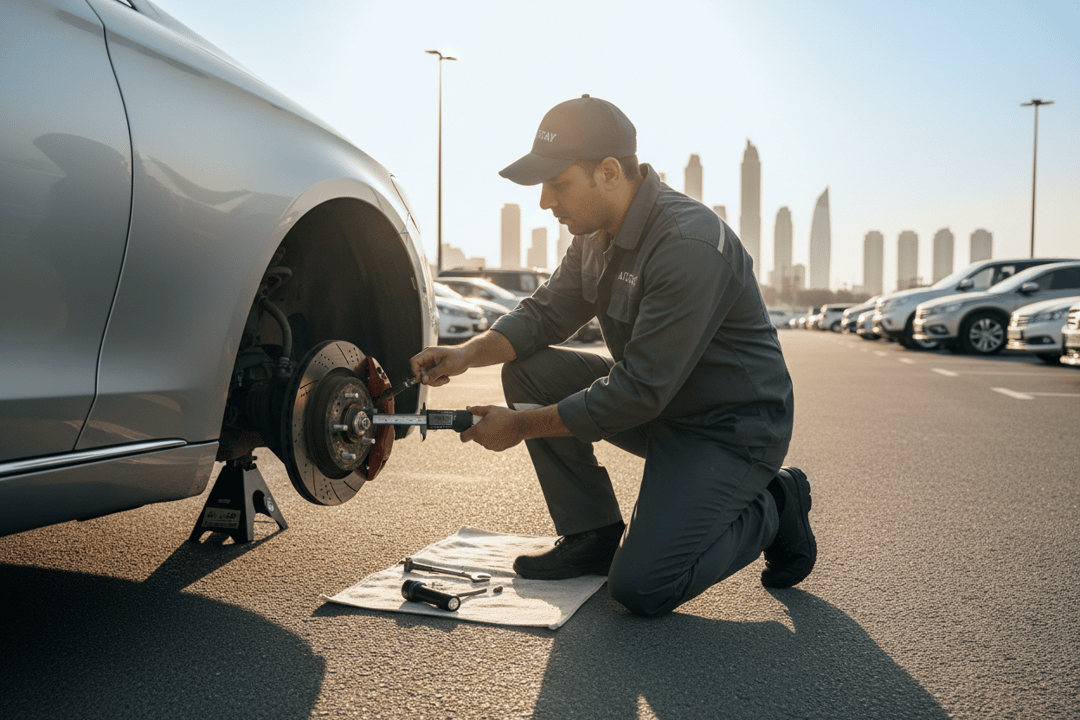
Brakes are the one system where partial failure is not an option. A car with worn pads can still stop — until it cannot. Our brake inspection covers 16 individual checkpoints across the entire braking system, from pad thickness to ABS function.
16 Brake Checkpoints: Pads to Pedal
The inspection starts with front and rear brake pads, each measured and rated: Good (over 50% remaining), Average (25-50%), Worn (under 25%), or Needs Replacement. Rotors are checked for scoring, warping, and minimum thickness. Both front and rear calipers are tested for sticking, leaking, or seized operation — a sticking caliper causes uneven pad wear and pulls the car to one side under braking.
The brake master cylinder, booster, lines, and hoses complete the hydraulic side. Lines are inspected for corrosion, and hoses for cracking, swelling, or leaking. The parking brake is tested for holding force — a weak parking brake on a hill is not just inconvenient, it is dangerous. The ABS system is checked for warning lights and proper function, and the brake pedal feel is evaluated: firm, soft, spongy, or pulsating.
What Pad Percentage Actually Means for Buyers
A seller might say the brakes are fine because the car stops. But stopping distance increases gradually as pads wear, and the difference is not noticeable in daily driving until it matters most — an emergency stop. Pads rated at under 25% will need replacement soon, and that is a cost the buyer should know about before agreeing on a price.
Uneven pad wear tells a deeper story. If the inner pad is significantly thinner than the outer pad, the caliper slide pins may be seized. If one side is worn more than the other, there could be a hydraulic imbalance. Our inspectors note these patterns because they indicate problems beyond just needing new pads.
Rotors, Lines, and the Parts Behind the Wheel
A scored rotor creates grooves that reduce braking surface area and cause vibration. A warped rotor produces a pulsating brake pedal — the rotor is no longer flat, so the pad contacts it unevenly with each rotation. Both conditions are documented with condition photos in the inspection report.
Brake lines and hoses are the hidden failure point. Metal brake lines corrode over time, especially on imported vehicles from humid climates. Rubber hoses can swell internally, acting as a one-way valve that keeps pressure applied after you release the pedal — causing the brakes to drag and overheat.
Brakes in UAE Driving Conditions
Stop-and-go traffic in Dubai and Abu Dhabi generates enormous heat in the braking system. Brake fluid absorbs moisture over time, which lowers its boiling point. In extreme UAE heat, degraded brake fluid can boil during heavy braking, creating gas bubbles that make the pedal feel spongy and reduce stopping power. Our inspectors check brake fluid condition — clear is good, dark or contaminated means it needs replacement.
AutoFay inspects 410 checkpoints including 16 dedicated brake points, with HD photos and a detailed PDF report. On-location inspection across all 7 Emirates. Book at autofay.ae or call +971-54-258-4458.


0 Comments
No comments yet. Be the first to share your thoughts!