

The Toyota brand holds a commanding position in the UAE automotive market, synonymous with durability and resale value. However, longevity in the Gulf climate relies heavily on rigorous and consistent maintenance. A vehicle that was reliable five years ago requires a much closer scrutiny today due to heat stress, salt exposure, and accumulated mileage. Annual inspections are not merely administrative hurdles; they are critical safety evaluations. An independent inspection provides an objective assessment that protects the owner from unforeseen mechanical failures. Whether purchasing a used vehicle or ensuring compliance with annual regulations, understanding the specific vulnerabilities of Toyota models is essential. Experienced inspectors look beyond the surface to identify issues that compromise vehicle safety and longevity.
The Engine: Heat Stress and Oil Degradation
Engines in the UAE endure extreme temperatures, accelerating the breakdown of internal components. Even within the Toyota ecosystem, oil dilution is a common issue in high-mileage vehicles, particularly those used for frequent short trips. This occurs when fuel condenses in the crankcase due to incomplete combustion, lowering oil viscosity. A comprehensive engine inspection requires checking the oil dipstick for smell and consistency. If the oil appears thin or smells of gasoline, immediate mechanical intervention is necessary.
Cooling systems in Toyota vehicles are often pushed to their limits. Radiator hoses and water pumps degrade faster in high heat. Inspectors must verify that coolant levels are topped up with the correct type and that there are no signs of sludge or discoloration in the expansion tank. Another frequent culprit is the thermostat. A failing thermostat can cause the engine to overheat or run inefficiently, leading to permanent head gasket damage over time. During the inspection, the sound of the engine at idle should be smooth; any knocking or tapping sounds suggest internal bearing wear or piston issues that will lead to a catastrophic engine failure if ignored.
Transmission and Drivetrain Reliability
Toyota transmissions are generally robust, but the dual-clutch automatics found in some models can be sensitive to heat. In stop-and-go traffic, the transmission fluid can overheat, leading to erratic shifting or slipping. Inspectors check the transmission dipstick (where applicable) for burnt smells and correct fluid levels. If the vehicle hesitates when shifting from Park to Drive or during acceleration, the transmission fluid may be degraded, or the solenoids may be failing.
For trucks like the Hilux, the transfer case and rear differential are high-stress areas. These units are prone to leaks, especially as the rubber seals age. A small differential leak might seem minor, but it can lead to a complete loss of lubrication, causing the metal gears to shred. Inspectors verify fluid levels under the vehicle and check for wet spots on the casing. The drivetrain also includes universal joints and CV boots. A torn CV boot allows road debris to enter, contaminating the joint and causing a clicking sound when turning. Without replacement, this damage escalates rapidly, requiring a full axle replacement.
Model-Specific Vulnerabilities: Corolla, Camry, and Hilux
Each Toyota model presents distinct challenges that require targeted inspection protocols. The Toyota Corolla and Camry are popular sedans known for their longevity, but their suspension systems are prone to wear. The front control arms and ball joints often loosen over time, leading to poor alignment and tire wear. A visual inspection of the suspension arms for cracks and checking the alignment settings is vital for ensuring straight driving and even tire tread life.
The Hilux is the workhorse of the region, but its steel body is susceptible to corrosion. While the engine is built to last, the chassis is vulnerable to rust, particularly around the wheel arches and the bottom of the doors. Inspectors must look for bubbling paint and surface rust that could compromise structural integrity. Additionally, the Hilux's steering box is a known weak point; excessive play in the steering wheel often indicates a worn gearbox, which affects handling precision.
For Land Cruiser owners, the focus shifts to the heavy-duty suspension components. The leaf springs can sag, and the shock absorbers often lose their damping ability after many years of service. This results in a bumpy ride and increased braking distance. Inspectors assess the road test performance to determine if the suspension is adequately absorbing shock, ensuring that the vehicle remains stable during emergency maneuvers.
The Critical Role of Computer Diagnostics
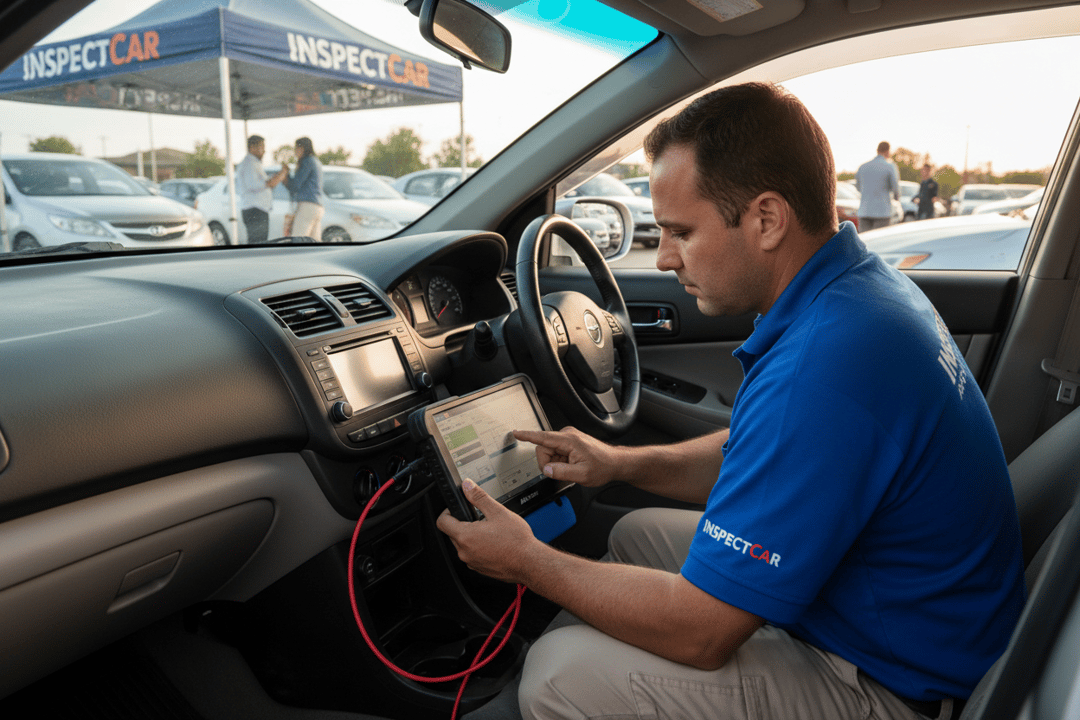
Modern Toyota vehicles rely on complex electronic control units (ECUs) to manage performance and safety. A visual inspection cannot detect internal sensor faults or software glitches. This is where computer diagnostics becomes indispensable. An OBD scan retrieves error codes stored in the vehicle's computer, revealing issues that are not yet causing symptoms but will likely fail an MOT or cause a breakdown in the near future.
Diagnostics cover the engine, transmission, ABS (anti-lock braking system), and airbag modules. For example, an ABS fault code might indicate a damaged wheel speed sensor or a faulty ABS pump. While the car may drive normally without ABS, the safety system is compromised. Similarly, airbag codes can be triggered by a dead battery, a loose connector, or a deployed sensor. Addressing these codes early prevents expensive repairs and ensures all safety systems function correctly. AutoFay offers a dedicated Computer Diagnostic service starting at AED 99, providing a fast and accurate analysis of the vehicle's electronic health.
Suspension, Brakes, and Safety Systems
Safety systems are the first line of defense against accidents. Brake pads and rotors wear down over time, but the severity of wear depends on driving style and road conditions. Inspectors use a pad thickness rating system to assess remaining life. If the pads are below the minimum threshold, they must be replaced immediately to avoid damaging the expensive brake rotors. Uneven pad wear indicates a sticking caliper, which requires immediate attention to prevent brake fade.
The suspension system connects the vehicle to the road. Shock absorbers and struts control the rebound and damping of the springs. Worn shocks lead to a bouncy ride and reduced tire contact with the road. Inspectors perform a bounce test to evaluate the suspension's effectiveness. Additionally, the Road Test phase assesses noise, vibration, and harshness (NVH). A clunking sound over bumps often points to worn bushings or ball joints, which can lead to loss of control if they fail while driving.
Body, Rust, and Undercarriage Integrity
While an engine or transmission is internal, the body and frame are the vehicle's structure. The UAE climate is harsh on metal. Salt used for road de-icing in winter, along with humidity, accelerates corrosion. Inspectors examine the vehicle panel-by-panel to identify previous accident repairs. Repainted panels often indicate a past collision, which may have compromised the structural integrity or hidden frame damage.
The floor pan and frame rails are critical areas that are often difficult to see. Rust in these areas can eat through the chassis, leading to a dangerous structural failure. Inspectors lift the vehicle or use inspection mirrors to check the underside of the cabin for rust holes. Any signs of significant rust or previous welding to repair rust holes are major red flags. AutoFay’s Comprehensive package includes a detailed frame inspection, verifying that the vehicle’s structural safety is intact.
Inspection Packages and Services
To navigate the complexity of a vehicle inspection, using a professional service like AutoFay ensures that no detail is overlooked. Different inspection needs require different levels of depth. A basic computer check might suffice for a quick verification, but a comprehensive purchase inspection requires a deeper dive. Below is a breakdown of the available packages and what they cover.
| Service Package | Price (AED) | Key Inclusions |
|---|---|---|
| Computer Diagnostic | 99 | OBD scan for Engine, Transmission, ABS, and Airbag codes. Identifies electronic faults. |
| Body & Computer | 250 | Includes the Computer Diagnostic service plus a detailed Body & Paint inspection (panel-by-panel). |
| Comprehensive Inspection | 399 | The full 410+ checkpoint including Body, Frame (floor pan/rails), Engine, Brakes, Suspension, Tires, Fluids, and Road Test. |
Tires and Fluids: The Last Line of Defense
Tires are the only contact point between the vehicle and the road. Inspectors check not just tread depth but also the manufacturing date. A tire older than six years, regardless of tread, is a safety hazard as the rubber degrades internally. The age of the tires must be verified using the DOT code on the sidewall.
Fluids play a vital role in vehicle longevity. Brake fluid absorbs moisture over time, lowering its boiling point. Old brake fluid can cause the brakes to fade during heavy braking, increasing stopping distances. Power steering fluid should be clear and bright; dark, brown fluid indicates internal seal breakdown. Transmission fluid should be bright red and smell like oil; if it is black or smells burnt, the transmission is likely failing. Ensuring all fluids are at the correct level and in good condition prevents overheating and mechanical failure.
Annual inspections are a non-negotiable part of vehicle ownership in the UAE. They provide a snapshot of the vehicle's health, highlighting issues that require immediate attention. By prioritizing engine health, transmission integrity, and safety systems, owners can ensure their vehicle remains reliable. Professional services provide the necessary expertise to interpret these findings accurately. Don't leave vehicle safety to chance. AutoFay inspects 410+ checkpoints with HD photos and PDF report. Book at autofay.ae or call +971542584458.



0 Comments
No comments yet. Be the first to share your thoughts!