
Hyundai vehicles dominate UAE roads due to their blend of practicality and value. However, continuous exposure to extreme heat and varied road conditions accelerates wear on specific components. An annual inspection must go beyond the basic safety check to identify latent failures common to Hyundai models in the region. Owners must prioritize mechanical health and structural integrity to ensure longevity. This guide outlines the critical areas to examine on Hyundai vehicles, specifically focusing on common faults and what constitutes a professional evaluation.
Hyundai Model-Specific Wear Patterns
Hyundai models like the Santa Fe, Tucson, and Elantra have distinct reliability profiles. The Santa Fe is often scrutinized for transmission behavior, particularly during hot months. Owners frequently report hesitation or slippage when accelerating from a standstill, often caused by thermal stress on transmission fluid. A failure to address transmission irregularities early can lead to catastrophic gear failure, rendering the vehicle undrivable.
The Tucson has faced scrutiny regarding its electrical architecture and HVAC systems. In the UAE climate, air conditioning performance is non-negotiable. Electrical glitches can cause intermittent failure of sensors, leading to erratic dashboard warning lights. Ignoring these electrical faults may result in the vehicle entering "limp mode," severely restricting performance and speed.
The Elantra and Veloster, popular for their sporty handling, are prone to engine mount degradation. The rubber isolators degrade under the high engine loads typical in stop-and-go traffic. Worn mounts allow excessive vibration to pass into the cabin and chassis, causing a rough driving experience. If not replaced, they can damage surrounding components, including the radiator mounts and exhaust system.
Common Mechanical Faults in the Region
Hyundai engines generally run efficiently, but coolant leaks and thermostat failures are prevalent. The plastic components in the cooling system become brittle under UV exposure, leading to leaks. Additionally, the crankshaft position sensor is a known failure point that can cause the engine to stall without warning. Inspecting these components during an annual check prevents unexpected breakdowns.
- Santa Fe: Transmission fluid degradation and torque converter shudder.
- Tucson: Electrical module failures and air conditioning compressor wear.
- Elantra/Veloster: Engine mount cracking and power steering pump noise.
The Diagnostic Imperative
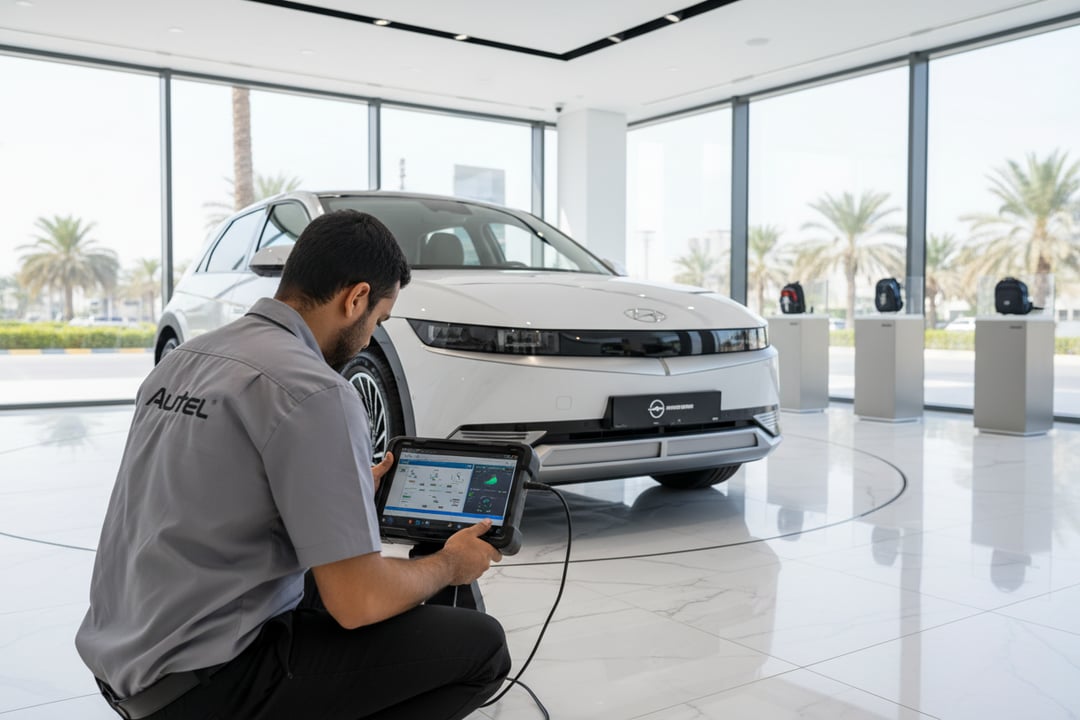
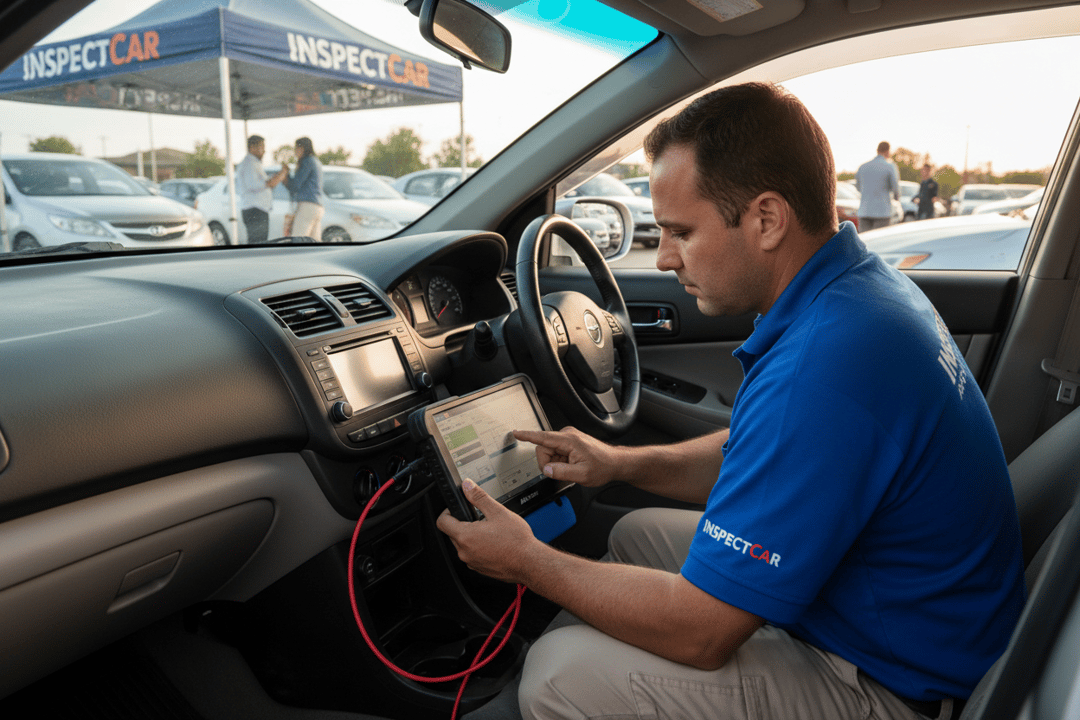
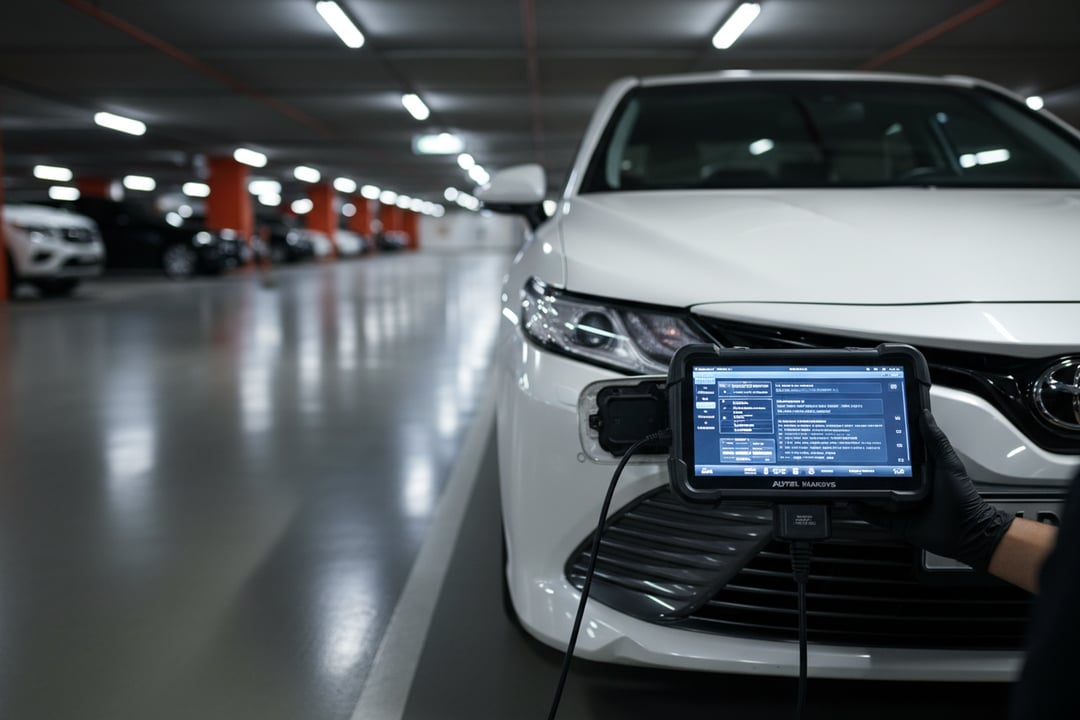
Visual inspection cannot reveal internal engine or transmission health. An On-Board Diagnostics (OBD) scan is the only definitive method to read fault codes stored in the Engine Control Unit (ECU), Transmission Control Unit (TCU), ABS module, and Airbag systems. Hyundai vehicles use complex software to manage fuel efficiency and emissions; a malfunctioning sensor can trigger a chain reaction of performance issues.
For a professional evaluation of these digital systems, a computer diagnostic service is required. AutoFay offers a specialized Computer Diagnostic service for AED 99. This scan detects hidden errors that manifest as warning lights or reduced fuel economy. Addressing these codes early prevents minor sensor failures from escalating into major engine repairs.
Structural and Body Integrity
Hyundai vehicles are often subjected to minor collisions in UAE parking lots, but frame damage is a significant concern. The vehicle's frame, or chassis rails, maintains the structural alignment of the suspension and steering components. Even a slight bend can cause uneven tire wear and poor handling. Inspecting the pillars and floor pans is crucial to ensure the car has never suffered a major impact.
Panel-by-panel inspection is necessary to distinguish between original factory paint and repair work. A repainted panel will often show a different texture or color shade compared to the original. High-quality touch-ups are acceptable, but evidence of multiple repairs or mismatched paint indicates a history of significant accident damage. This history affects the vehicle's resale value and long-term safety performance.
Brakes, Suspension, and Tires
Brake systems in the UAE deteriorate faster due to dust and heat. The friction material on brake pads wears down based on driving style and road conditions. A professional inspection uses a pad percentage rating to determine remaining life. Replacing worn pads is cheaper than replacing warped rotors, which occur when pads are allowed to wear down to the metal backing.
Suspension components, such as control arms and ball joints, wear out over time. These parts are responsible for maintaining vehicle stability and absorbing road imperfections. Clunking noises during cornering or uneven tire wear patterns are clear indicators of suspension failure. Neglecting these issues compromises the vehicle's handling and safety during high-speed driving.
Tires require scrutiny beyond tread depth. The manufacturing date of a tire is printed on the sidewall; tires older than five years lose their rubber elasticity and are prone to blowouts. Inspecting the manufacturing year ensures the vehicle is fitted with safe rubber. AutoFay inspectors evaluate tire condition rigorously, as worn tires are the leading cause of accidents in the region.
Fluids and Undercarriage Health
Engine oil, transmission fluid, and coolant must be inspected for level and condition. Old transmission fluid turns brown or black and loses its ability to lubricate and cool the transmission. Low brake fluid levels indicate worn brake pads, while milky coolant suggests a blown head gasket. These fluid issues are often symptoms of deeper mechanical problems.
The undercarriage should be inspected for fluid leaks. Oil leaks can damage the catalytic converter, leading to expensive emissions system repairs. Power steering fluid leaks can result in a sudden loss of steering assistance, creating a hazardous driving situation. Identifying these leaks during an inspection saves the owner from costly repairs down the line.
Why Standard Inspection Standards Fall Short
Generic inspections often miss the nuances of modern vehicle maintenance. A comprehensive inspection covers over 410+ checkpoints across 25 specific categories. This level of detail is necessary to uncover the compounded effects of climate exposure on vehicle components.
Standard checks rarely include a full road test under varying loads. AutoFay provides a comprehensive inspection package for AED 299 that includes a rigorous road test. This test evaluates acceleration, braking response, and noise levels under load. It ensures the vehicle performs correctly in real-world driving conditions, not just static testing.
| Package | Price | Key Inclusions |
|---|---|---|
| Computer Diagnostic | AED 99 | Engine, Transmission, ABS, Airbag Scan |
| Body & Computer | AED 250 | Panel-by-panel paint check, OBD scan, Road test |
| Comprehensive | AED 299 | Full 410+ checkpoints, Frame inspection, HD photos, PDF Report |
AutoFay inspects 410+ checkpoints with HD photos and PDF report. Book at autofay.ae or call +971542584458.


0 Comments
No comments yet. Be the first to share your thoughts!