
Modified cars are common in the UAE market. From simple exhaust tip changes to full performance builds with engine tuning, cold air intakes, and upgraded turbochargers, modifications range from cosmetic to deeply mechanical. For buyers, a modified car presents both opportunity and risk — the modifications may add performance value, but they may also indicate aggressive driving history and introduce reliability concerns that a professional inspection can identify.
Exhaust System Modifications
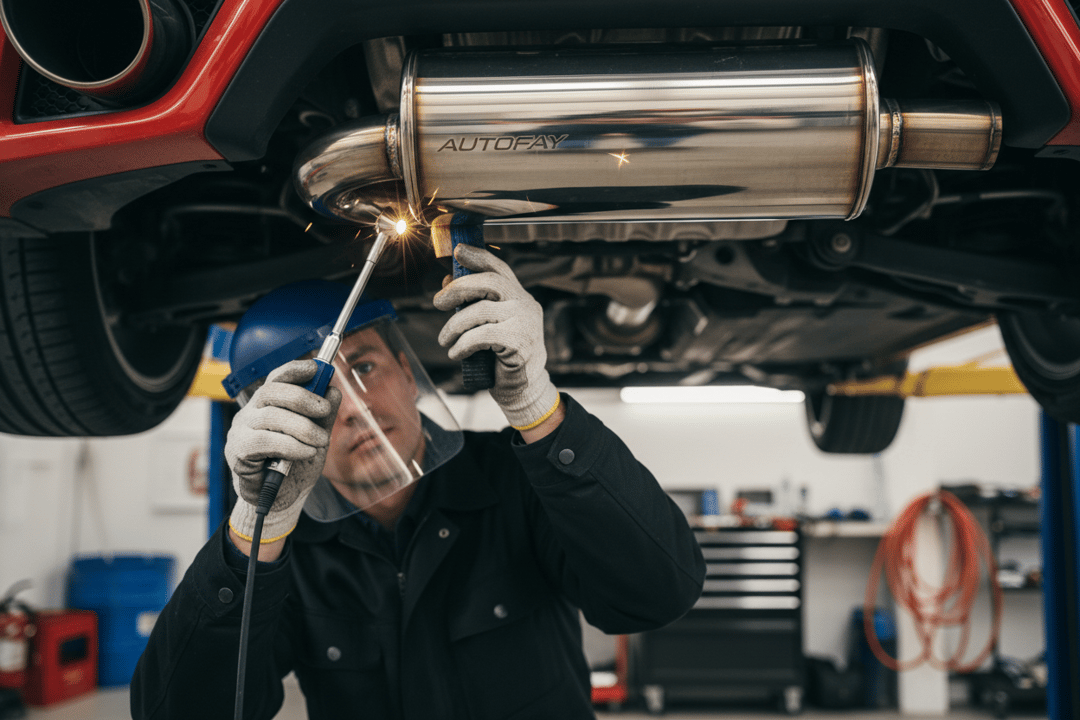
AutoFay's exhaust inspection covers nine checkpoints that reveal the full picture. The exhaust manifold is checked for cracks and leaks — rated No Visible Fault, Cracked, or Leaking. Aftermarket headers or manifolds may fit poorly, creating exhaust leaks (rated None, Minor, or Major) that affect both performance and emissions. The catalytic converter — rated No Visible Fault, Rattling, Clogged, or Missing — is a critical checkpoint. Some performance builds remove the catalytic converter entirely, which is illegal in the UAE and will cause the car to fail emissions testing during registration renewal.
The muffler (No Visible Fault, Rusted, Holes, or Loud) and exhaust pipes (same ratings) tell you about the quality of the aftermarket installation. A professionally installed performance exhaust will show clean welds, proper routing, and secure mounting. A budget installation may show poor welds, loose exhaust mounts/hangers (Good, Worn, Broken, or Missing), and rattling heat shields (Good, Loose, Rattling, or Missing). Exhaust tips (Good, Rusted, or Damaged) that are oversized for the actual piping indicate a cosmetic-only modification.
Engine Modifications and Their Consequences
Aftermarket cold air intakes replace the factory air intake system. Our inspection rates the air intake system as Good, Dirty, or Damaged. A poorly designed aftermarket intake can allow unfiltered air or excessive heat into the engine, causing accelerated wear. The engine air filter (Clean, Dirty, or Needs Replacement) on modified cars often uses reusable performance filters that may not be properly oiled or maintained.
Turbocharger upgrades or modifications are checked during the engine inspection — turbocharger rated Working Fine, Noisy, or Leaking. An upgraded turbo pushing more boost than the engine was designed for accelerates wear on engine internals, valve cover gaskets (No Visible Fault, Seeping, or Leaking), and engine oil seals. Engine mounts (No Visible Fault, Worn, or Broken) wear faster on modified engines due to increased vibration and torque. The check engine light (Off, On, or Flashing) and OBD fault codes are particularly important on modified cars — engine tuning that adjusts fuel mapping and ignition timing can trigger stored codes that indicate the ECU is operating outside factory parameters.
Drivetrain Stress from Added Power
Increased engine power puts additional stress on every component downstream. Transmission operation — rated Smooth, Slight Delay, Hard Shifting, or Slipping — may show Slight Delay or Hard Shifting on modified cars because the transmission was not designed for the increased torque. Transmission fluid (Good through Contaminated) degrades faster when the transmission handles more power. CV axles (Good, Clicking, Vibration, or Leaking) and CV boots (Good, Cracked, Torn, or Leaking) are common failure points on modified front-wheel-drive cars.
The driveshaft (Good, Vibration, or Damaged) on modified rear-wheel-drive cars can develop vibration from increased power delivery. Universal joints (Good, Worn, or Noisy) and rear differential (Good, Noisy, or Leaking) show accelerated wear. On modified AWD vehicles, the transfer case (Working, Noisy, or Leaking) bears the additional load of distributing increased power to all four wheels.
Brake and Suspension: Keeping Up with Power
Cars modified for more power without corresponding brake upgrades create a safety imbalance. Our brake inspection checks front and rear brake pads, rotors, calipers, brake lines, and ABS system. A car with performance engine modifications but stock brakes shows accelerated pad and rotor wear from harder driving. Front brake pads at Worn or Needs Replacement on a relatively low-mileage modified car indicate aggressive driving habits that affect the entire vehicle.
Suspension modifications — lowering springs, coilovers, or stiffer sway bars — change the inspection profile. Front and rear shocks are rated No Visible Fault, Worn, Leaking, or Needs Replacement. Aftermarket coilovers may show leaking or noise earlier than OEM components because they are often lower quality or improperly adjusted. Bushings (No Visible Fault, Worn, Cracked, or Needs Replacement) and ball joints wear faster on lowered cars due to altered suspension geometry.
The OBD Scanner Tells the Truth
The most revealing check on a modified car is the OBD scan. Engine fault codes, transmission fault codes, and body control module codes each tell a story. A modified car with No Faults across all systems has either been properly tuned to work within the ECU's parameters or has had its codes recently cleared. Our inspectors note whether readiness monitors are complete — if they show "not ready," the codes were likely cleared recently. Active faults on a modified car indicate modifications that the engine management system cannot accommodate, which means ongoing reliability problems.
AutoFay inspects 410 checkpoints on both stock and modified vehicles, with HD photos and a detailed PDF report. On-location inspection across all 7 Emirates. Book at autofay.ae or call +971-54-258-4458.




0 Comments
No comments yet. Be the first to share your thoughts!