

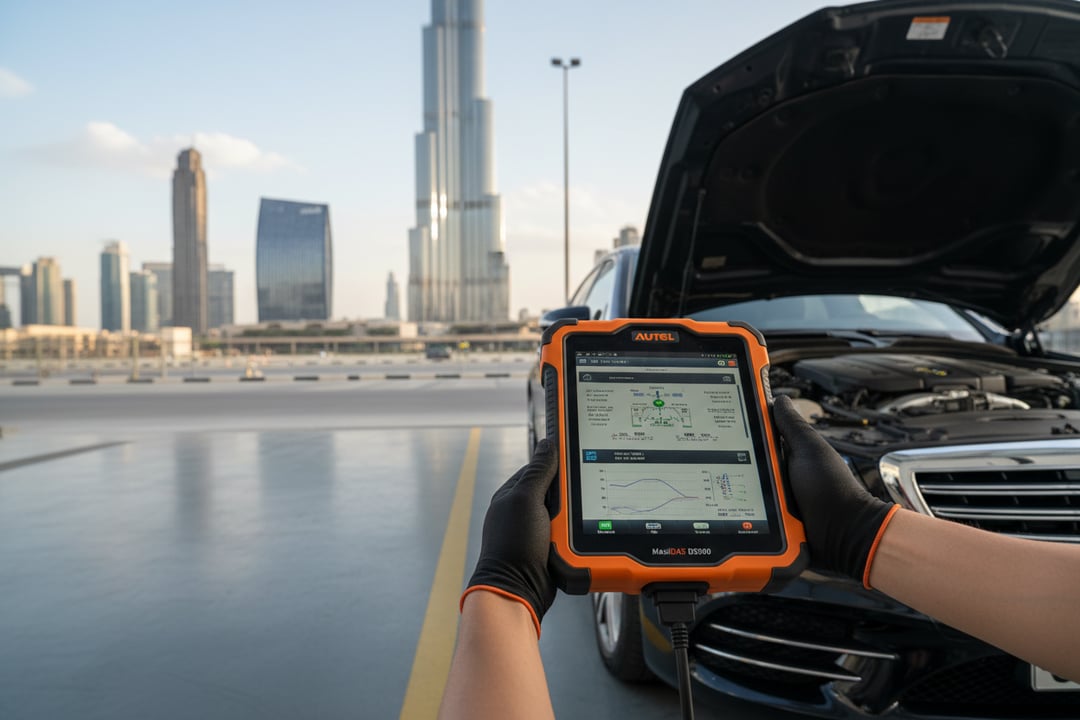
The UAE market offers a vast selection of pre-owned vehicles, but a significant portion consists of cars stored for long periods. Nissan models, including popular sedans like the Sentra and Altima, and performance cars like the 370Z, frequently appear in storage units. While a low odometer reading suggests low usage, long-term storage introduces specific mechanical risks that differ from high-mileage usage. Inspecting a stored vehicle requires a rigorous approach to uncover latent failures before purchase.
The Critical Role of Electrical Diagnostics
The electrical system is the first component to suffer during prolonged inactivity. A vehicle left dormant for over six months often arrives with a depleted battery or a failing alternator. When the engine is cold, the electrical demand is high, and an aging starter motor may fail to engage. Furthermore, moisture trapped in the alternator rectifier diodes can lead to early failure, leaving the battery unable to hold a charge.
Initial ignition is not enough to verify system health. A Computer Diagnostic scan is essential to reveal hidden faults in the Engine, Transmission, ABS, and Airbag modules. Diagnostic tools can detect soft errors stored in the ECU memory that manifest only when the battery is disconnected and reconnected. Skipping this step risks purchasing a car with compromised electronics, leading to unpredictable behavior.
- Dead Battery: The most immediate risk of storage is a battery that cannot hold a charge.
- Alternator Failure: Long-term discharge can damage the rectifier diodes, preventing the alternator from charging the battery.
- Relay Sticking: Moisture ingress can cause relays to stick in the closed position, draining the battery or activating systems while the car is off.
Engine Longevity: Timing Chains and Oil Leaks
Nissan engines, particularly the QR20DE and VQ series found in many UAE models, are generally robust. However, extended storage accelerates oil degradation and seals hardening. Oil left in the pan for years can thicken into sludge, restricting oil flow to critical bearings. This lack of lubrication can cause catastrophic engine failure at the moment of restart.
Another common issue with stored Nissans is oil leakage. Gaskets and seals shrink over time due to the loss of plasticizers. The oil pan gasket, valve cover gasket, and rear main seal are prime candidates for failure. A thorough inspection involves checking for fresh oil spots beneath the vehicle and listening for abnormal noises during startup. A ticking sound coming from the front of the engine often indicates slack in the timing chain, a critical issue in high-mileage Nissan units.
Fluid Degradation and Hydraulic Failure
Fluids in a stored car do not simply sit idle; they chemically degrade. Brake fluid is hygroscopic, meaning it absorbs moisture from the air. Over a year of storage, the moisture content can exceed the saturation point, causing the fluid to boil at lower temperatures. This leads to spongy brakes and reduced stopping power, which is dangerous in emergency situations.
Transmission fluid also loses its viscosity and shock-absorbing properties. If the car was stored in gear or with the parking brake applied, the transmission fluid may have pooled in cooler areas, causing internal seals to dry out. Similarly, coolant can become acidic and attack the radiator and engine block. Inspectors must check fluid levels, clarity, and smell to ensure hydraulic systems are safe for operation.
Suspension and Bushings
Rubber components in the suspension system are highly susceptible to environmental factors. In the UAE, high humidity and temperature fluctuations accelerate the aging process of polyurethane and rubber bushings. A car sitting stationary for years will have bushings that have hardened and cracked, leading to increased vibration and noise.
Drivers often describe stored cars as "loose" at low speeds. This sensation is caused by worn control arm bushings and worn shock absorbers. The metal-to-metal contact in the suspension joints creates a harsh ride and accelerates tire wear. During inspection, the suspension must be cycled to ensure the shocks are damping effectively and that there is no play in the ball joints or tie rods.
Body and Frame Integrity
Structural integrity is often compromised by the nature of storage. Vehicles stored in garages are rarely moved, leading to flat spots on tires and dry-rotted sidewalls. More critically, the vehicle's position on the ground can cause the frame to settle unevenly, stressing the chassis rails.
Inspectors must look for signs of water damage or corrosion. Floor pans and wheel arches are common areas for rust to form if the storage environment was humid. Additionally, the interior may develop mold if windows were left slightly ajar or if there was a small leak. A "Body & Computer" inspection can identify panel-by-panel discrepancies, ensuring the car has not been involved in accidents that compromised its structural safety.
Selecting the Right Inspection Package
Choosing the correct inspection service is crucial for uncovering the hidden issues associated with storage. Different levels of inspection cover different aspects of vehicle health. To ensure a comprehensive evaluation of a stored Nissan, one should select a service that prioritizes the electrical system, fluids, and structural components.
| Inspection Package | Key Inclusions | Best Suited For |
|---|---|---|
| Computer Diagnostic AED 99 | Engine, Transmission, ABS, Airbag OBD codes | Rapid check of stored electronics and warning lights |
| Body & Computer AED 250 | Panel-by-panel paint condition, frame rails, pillars, computer scan | Assessing accident history, rust, and body damage |
| Comprehensive AED 299 | 410+ checkpoints across 25 categories, brakes, tires, fluids, road test | Full health assessment of stored vehicles |
For a car that has been sitting idle, the Comprehensive package offers the highest value. It covers the Fluids (level + condition) and performs a Road Test to verify acceleration, braking, and noise. This ensures that mechanical failures are not only identified but also test-driven to confirm their severity.
AutoFay inspects 410+ checkpoints with HD photos and PDF report. Book at autofay.ae or call +971542584458.




0 Comments
No comments yet. Be the first to share your thoughts!