

Leaving a vehicle dormant for an extended period in the UAE climate presents a unique set of challenges. High temperatures, humidity, and fluctuating salinity levels accelerate the degradation of critical systems that are typically dormant during storage. A car sitting idle for months is not merely "resting"; it is undergoing chemical and mechanical shifts that compromise safety and longevity. Before driving a previously stored vehicle back onto UAE roads, a rigorous assessment is non-negotiable to prevent mechanical failure or accident.
Electrical & OBD Diagnostics
The most immediate casualty of long-term storage is the electrical system. Batteries discharge slowly even when disconnected due to parasitic drain, and the heat can accelerate internal chemical reactions, leading to premature failure. Before attempting to start the engine, verify battery voltage and terminal corrosion. A failed battery renders the entire vehicle inoperable, stranding the driver and potentially causing safety hazards if the car rolls unexpectedly.
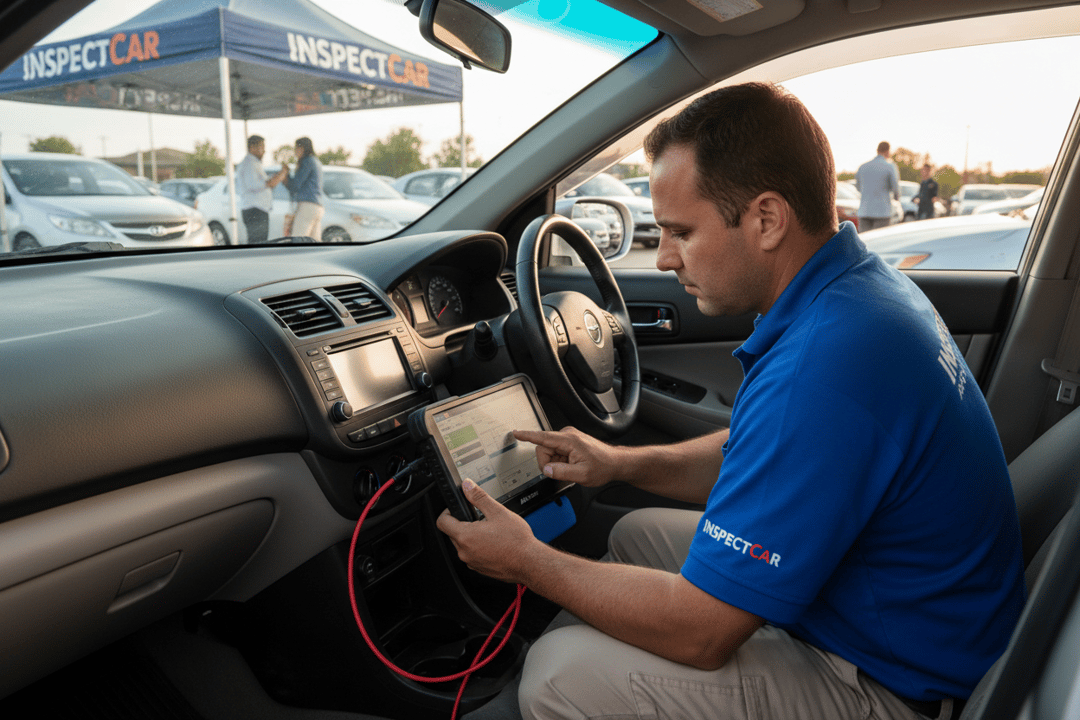
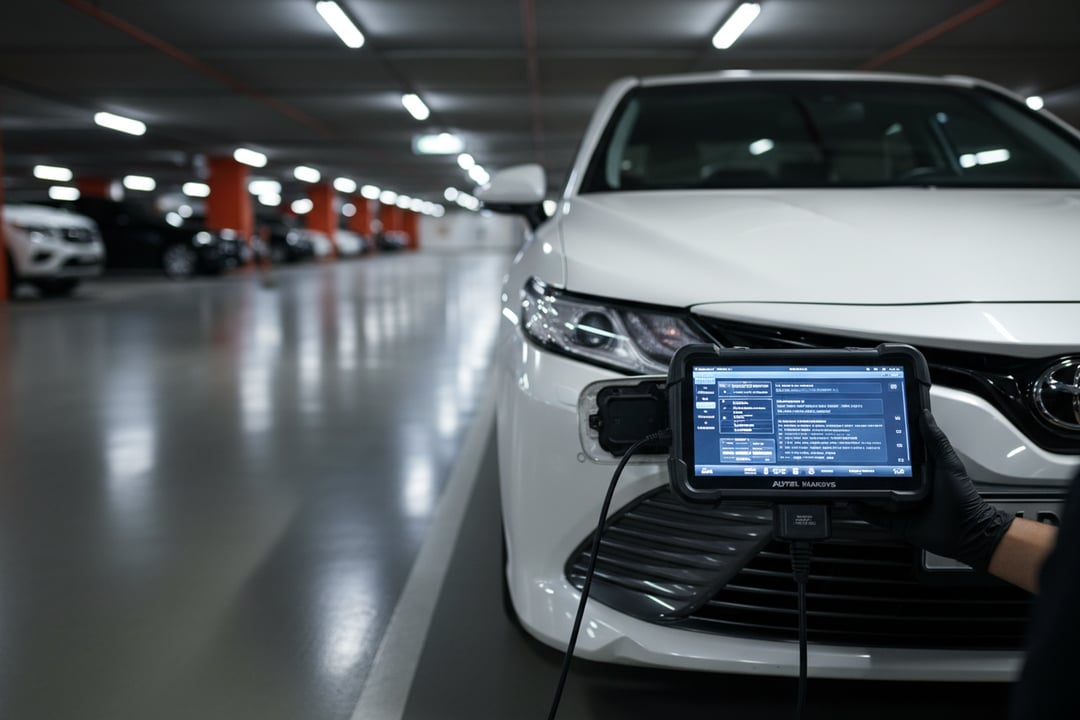
Modern vehicles rely heavily on the On-Board Diagnostics (OBD) system to monitor engine, transmission, airbag, and ABS modules. A dormant car may have dormant error codes stored in the computer memory that do not trigger dashboard warning lights. A professional computer diagnostic scan is essential to reveal hidden faults. At AutoFay, a computer diagnostic check is available as a standalone service for AED 99, ensuring that no underlying electronic fault is missed before the vehicle is put under load.
- Check battery terminals for white or blue crystalline corrosion which indicates high current leakage.
- Inspect battery cables for brittleness or cracks caused by heat aging.
- Use an OBD scanner to retrieve stored fault codes from engine, transmission, airbag, and ABS modules.
- Test the alternator output to ensure it can recharge the battery and power electrical systems under load.
Fluid Analysis & Conditioning
Fluids do not remain static in a stored vehicle. Engine oil oxidizes and can turn into sludge, losing its lubricating properties. Brake fluid is hygroscopic, meaning it absorbs moisture from the air over time, which lowers its boiling point and compromises braking efficiency. Coolant can degrade and lose its ability to prevent overheating or corrosion within the radiator and engine block.
Consequences of neglecting fluid checks are severe. Driving on degraded oil can cause bearing wear and engine seizure. Using old brake fluid risks brake fade during emergency stops or total brake failure. A comprehensive inspection should include a visual check of fluid levels and a condition analysis of the oil and brake fluid. If the fluids are dark, cloudy, or contain particles, they must be drained and replaced immediately. This is often included in the higher-tier inspection packages offered by on-location inspection services.
Mechanical Integrity & Road Test
When an engine sits, seals dry out and gaskets can lose their elasticity, leading to oil and coolant leaks. Engine mounts, which are rubber components, can harden and crack under the persistent heat of the UAE sun, resulting in excessive engine vibration during operation. A road test is the definitive method to identify mechanical noises, hesitation, or misfires that are not visible under a hood.
During the road test, an inspector listens for unusual knocking sounds, hissing from the exhaust, or smoke from the tailpipe (white smoke indicates water/coolant burning, blue smoke indicates burning oil). The transmission should engage gears smoothly without slipping or jerking. Engine mounts are observed for movement while the vehicle is idled and revved. A failing engine mount can cause damage to the chassis or transmission over time if not replaced, making this a critical component of the inspection checklist.
Structural Health & Body Assessment
UAE humidity and coastal proximity create a breeding ground for rust, particularly in the undercarriage. Even if a car was garaged, the underside is vulnerable to salt spray if the vehicle was previously used in coastal areas. The frame rails, pillar structures, and floor pans are the most critical areas to inspect for corrosion.
Paint condition is also a major indicator of vehicle history. Panel-by-panel inspection reveals original factory paint versus repainted areas, which can hide accident damage or poor-quality repairs. A body inspection looks for bubbling paint (indicating surface rust), mismatched colors, and bondo textures. A compromised frame or structural rust can severely affect the vehicle's crashworthiness and handling characteristics. AutoFay inspectors use specialized lighting to detect defects that are invisible to the naked eye.
Safety Systems: Brakes & Suspension
The braking system is the most vital safety component for a vehicle returning to active service. Brake pads and rotors can seize to the caliper if the vehicle has been stationary for too long, leading to a spongy pedal feel or reduced stopping power. Suspension components, including shock absorbers, control arms, and bushings, can deteriorate due to age and exposure to dust and heat. Leaking shocks result in a bumpy ride and poor tire contact with the road.
Inspectors rate brake pad thickness as a percentage to give an objective assessment of remaining life. For suspension, they look for leaking fluid, visible cracks in rubber bushings, and play in ball joints. A failure in the suspension system not only makes the ride uncomfortable but can lead to a loss of control, especially at high speeds on UAE highways.
Tires & Undercarriage
Tires are the only point of contact between the vehicle and the road, and they degrade significantly over time even if not used. The rubber compound in tires hardens and cracks due to UV exposure and ozone in the atmosphere. In the UAE, the extreme heat accelerates this process. Additionally, tires can develop flat spots if the car sits in one position for months, causing vibrations when driving.
An inspection checks the manufacturing date of the tires, as rubber has a shelf life of 5 to 10 years regardless of tread depth. Tires with a manufacturing date exceeding 10 years should be replaced immediately. The undercarriage must also be inspected for rust on exhaust components, which can lead to holes and dangerous carbon monoxide leaks into the cabin.
Understanding the Inspection Report
A professional inspection report provides a data-driven history of the vehicle's condition. It should not merely list defects but provide a clear visual and mechanical profile. The report must include high-definition photos documenting every issue found, from the smallest scratch to major structural damage. This documentation serves as a crucial reference point for maintenance planning and ensures transparency between buyer and seller.
Inspectors categorize findings into distinct sections, such as Body, Frame, Engine, OBD, Brakes, Suspension, Tires, Fluids, and Road Test. Each category contains specific checkpoints that have been met or failed. The report acts as a roadmap for repairs, prioritizing critical safety issues that require immediate attention over cosmetic concerns.
| Package | Service Inclusions | Price |
|---|---|---|
| Computer Diagnostic | Engine, Transmission, ABS, Airbag Code Scanning | AED 99 |
| Body & Computer | Panel-by-panel paint check, computer scan, frame inspection | AED 250 |
| Comprehensive | Full 410+ checkpoints covering all categories including road test | AED 299 |
AutoFay inspects 410+ checkpoints with HD photos and PDF report. Book at autofay.ae or call +971542584458


0 Comments
No comments yet. Be the first to share your thoughts!