

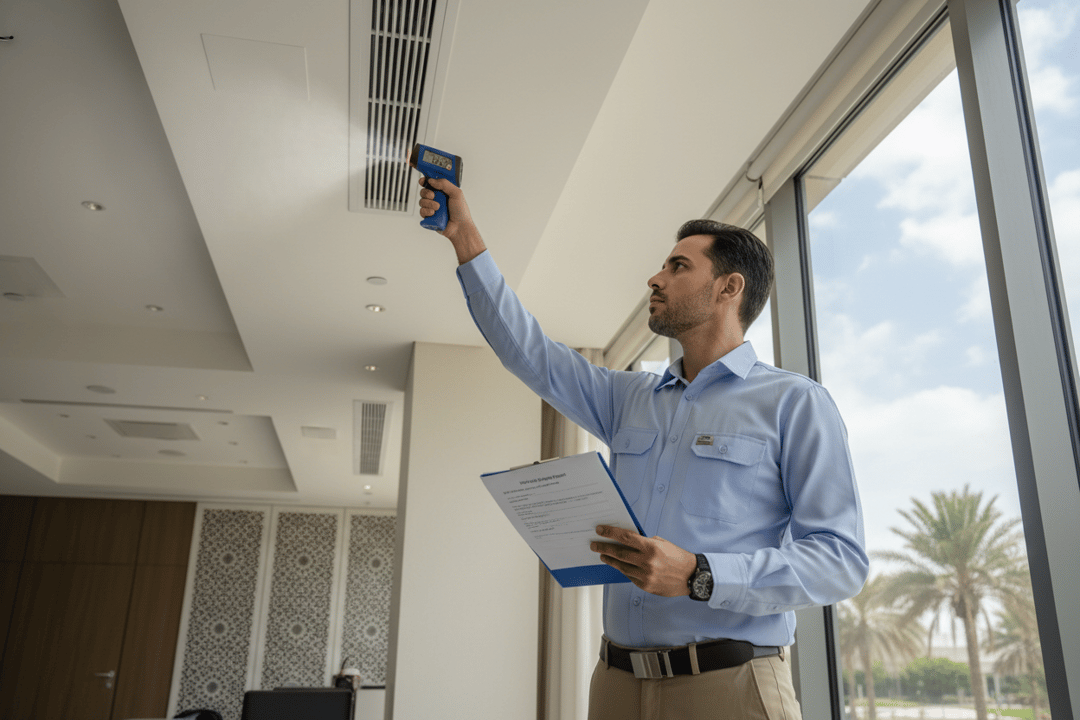
The UAE experiences two distinct driving seasons. Summer, roughly May through September, pushes vehicles to their thermal limits with ambient temperatures exceeding 50°C. Winter, October through March, brings milder temperatures but introduces fog, occasional rain, and significantly different driving conditions. The transition between seasons is the ideal time for a comprehensive vehicle check because summer stress may have created problems that only manifest under winter conditions.
Post-Summer Cooling System Assessment
The cooling system works hardest during summer. By October, it has endured five months of near-maximum operation. AutoFay's cooling system inspection checks every component that summer may have degraded. The radiator (No Visible Fault, Dirty, Damaged, or Leaking) may have developed micro-leaks from the sustained thermal pressure. Cooling hoses (Good, Soft, Cracked, or Leaking) that survived summer in a weakened state may fail during the first cool-down cycles of winter when the rubber contracts. The water pump (Working, Noisy, Leaking, or Needs Replacement) that ran continuously through summer may show bearing noise as the load decreases.
Coolant condition (Clean, Dirty, Contaminated, or Oily) should be checked because summer operation degrades the antifreeze properties and pH balance of coolant. While freezing is not a concern in the UAE, coolant chemistry matters for corrosion protection. The coolant overflow tank (Good, Cracked, or Leaking) is another summer casualty — the plastic expands in heat and can develop stress cracks that only leak when the system is under pressure.
AC to Heating Transition
While the AC works at maximum during summer, winter mornings in the UAE can be cool enough to require heating — or at minimum, the defroster. The heating system (Working, Weak, or Not Working) may not have been used for months. A heater that does not produce warm air usually indicates low coolant level, a stuck thermostat, or a blocked heater core. The front defroster (Working, Weak, or Not Working) is critical during foggy winter mornings, which are common from November through February. A defroster that does not clear the windshield effectively creates a dangerous visibility situation.
The rear defroster (Working or Not Working) clears condensation from the rear window during humid winter mornings. Blend door actuators (Working, Clicking Noise, Stuck, or Not Working) that were stuck in the cold position all summer may malfunction when asked to switch to warm air for the first time in months.
Visibility Systems for Winter Conditions
Winter in the UAE brings fog, especially in the early morning hours along the Abu Dhabi-Dubai corridor and in coastal areas. Headlights become more important — our inspection checks low beam, high beam, and fog lights individually. Headlights rated Dim or with Hazy lens condition reduce visibility in fog, creating a safety hazard. Fog lights (Working or Not Working) are essential for winter driving and may not have been tested since the previous winter season.
Front wiper blades (Good, Streaking, Worn, or Needs Replacement) that hardened on the hot windshield all summer may not clear water effectively during winter rain. The windshield washer system (Working, Weak, or Not Working) should be tested and the washer fluid topped off. Rain-sensing wipers (Working or Not Working) may malfunction after months of disuse. The rear wiper (if equipped) needs the same attention — the rubber blade sits unused in the heat and may have deteriorated.
Tire Readiness for Wet Roads
UAE roads during rain become extremely slippery because oil and dust accumulated on the dry surface create a slick layer when wet. Tire condition becomes safety-critical during winter rain events. Our per-wheel tire inspection checks each tire's condition and tread depth. Tires rated Good with adequate tread provide the drainage channels needed to maintain grip on wet pavement. Tires with Center Wear or worn tread that were adequate for dry summer driving may hydroplane on the first rain.
Tire pressure (Correct, Low, High, or Uneven) changes with temperature. As temperatures drop from summer highs to winter lows, tire pressure decreases. TPMS sensors (All Working, Warning On, or Faulty) may trigger warnings during the transition as pressure drops with temperature. Checking and adjusting tire pressure for the new season is a simple but important step.
Battery After Summer Stress
Batteries that survived summer heat may fail as temperatures cool. This seems counterintuitive, but a battery that was damaged by summer heat may have just enough capacity to start a warm engine but fail when the engine and ambient temperature are cooler and the oil is thicker. Battery capacity should be tested after summer, along with terminals (Clean, Corroded, or Loose) and cables (Good, Worn, or Damaged). Replacing a weakened battery before winter is far better than being stranded on a cool morning.
AutoFay inspects 410 checkpoints covering all seasonal transition concerns, with HD photos and a detailed PDF report. On-location inspection across all 7 Emirates. Book at autofay.ae or call +971-54-258-4458.



0 Comments
No comments yet. Be the first to share your thoughts!