
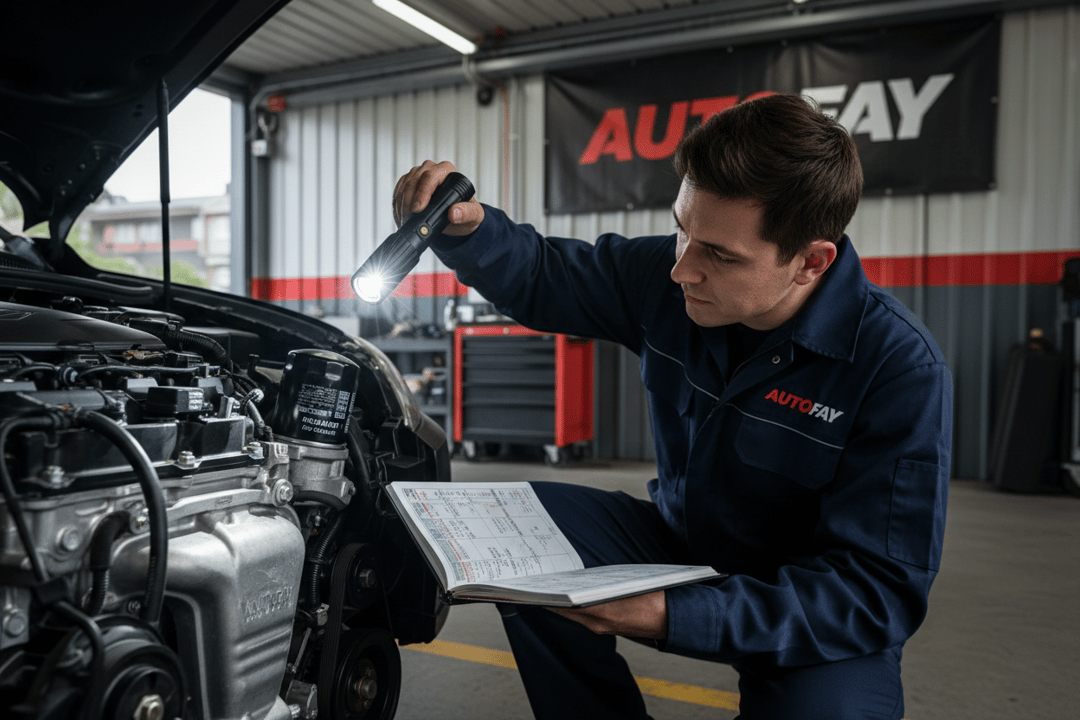
Service history is one of the most cited selling points for used cars in the UAE. Agency maintained, full service history, stamped service book — these phrases appear in almost every premium listing. But service records are only as reliable as the entity that created them. Records can be incomplete, exaggerated, or in some cases, entirely fabricated. A professional inspection provides the independent verification that tells you whether the car's physical condition matches its documented history.
What Service Records Claim vs What Fluids Reveal
A service book stamped for regular oil changes should produce a car with engine oil rated Clean or Dark (acceptable if the change is approaching due). If the oil reads Dirty or Milky despite recent service stamps, either the oil was not actually changed, the wrong oil was used, or there is an underlying engine issue. AutoFay checks engine oil level (Full, Low, Overfilled, Empty, or Sealed Unit) and condition independently — these readings do not lie.
Transmission fluid condition (Good through Contaminated) is another verification point. A service record showing regular transmission service should correspond to fluid that reads Good or Acceptable. Fluid that reads Dirty or has a Burnt Smell contradicts the service claim. Coolant condition (Clean, Dirty, Contaminated, or Oily) should be Clean if the service history shows recent coolant flush. Brake fluid (Clear, Dark, or Contaminated) should be Clear if brake service was recently performed. Each fluid check provides a data point that either supports or contradicts the paper record.
Filters: Simple Verification
Engine air filter (Clean, Dirty, or Needs Replacement) and cabin air filter (Clean, Dirty, or Needs Replacement) are the easiest service claims to verify. A service stamp claiming a recent filter change should produce filters rated Clean. Filters rated Dirty or Needs Replacement on a car with a recent service stamp indicate that the stamp does not match reality. These are inexpensive items — if the seller did not bother replacing filters despite claiming service, what else was skipped?
Drive and accessory belts (Good, Worn, Cracked, or Needs Replacement) have manufacturer-recommended replacement intervals. A car with higher mileage showing belts rated Cracked, despite service records claiming belt replacement at higher mileage, suggests either the replacement did not happen or incorrect parts were used.
Brake and Suspension: Matching Wear to Claims
A service history claiming recent brake service should be reflected in the brake inspection. Front brake pads rated Good (above 50%) match a recent replacement claim. Pads rated Worn (below 25%) contradict it. Brake rotors (Good, Scored, Warped, or Needs Replacement) should be Good or at worst mildly Scored if recently serviced. Brake fluid level should be Full, not Low.
Suspension service claims can be verified through the 22-point suspension inspection. If the service history shows recent shock absorber replacement, the shocks should be rated No Visible Fault — not Leaking or Worn. If the records show a wheel alignment, the inspection should confirm Good alignment rather than Slight Pull or Needs Alignment. Ball joints and tie rod ends claiming recent replacement should show No Visible Fault rather than Worn or Loose.
OBD History: The Digital Paper Trail
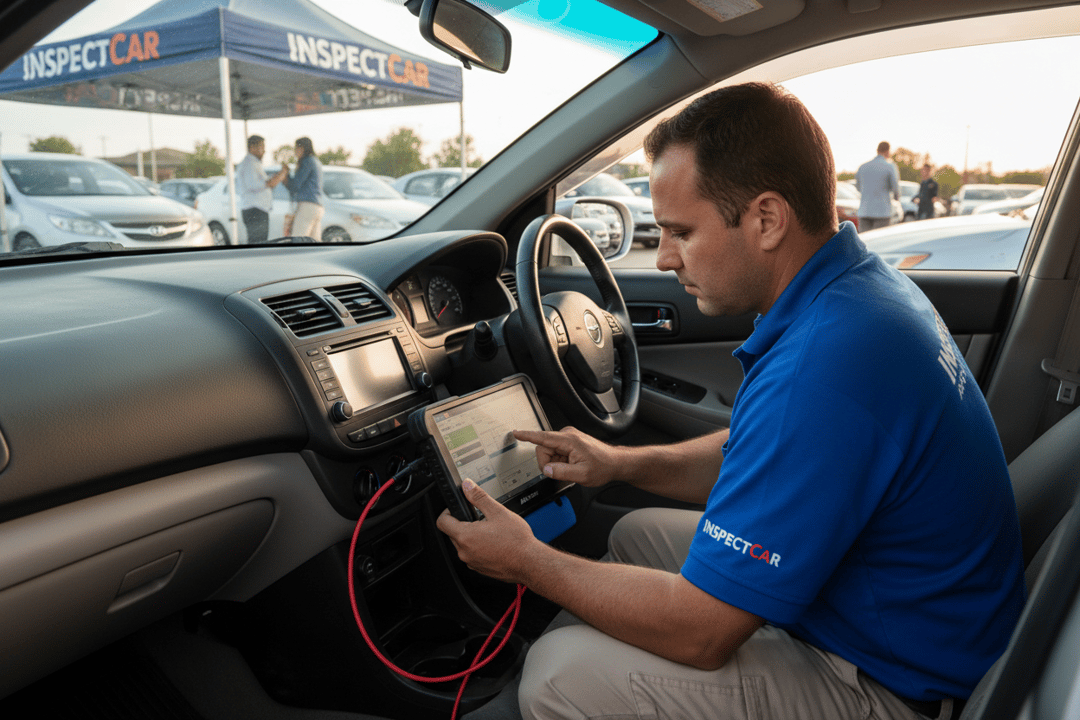
The OBD scanner provides a digital layer of verification. If service records claim that a check engine issue was resolved, the OBD scan should show No Faults for the engine system. If stored codes remain after a claimed repair, either the repair did not address the root cause or the codes were cleared without repair and have returned. The OBD scan checks engine, transmission, ABS, airbag/SRS, and body control module codes — each providing an independent verification against service history claims for those systems.
Readiness monitors are particularly telling. These monitors track whether the engine's self-diagnostic tests have completed since the last code clear. If all monitors show ready, the system has completed its checks and any codes present are genuine findings. If monitors show not ready, the codes were recently cleared — which may be legitimate post-service behavior, or may indicate an attempt to hide persistent faults.
Agency vs Independent Workshop History
Agency (authorized dealer) service history is generally more reliable because authorized workshops follow manufacturer protocols and use genuine parts. Independent workshop records are harder to verify because quality varies enormously. The inspection does not distinguish between who performed the service — it evaluates the result. A car serviced at an independent workshop with Clean oil, Clean filters, Good belts, and No Faults on the OBD scanner has been well maintained regardless of where the work was done.
Conversely, an agency-serviced car with Dirty transmission fluid and Worn belts despite service stamps suggests that not all claimed work was actually performed, or that the intervals between services were too long for UAE driving conditions. The inspection cuts through the brand name on the service stamp and reports the car's actual condition.
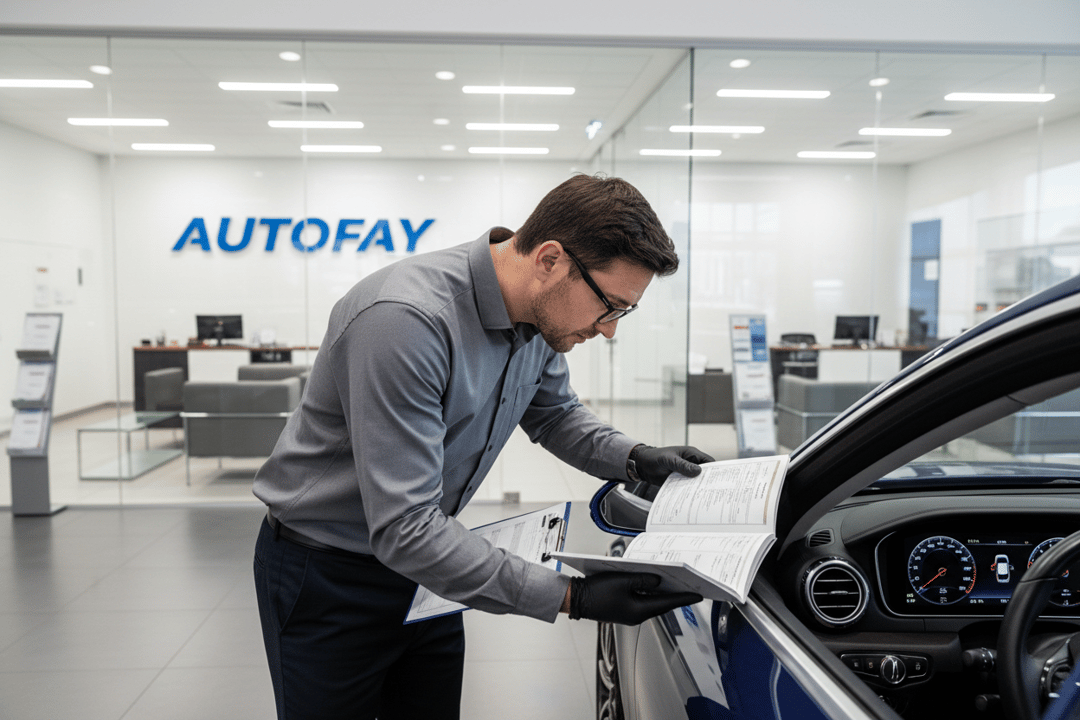
AutoFay inspects 410 checkpoints providing independent verification of any maintenance claims, with HD photos and a detailed PDF report. On-location inspection across all 7 Emirates. Book at autofay.ae or call +971-54-258-4458.


0 Comments
No comments yet. Be the first to share your thoughts!