


Most people think of vehicle inspection as something you do once — when buying a used car. But in the UAE's extreme driving environment, regular inspection catches developing problems before they become expensive repairs or safety hazards. The question is not whether to inspect, but how often — and the answer depends on your specific vehicle and driving pattern.
New Cars (Under 3 Years): Annual Baseline
Vehicles under three years old are generally still under manufacturer warranty and benefit from scheduled dealership service. An annual independent inspection supplements dealer service by checking items that service visits may not cover — body and paint condition, frame integrity, tire age and wear patterns, and a comprehensive OBD scan that reads all system fault codes, not just the ones the dealer chooses to address.
Even new cars develop issues. A stored fault code in the body control module, a repainted panel from a parking lot incident, or a slowly failing blend door actuator that clicks behind the dashboard — these are items that a new car owner might dismiss but should document. An annual inspection creates a condition baseline that makes future changes easy to identify.
Mid-Age Cars (3 to 7 Years): Every 6 Months
This is the sweet spot where regular inspection provides the most value. Warranty coverage is expiring or has expired. Components that were new when you bought the car are now aging. The AC system has worked through several UAE summers. Brake pads and tires may be approaching replacement thresholds. Suspension bushings are degrading. Engine seals may be starting to seep.
A six-month inspection cycle catches these items at the developing stage. Brake pads rated at Average (25-50%) in one inspection can be monitored and replaced before they reach Needs Replacement. Tires approaching their manufacturing age limit can be planned for replacement rather than discovered during a breakdown. Fluid conditions — engine oil, transmission fluid, coolant, brake fluid — are verified twice yearly to ensure maintenance is actually happening on schedule.
Older Cars (Over 7 Years): Every 3 to 6 Months
As vehicles age, the interval between potential problems shortens. A seven-year-old car in the UAE has endured conditions that age components faster than in milder climates. Cooling system components, rubber seals, drive belts, battery health, and suspension wear all accelerate with age. Inspecting every three to six months identifies problems while they are still minor — a seeping valve cover gasket versus a fully leaking one, a weak shock absorber versus a failed one.
The OBD scan becomes increasingly important on older vehicles. As components age, fault codes appear more frequently. Regular scanning creates a history — you can see whether a code is recurring or new, stored or active. This history helps your mechanic diagnose problems more efficiently and avoids unnecessary part replacements based on guesswork.
High-Mileage Vehicles: Mileage-Based Intervals
For vehicles driven more than higher mileage per year, mileage-based inspection intervals make more sense than calendar-based ones. An inspection every 15,000 to higher mileage keeps pace with the rate of wear. Brake pads, tires, fluids, and drivetrain components all wear proportionally to distance driven rather than time elapsed.
High-mileage vehicles also accumulate more transmission stress, more suspension cycles over speed bumps, and more AC compressor run-time. Each inspection documents the progression of wear across all 410 checkpoints, creating a trend that helps predict when major service will be needed.
Event-Based Inspection
Beyond scheduled intervals, certain events warrant inspection: before long road trips, after accidents (even minor ones), when buying or selling, when starting to hear new noises, or when warning lights appear. A pre-trip inspection before Eid travel or summer road trips confirms the car is ready for sustained high-speed driving with a full load. A post-incident inspection after hitting a curb or speed bump hard can reveal suspension or wheel damage that is not immediately obvious.
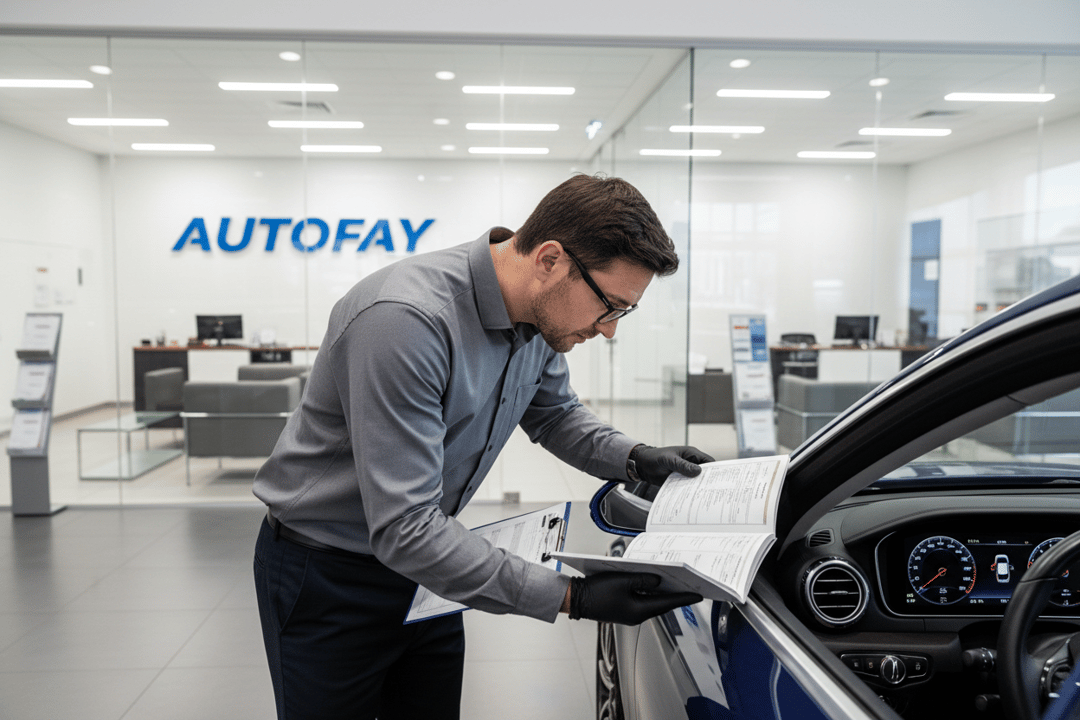
AutoFay checks 410+ checkpoints with HD photos and a detailed PDF report. On-location inspection across all 7 Emirates. Book at autofay.ae or call +971-54-258-4458.




0 Comments
No comments yet. Be the first to share your thoughts!