

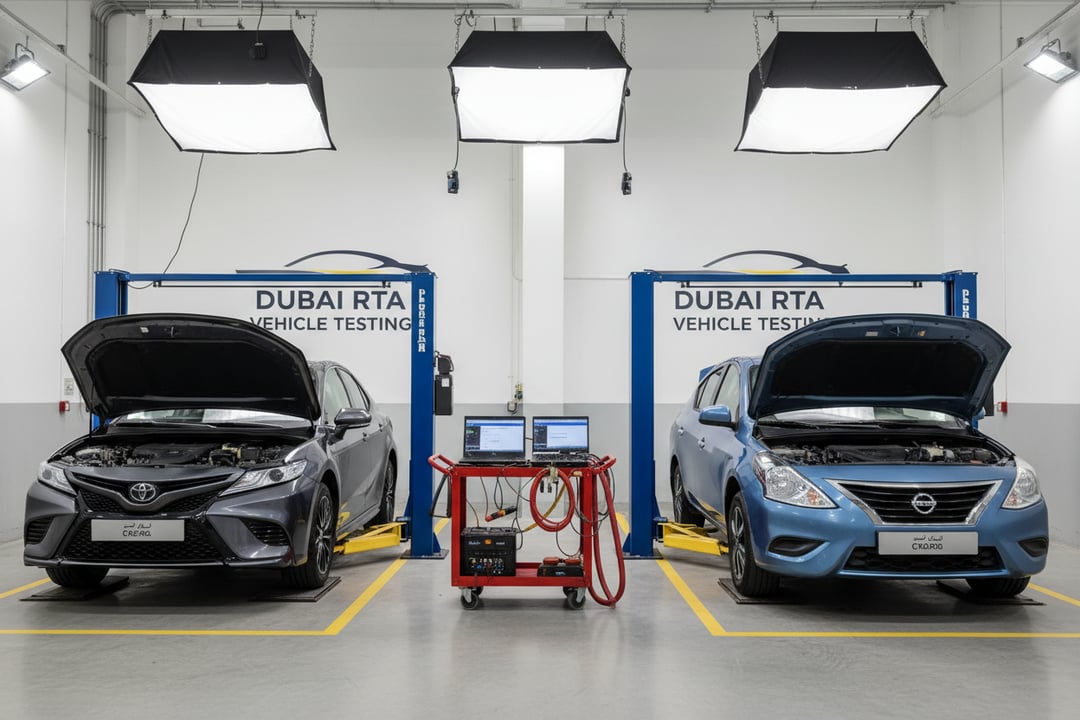
When a buyer weighs a 2020 Toyota Camry against a 2024 Nissan Sunny, the hidden condition of each sedan often decides which model truly fits the road ahead.
What the Inspection Covers
AutoFay begins with Engine Start & Operation, confirming that the Camry’s push‑button start and the Sunny’s remote start ignite cleanly, that idle RPMs stay steady, and that no check‑engine light glows on the gauge cluster.
Body, Paint & Damage receives a panel‑by‑panel audit; each front bumper, hood, fender and door is rated, Repainted, or Replaced, while paint depth is measured to spot a total repaint that could hide prior collision work.
Frame Condition is examined across bumper supports, bulkhead, radiator frame and chassis rails; any rating of Damaged or Repaired on the Camry’s front rail or the Sunny’s rear cross member signals structural repair history.
Glass inspection checks the windshield, side windows and mirrors for chips or aftermarket replacement, because a cracked windshield can compromise both safety airbags and the vehicle’s ability to pass UAE annual tests.
Exterior Lights are for low/high beams, DRL and turn signals; lens haze or replaced bulbs are noted, as diminished illumination affects night driving in desert outskirts.
Doors are opened and closed to assess hinges, rubber seals and power‑window motors; a compromised seal on the Sunny can allow sand to infiltrate the cabin electronics.
Interior assessment records dashboard condition, steering wheel integrity and seat wear; the Camry’s heated seats and the Sunny’s climate‑control buttons are inspected for functional operation.
Digital & Infotainment checks include the touchscreen, Bluetooth pairing and CarPlay/Android Auto compatibility; a non‑responsive infotainment unit often reveals hidden wiring faults.
HVAC performance is measured by cooling output and heater response; in Dubai the AC compressor must sustain full load for ten months a year, so any loss of refrigerant is a red flag.
Under The Hood, the inspector reviews the air filter, battery terminals and alternator output; a weakened 12 V battery in the Camry can cause starting issues on hot days.
Engine health is judged by sound, vibration and exhaust smoke color; the presence of blue smoke on the Sunny would indicate oil consumption beyond normal wear.
OBD Scanner runs across engine, transmission, ABS and airbag modules; stored fault codes without active illumination still point to unresolved electronic glitches.
Fluids are sampled for level and condition; dark coolant in the Camry could signal a failing radiator, while low transmission fluid in the Sunny may lead to gear‑shift harshness.
Cooling System components such as radiator, fans and water pump are pressure‑; a leaking hose in either sedan can cause overheating under UAE summer stress.
Fuel System scrutiny includes the fuel door seal, pump pressure and injector pattern; a weak pump in the Camry often manifests as hesitation during acceleration.
Drivetrain evaluation watches the automatic gearbox for smooth shifts and checks CV joint boots for cracks that let sand infiltrate the bearings.
Brakes are measured for pad thickness, with the Camry’s front pads often above 50 % and the Sunny’s rear pads sometimes dropping below 25 %; low pad percentage shortens stopping distance on sand‑covered roads.
Suspension & Steering inspection records shock absorber leakage, control‑arm bushings and wheel alignment; misalignment after a pothole hit is common in UAE city streets.
Tires & Wheels are examined for tread depth, manufacturing year and TPMS functionality; a mismatched tire size on the Sunny can affect fuel efficiency.
Exhaust & Emissions checks include catalytic converter integrity and O₂ sensor response; a failing sensor can trigger stored OBD codes that affect registration.
Safety & Security systems such as airbags, backup camera and lane‑assist sensors are activated and recorded; any non‑functioning airbag module must be replaced before resale.
Road Test captures acceleration, braking feel, steering response and cabin noise; the Camry’s ride comfort and the Sunny’s wind‑noise level are quantified during a 15‑minute drive.
What Buyers Miss Without Inspection
Hidden OBD fault codes often stay dormant until a sensor fails; a stored ABS code on a Sunny could mean the anti‑lock system will not engage during sudden stops on sandy highways.
Repaired frame rails may look, yet a subtle bend can cause uneven tire wear that only a chassis measurement reveals, leading to premature suspension wear.
Transmission fluid that appears clear may actually be low on additives; without a fluid‑color check the Camry could suffer gear‑shift lag after a few thousand kilometers.
Brake pads measured at less than 25 % on the Sunny will force the owner to replace them within months, increasing maintenance and reducing safety during high‑speed desert overtakes.
Worn door seals allow fine sand to settle on the HVAC evaporator, eventually causing a clogged system that reduces cooling efficiency during the scorching summer months.
UAE‑Specific Considerations
Extreme heat accelerates rubber‑seal aging, so the inspector pays special attention to door and trunk seals on both sedans; a cracked seal on the Camry can let dust into the cabin and degrade electronic connectors.
Sand ingress is a common issue for interior electronics; the Sunny’s infotainment wiring is checked for corrosion, because a single exposed connector can cause intermittent Bluetooth loss.
High ambient temperatures stress the cooling system; radiators on both models are pressure‑, and any sign of coolant discoloration indicates a possible head‑gasket leak that could worsen under UAE summer loads.
Road‑surface abrasiveness in the Emirates leads to faster tire wear; tire tread depth is recorded, and the Camry’s OEM tires often retain more life than aftermarket replacements on the Sunny.
Humidity can affect brake fluid boiling points; the inspector measures fluid clarity and replaces it if cloudiness suggests moisture absorption, a vital step for safe braking on wet coastal roads.
Finally, the inspection records the performance of the AC compressor under full load; a weak compressor in the Sunny will struggle to maintain cabin temperature during midday heat, while a robust Camry unit ensures consistent cooling.
AutoFay evaluates over 250 checkpoints, captures HD photos and provides a detailed PDF report to your device. Inspector comes to the vehicle reaches all seven Emirates; schedule your inspection at autofay.ae or call 971‑50‑8066937.


0 Comments
No comments yet. Be the first to share your thoughts!