

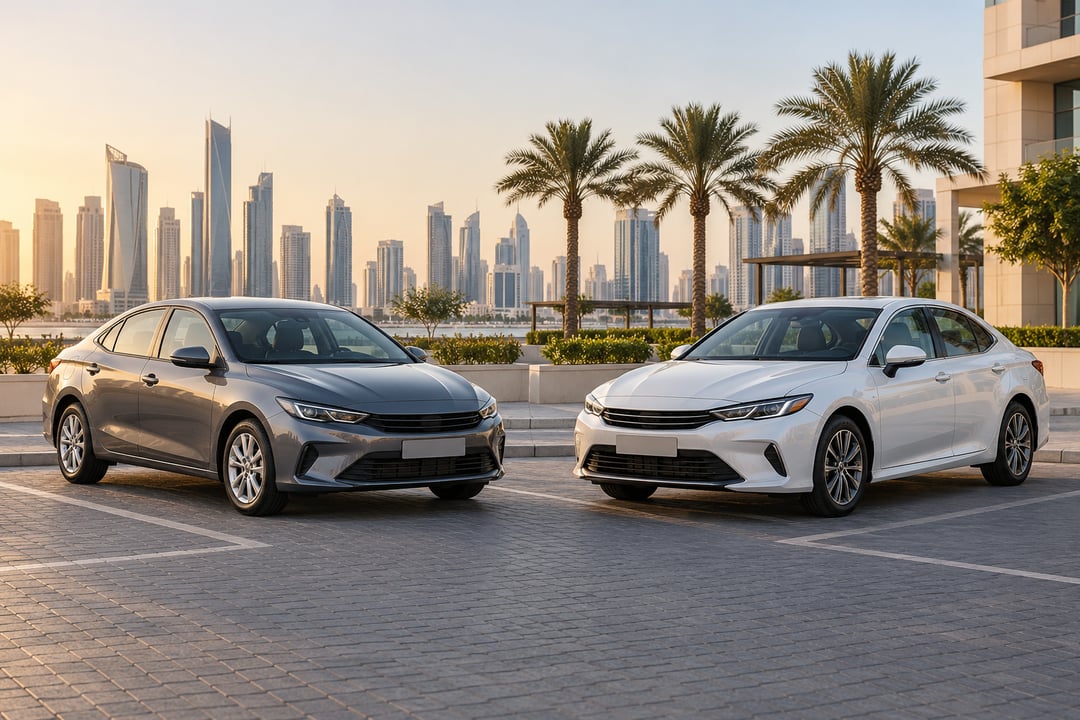
Choosing a 2021 Hyundai Elantra or a 2020 Toyota Camry? Rather than comparing power figures for unidentified grades or assumed failures, establish the two cars and try the comfort, space, parking and equipment you need. Condition, records and necessary work can change the value of a price difference more than badge or model year.
Identify what you are comparing first
Hyundai's official 2021 Elantra announcement introduced a new generation and discussed different equipment and versions, including a hybrid. A launch release does not establish those features on every UAE car. Match the VIN, grade, supplying market and correct manual.
Do the same for the Camry: establish actual engine, transmission and equipment from documents and the relevant provider. No universal power, economy or equipment values for 2020 cars are established here. Confirm whether screens, cameras and wheels are original or added before treating them as advantages.
Assess the cabins against your routine
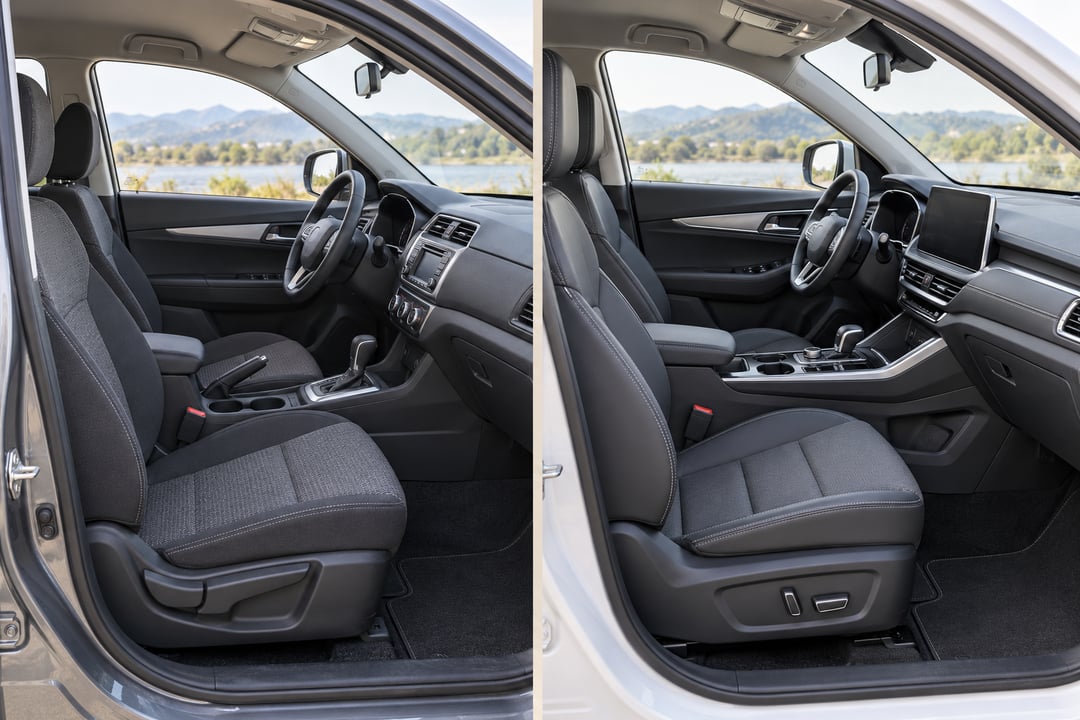
Set your driving position in both cars and try visibility, climate controls and control access while stationary. Sit behind the adjusted seat and load the same bags. A size category alone cannot establish comfort for a set passenger count or child-seat compatibility; try your actual requirements according to seat and vehicle instructions.
In a safe, permitted parking area, assess door opening and luggage access. You may prefer one cabin and find the other more convenient in your parking space. Base that conclusion on practical assessment rather than another grade's dimensions or appearance.
Record observations without assuming faults
With permission on a safe route, observe gentle movement, stopping, steering and AC, recording noise, vibration or warnings. Weak cooling does not automatically prove a failed compressor seal, and transmission response alone cannot diagnose an internal component. Seek appropriate explanation and diagnosis for significant concerns.
Review servicing, repair invoices and postponed recommendations, comparing dates and mileage. This guide assumes neither failure at a fixed distance nor concealment by a seller. Keep unexplained observations on a clear list to resolve before signing.
A decision sheet balancing comfort and cost
| Question | Evidence to obtain |
|---|---|
| Which is more comfortable for me? | Try the seat, visibility, controls and actual passengers. |
| Is useful equipment present and working? | Grade information and function checks under the manual. |
| Is the price difference understood? | Asking prices, records and quotations for diagnosed work. |
| What remains unresolved? | A list of concerns, inspection limitations and further assessment needed. |
Estimate fuel from your distance, substantiated consumption and current prices, then add actual expenses. Avoid generic resale percentages or service costs. If neither car's condition is clear, another example may be preferable to forcing a winner.
How AutoFay helps you compare
An experienced inspector comes to the vehicle for a visual, non-intrusive, non-mechanical inspection, with computer diagnostics and functional observations according to package and conditions. Paint and visible underbody areas may be assessed where safe access is available within the package scope.
The inspection does not dismantle components, examine internal engine or transmission parts, or perform repairs. Some observations need workshop diagnosis. A report cannot guarantee detection of every fault or future reliability. Compare observed condition and report limitations alongside records and your everyday-use assessment before deciding.
Prepared by AutoFay. Editorial update: October 28, 2026.




0 Comments
No comments yet. Be the first to share your thoughts!