

Large sport utility vehicles dominate the UAE automotive landscape, offering commanding presence and practical utility. However, owning a high-riding vehicle in the Emirates often comes with a financial reality check: elevated insurance premiums. Insurers assess risk based on the aggregate cost of repairing a vehicle, and SUVs frequently represent a higher liability than their sedan counterparts. Understanding the mechanics behind these costs requires a closer look at vehicle specifications and the technical condition of the asset. A thorough vehicle inspection serves as a critical tool for both buyers and owners to document a vehicle's true state before renewing policies or finalizing sales.
The Correlation Between Vehicle Type and Premiums
Insurance providers categorize vehicles based on their repair expenditure and safety profiles. SUVs generally possess higher curb weights and larger engine displacements, which directly correlate with increased fuel consumption and higher repair labor rates. When a collision occurs, SUVs exert more force on impact, leading to greater damage to surrounding infrastructure and other vehicles. Consequently, insurers assign a higher risk coefficient to these vehicles to cover potential payouts for third-party liability and comprehensive repairs.
The specific make and model also influence the base premium. Luxury SUVs with advanced safety features may initially qualify for discounts, but their replacement parts often command higher prices than standard economy models. Furthermore, the likelihood of off-road usage in the UAE terrain contributes to wear and tear, which insurers view as a contributing factor to the vehicle's overall depreciation. Owners must recognize that the initial purchase price of an SUV is only one component of the total cost of ownership, with insurance renewals often reflecting the vehicle's market value and repair complexity.
- Vehicle Weight: Heavier vehicles cause more damage in collisions, increasing third-party liability costs.
- Engine Size: Larger displacement engines often require specialized diagnostic equipment and expertise for repairs.
- Avg. Repair Costs: SUVs typically incur higher labor hours due to complex suspension systems and body structures.
Structural Integrity and Safety Risks
For insurance purposes, the structural integrity of a vehicle is paramount. The chassis, or frame, dictates the safety of occupants during a collision and the vehicle's ability to absorb impact energy. Insurers scrutinize whether the vehicle has undergone significant structural repairs, as compromised frames can lead to alignment issues, handling instability, and accelerated wear on suspension components. A vehicle with a history of frame damage is statistically more likely to suffer from future mechanical failures or be deemed unsafe to drive.
Professional inspection services evaluate the frame using rigorous standards. Technicians examine the rails, pillars, and floor pan to ensure they remain within manufacturer specifications. Any deviation from these measurements indicates that the vehicle may have been involved in a severe accident or subjected to harsh off-road impacts. When a vehicle presents a history of frame issues, insurers may either classify it as a high-risk asset or refuse to offer comprehensive coverage, forcing the owner to seek third-party-only policies which offer minimal financial protection.
Engine Health and Repair Liability
The engine is the most expensive component of any vehicle, and its condition directly impacts insurance premiums. Insurers calculate the potential cost of engine failure, which can range from a simple sensor replacement to a full engine rebuild or replacement. A vehicle with a history of poor maintenance, such as burnt oil, coolant leaks, or unusual smoke emissions, presents a higher risk of significant failure. This risk translates into higher premiums to offset the potential of a total loss claim.
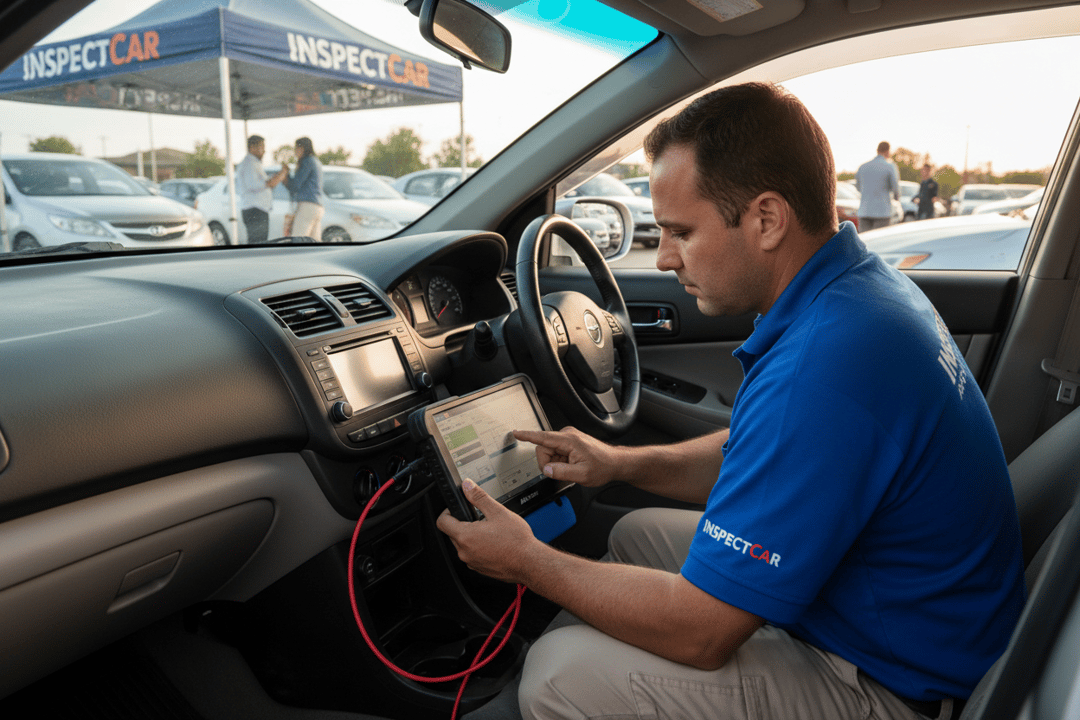
Inspection reports provide evidence of engine health through several critical diagnostics. Technicians assess engine mounts to ensure smooth operation and listen for abnormal sounds that indicate bearing wear or piston issues. They utilize On-Board Diagnostics (OBD) to scan for hidden error codes related to the engine, transmission, ABS, or airbag systems. A clean OBD scan report acts as a bargaining chip during insurance negotiations, proving to the provider that the vehicle is mechanically sound and unlikely to incur expensive repair claims.
- Mechanical Noise: Knocking or ticking sounds suggest bearing wear, leading to higher risk assessments.
- Smoke Emission: Blue smoke indicates oil burning, while black smoke suggests fuel mixture issues.
- Engine Mounts: Worn mounts cause excessive vibration and can damage other components during operation.
The Value of a Pre-Purchase or Renewal Inspection
Obtaining an independent inspection report serves as an objective benchmark for vehicle condition. This documentation protects the owner from purchasing a "lemon" and provides the insurance company with verified data regarding the vehicle's mileage and mechanical state. Without such data, insurers rely on general market averages, which may not reflect the specific condition of the vehicle. A detailed report detailing 410+ checkpoints across 25 categories bridges this information gap.
Inspection companies typically offer on-location inspections, allowing the vehicle to be assessed at a location convenient for the owner. This flexibility ensures that the inspection occurs under standard driving conditions. The resulting report, often including HD photos and PDF documentation, is admissible evidence in disputes regarding pre-sale condition. By providing the insurer with a verified report that confirms the vehicle is in good mechanical standing, owners can justify a lower premium based on low risk rather than inflated estimates.
Critical Inspection Categories That Matter
Insurers focus heavily on operational safety and wear-and-tear items that lead to accidents or failures. A comprehensive inspection will break down these specific areas to give a complete picture of the vehicle's reliability. Understanding these categories helps owners maintain their vehicles to reduce long-term costs.
| Inspection Category | Key Factors Evaluated | Impact on Insurance/Risk |
|---|---|---|
| Brakes | Pad percentage rating, disc thickness, fluid condition | Worn brakes increase accident liability and total loss potential. |
| Tires | Manufacturing year, tread depth, cracking (dry rot) | Old or bald tires are a primary cause of loss-of-control accidents. |
| Suspension | Shock absorbers, bushings, ball joints, steering alignment | Bad suspension affects handling and causes rapid tire wear claims. |
| Fluids | Engine oil level/color, coolant condition, brake fluid | Contaminated fluids cause internal engine damage and overheating. |
Selecting the Appropriate Inspection Package
Not all inspections offer the same depth of analysis, and choosing the right package depends on the owner's specific needs. While basic checks are available, comprehensive evaluations often yield the most useful data for insurance negotiations. AutoFay provides a tiered service structure designed to meet different budgets and requirements.
For a quick assessment of electronic systems, the Computer Diagnostic package is available for AED 99. This service checks engine, transmission, ABS, and airbag codes but does not cover physical wear. The Body & Computer package, priced at AED 250, adds a visual inspection of the exterior and interior. However, the most thorough option is the Comprehensive package, available for AED 299. This service covers the on-location inspection of body panels, frame integrity, engine sound, mounts, brakes, suspension, tires, fluids, and a road test. For an SUV owner looking to prove low risk to an insurer, the AED 299 Comprehensive package offers the necessary documentation to support a lower premium.
Conclusion: Documentation is Protection
The insurance premium for an SUV in the UAE is rarely arbitrary; it is a calculated reflection of the vehicle's physical condition and repair potential. By utilizing professional inspection services, owners can move beyond estimated risks and present hard evidence of a well-maintained vehicle. A verified inspection report detailing the frame, engine health, brakes, and suspension provides the authority needed to negotiate fair premiums.
Regular maintenance and documentation are the most effective strategies for controlling insurance costs. Ensuring that a vehicle passes a rigorous 410+ checkpointlist before renewal demonstrates to insurers that the asset is in optimal condition. Owners should prioritize vehicle health to avoid the long-term financial burden of high premiums and potential claim denials.
AutoFay inspects 410+ checkpoints with HD photos and PDF report. Book at autofay.ae or call +971542584458

0 Comments
No comments yet. Be the first to share your thoughts!