

The pickup truck market in the United Arab Emirates represents a significant segment of the automotive landscape, catering to both commercial enterprises and off-road enthusiasts. Unlike passenger vehicles, pickups carry distinct insurance considerations due to their structural design, payload capacity, and usage patterns. Insurance premiums for these vehicles are rarely arbitrary; they are calculated based on a complex risk assessment that includes the vehicle's specifications and its physical condition. Understanding how these factors intersect is essential for owners and buyers seeking to manage their financial exposure.
The Impact of Vehicle Class and Specifications
Insurance providers categorize pickups based on engine displacement, chassis configuration, and intended usage. Vehicles with larger engines, such as V8 powertrains often found in heavy-duty models, command higher premiums due to increased acceleration capabilities and the potential for greater damage in a collision. Furthermore, the classification of a vehicle as a "light commercial" or a "private use" vehicle alters the premium structure, as commercial classifications typically involve higher liability limits and different risk profiles regarding cargo and passenger transport.
The suspension design of a pickup also plays a role in premium calculation. Models equipped with heavy-duty suspension kits intended for off-roading are statistically associated with a higher frequency of accidents, particularly in rural areas or during desert excursions. Insurers view these vehicles as higher-risk assets, necessitating special policy endorsements that reflect the likelihood of damage to undercarriage components and tires.
How Inspection Findings Influence Insurance Rates
A vehicle's true risk profile is often hidden beneath its exterior paint and within its mechanical systems. Insurance companies rely on historical data, but a pre-inspection report provides tangible evidence of a vehicle's current condition. If a vehicle has been in an accident, the structural integrity may be compromised, leading to a higher risk of failure during a subsequent impact. This structural vulnerability allows insurers to justify elevated premiums or specific exclusions in the policy wording.
Additionally, the mechanical health of the braking system and suspension directly correlates with the likelihood of a claim. Worn brake pads or faulty suspension components increase the risk of a collision caused by loss of control. When a vehicle presents a high risk of mechanical failure, insurers adjust the premium to account for the potential payout for repair or replacement parts. A professional inspection identifies these liabilities before a policy is finalized, ensuring the premium reflects the reality of the vehicle's state.
Key Inspection Categories and Their Implications
A comprehensive inspection evaluates specific subsystems that dictate a vehicle's operational safety and longevity. The following categories are critical for determining a pickup's insurability and premium rate:
- Body and Paint: Inspectors examine every panel for panel gaps, rust, and signs of prior repainting. Discrepancies in paint color or texture can indicate a history of collision damage, which redirects the insurer's focus to structural repairs rather than cosmetic ones.
- Frame Integrity: The chassis frame is the backbone of the vehicle. Inspectors look for bending, welding, or corrosion on the rails and pillars. A compromised frame is a major red flag for insurers, as it may not crumple predictably during a crash, leading to higher liability risks.
- Engine Performance: Operators listen for unusual noises and check for smoke during a road test. Excessive smoke indicates internal wear, while knocking sounds suggest bearing failure. These findings suggest a higher probability of mechanical breakdown, which can impact the comprehensive coverage portion of the policy.
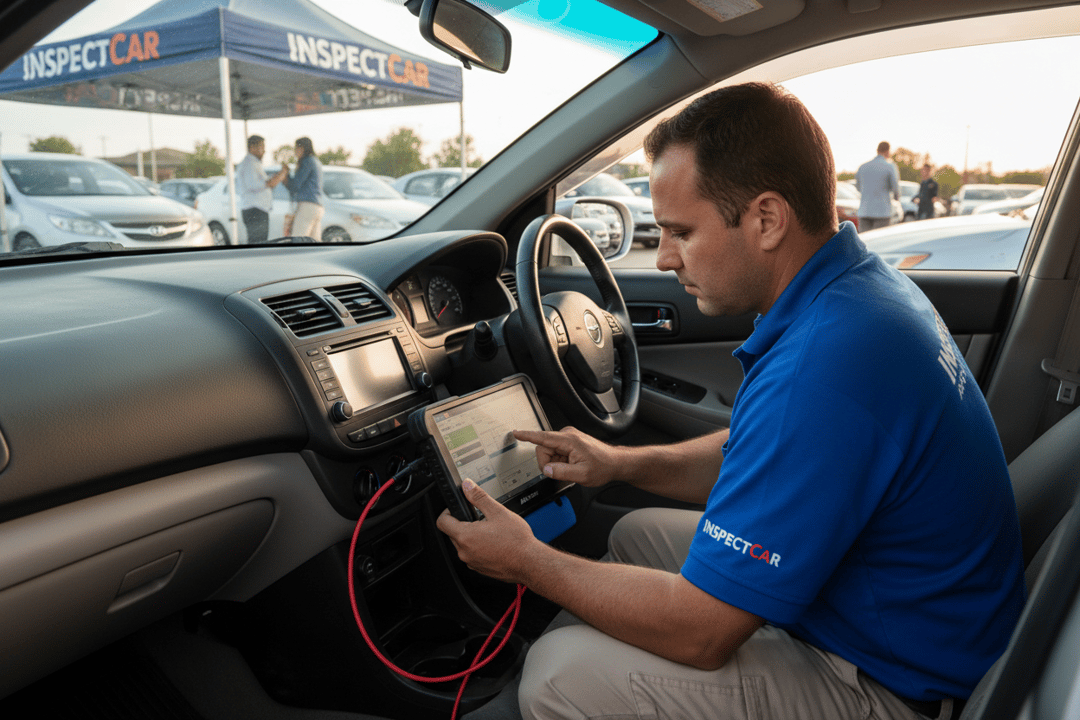
- Diagnostic Scanning: Using an OBD scanner to check for error codes in the engine, transmission, ABS, and airbag systems reveals hidden electronic faults. Faulty sensors can trigger unnecessary warning lights, which may be misinterpreted by mechanics and lead to increased repair costs over the vehicle's life.
- Brakes and Suspension: Technicians assess the percentage of remaining pad life and the condition of shock absorbers. Worn components reduce the vehicle's stopping distance and ride stability, increasing the statistical probability of an accident claim.
- Tires and Fluids: The manufacturing date and tread depth of tires are inspected to ensure they meet safety standards. Low tread height is a direct safety hazard. Similarly, fluid conditions—engine oil, coolant, and brake fluid—are checked to ensure the vehicle operates within acceptable parameters.
AutoFay Pricing and Package Value
Investing in a professional inspection before purchasing insurance or finalizing a vehicle acquisition acts as a financial safeguard. AutoFay offers a tiered inspection service designed to cover specific needs without unnecessary expense. The pricing structure reflects the depth of analysis provided:
| Package | Price (AED) | Inspection Scope |
|---|---|---|
| Computer Diagnostic | 99 | Focuses on electronic fault codes across the engine, transmission, ABS, and airbag systems. This package identifies hidden electronic issues that might not be visible during a visual walk-around. |
| Body & Computer | 250 | Combines a rigorous visual examination of the bodywork with the diagnostic scan. This package identifies panel damage, repainted sections, and structural concerns alongside electronic faults. |
| Comprehensive | 399 | Includes all the above plus a detailed road test, brake assessment, suspension check, and fluid analysis. This is the most thorough option for high-value pickups and commercial vehicles. |
Paying for the Computer Diagnostic AED 99 or the Body & Computer AED 250 packages provides a documented history of the vehicle's health. This report can be presented to insurance brokers to negotiate a premium that accurately reflects the vehicle's condition, rather than assuming a high-risk baseline.
Preparing Your Vehicle for Insurance Assessment
Before scheduling an inspection, ensure the vehicle is accessible for a on-location inspection. AutoFay operates across all 7 Emirates, bringing the inspection to the customer's location. A road test is a mandatory component of the process, as it evaluates the vehicle's dynamics in real-world conditions.
Owners should be prepared to discuss specific findings with the inspector. For example, if the inspection reveals that a suspension component is nearing the end of its life, this information should be disclosed to potential insurers. While full disclosure might seem counterintuitive, accurate data allows insurers to price the risk correctly. Concealing known issues can lead to policy cancellation or claim denial, resulting in significantly higher costs in the long run.
Understanding the correlation between vehicle condition and insurance cost is a fundamental aspect of vehicle ownership. By utilizing a professional inspection service to verify the physical state of a pickup, owners ensure that their insurance premiums are based on facts rather than assumptions.
AutoFay inspects 410+ checkpoints with HD photos and PDF report. Book at autofay.ae or call +971542584458


0 Comments
No comments yet. Be the first to share your thoughts!