

Minivans in the UAE represent a distinct market segment, balancing high utility with significant financial exposure for owners and insurers alike. Unlike sedans or coupes, these vehicles are statistically more expensive to repair and possess higher repair labor hours due to complex mechanical architectures. Insurance premiums for minivans in the Emirates are not arbitrary; they are calculated based on the vehicle's tangible risk profile. This profile is heavily influenced by the vehicle's physical condition, which is determined by rigorous inspection processes. Understanding how vehicle type dictates cost and how inspection findings alter rates is essential for any minivan owner looking to manage their financial liability effectively.
The Mechanics of Minivan Insurance Premiums
Minivans typically command higher insurance premiums in the UAE due to their higher repair costs and greater theft risk. Insurers assess the likelihood of a claim based on the vehicle's value, its tendency to be involved in accidents due to size, and the cost of spare parts. A vehicle's "asset value" is fluid, changing based on its mechanical health and accident history. When a minivan is involved in a collision, the structural complexity often means that a seemingly minor fender bender results in extensive chassis repair.
The engine and transmission units in minivans are often larger and more expensive than those in standard passenger cars. If a critical component fails, the replacement cost and the labor required to install them drive up the insurer's payout. Furthermore, minivans are frequently used for commercial purposes, such as school transport or delivery services, which statistically increases the mileage and wear on the vehicle, contributing to a higher frequency of claims.
How Inspection Findings Alter Insurance Rates
Insurers rely on inspection data to determine a vehicle's Actual Cash Value (ACV) and its insurability. A vehicle with a clean inspection report indicates a lower risk of future mechanical failure and a higher probability of surviving a collision without being totaled. Conversely, findings that suggest significant wear or previous severe damage will lower the perceived value of the vehicle and subsequently lower the premium offered by the insurer.
For minivan owners, an inspection is not merely a formality; it is a tool for risk mitigation. If a vehicle has a history of accident damage involving the frame, the insurer may view it as a "write-off" candidate in the event of a total loss. This perception forces the owner into a higher-risk bracket or makes insurance coverage difficult to obtain. Detailed documentation of a vehicle's current state provides leverage in negotiations, ensuring that the insurance payout reflects the vehicle's true condition rather than a generic valuation.
Engine and Transmission Health: Core Risks
The engine and transmission are the heart and soul of any vehicle, and their health is the most significant factor in determining long-term insurance liability. A failing engine or transmission drastically reduces a minivan's value and increases the likelihood of an on-road breakdown. Insurers assess the risk of engine failure based on visual cues and diagnostic data.
A thorough inspection will evaluate the engine for fluid leaks, unusual noises, and smoke emissions. White smoke often indicates a blown head gasket, which can be a catastrophic and costly repair. Blue smoke suggests burning oil, pointing to internal wear. The inspection must also check engine mounts; if these fail, the engine can shift violently, causing significant damage to the chassis and surrounding components during operation.
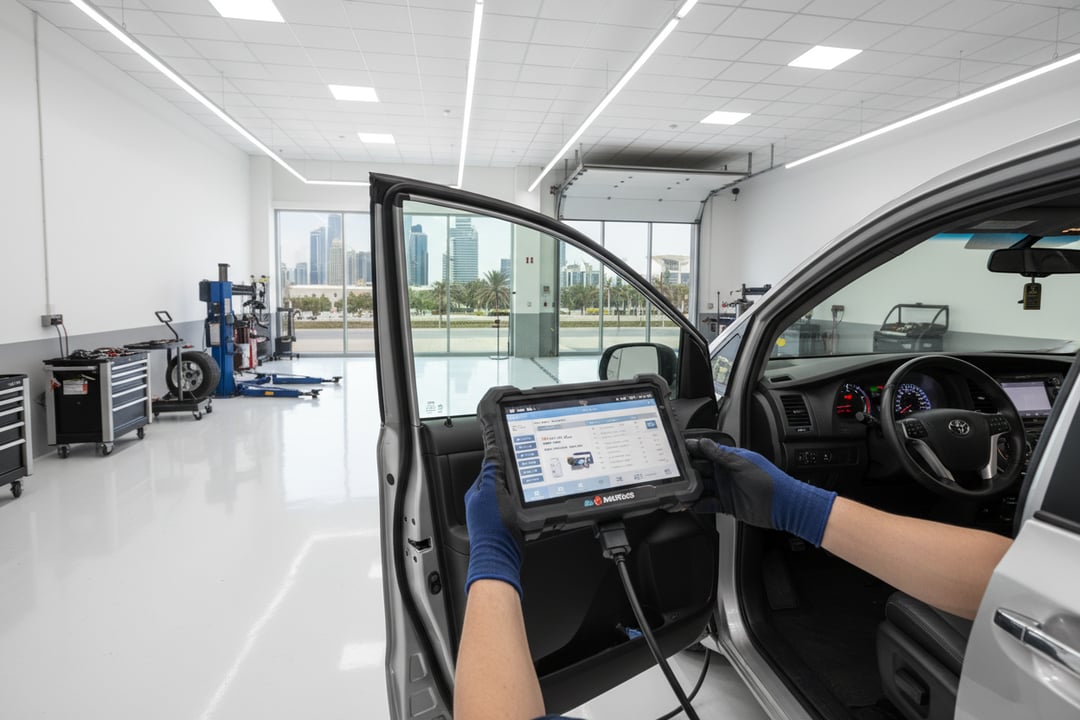
To accurately diagnose these issues, a Computer Diagnostic scan is imperative. This process reads the vehicle's onboard computer system to identify error codes related to the engine, transmission, ABS, and airbag systems. Identifying these faults early prevents sudden mechanical failure and provides a clear audit trail of the vehicle's maintenance history.
Structural Integrity and Frame Assessment
For minivans, structural integrity is non-negotiable. The safety of passengers relies on the vehicle's frame maintaining its original geometry, especially in the event of a rollover or high-impact frontal collision. Insurers scrutinize frame condition strictly because a compromised frame can lead to uneven tire wear, steering misalignment, and reduced crash protection.
Professional inspection protocols involve a detailed examination of the frame rails, pillars, and floor pan. Even a small bend in a structural pillar can render the vehicle unsafe. If a minivan has been in an accident, the repair process must include frame straightening and welding, which alters the vehicle's manufacturing tolerances. A experienced inspector will identify whether the frame has been repaired or if there are signs of previous welding or modification that might not be visible to the naked eye.
Visual Condition: Body, Paint, and Panel Alignment
The visual condition of a minivan directly impacts its aesthetic value and the perceived quality of its repairs. Insurance payouts often cover cosmetic damage, but the quality of those repairs determines the vehicle's future appeal and safety. Panels that have been repainted over without proper preparation can hide underlying rust or structural damage.
A comprehensive inspection covers the body and paintwork on a panel-by-panel basis, classifying each section as original, recently repainted, or poorly repaired. Discrepancies in paint color, texture, and gloss level between adjacent panels are immediate indicators of collision damage. Furthermore, the inspection assesses panel gaps; excessive gaps between doors and the body suggest that the vehicle has been damaged and poorly repaired.
For a complete assessment of the vehicle's mechanical and physical state, the Body & Computer package offers a robust solution. This service combines the visual scrutiny of the bodywork with the diagnostic capabilities of the onboard computer, providing a holistic view of the vehicle's condition.
Suspension, Brakes, and Tires: The Safety Matrix
The condition of the suspension, brakes, and tires is critical for the safety of the occupants and the accuracy of the insurance valuation. Worn suspension components can affect the vehicle's handling, leading to increased stopping distances and potential loss of control. Tires are the only point of contact between the vehicle and the road, and their age and tread depth are vital indicators of the vehicle's general maintenance level.
Inspections assess brake pad wear percentages, brake disc condition, and the status of all braking sensors. Even a small amount of brake fluid leakage can compromise the braking system. Suspension components, including shock absorbers and ball joints, must be checked for play and fluid loss. Tires are rated based on their manufacturing year and tread depth; tires manufactured more than five years old, regardless of tread depth, are considered unsafe and must be replaced.
Optimizing Your Inspection Strategy
To fully understand the condition of a minivan, a detailed inspection covering all 410+ checkpoints across 25 categories is necessary. The complexity of minivans requires a service that goes beyond a visual walk-around. Owners must choose an inspection package that matches their specific needs to capture accurate data without unnecessary expense.
The Comprehensive package provides the highest level of detail, covering every critical system from the engine to the undercarriage. This is the optimal choice for high-value minivans or vehicles with a complex service history. It ensures that no corner is missed, providing a complete document suitable for insurance negotiations or resale.
For routine maintenance checks or pre-purchase assessments, the Computer Diagnostic and Body & Computer packages offer targeted insights. These packages focus on the most critical systems while still providing a thorough evaluation of the vehicle's condition. The on-location inspection offered across all 7 Emirates ensures that these inspections can be conducted at the owner's location, adding convenience and minimizing vehicle downtime.
| Inspection Package | Price (AED) | Primary Focus |
|---|---|---|
| Computer Diagnostic | 99 | OBD scan for engine, transmission, ABS, and airbag codes. |
| Body & Computer | 250 | Visual body inspection + Computer Diagnostic + Paint analysis. |
| Comprehensive | 399 | Full 410+ checkpoint inspection including frame, fluids, suspension, and road test. |
The decision to invest in a professional inspection is a strategic move that directly influences the financial outcome of insurance claims and vehicle valuation. By understanding the specific data points that insurers value, minivan owners can accurately assess the risk associated with their vehicles. Transparency regarding the vehicle's condition through a professional inspection report prevents disputes and ensures fair compensation.
Minivan owners operating in the UAE must recognize that vehicle type significantly impacts risk, and physical condition dictates the severity of that risk. Whether preparing for a new insurance policy or assessing a used vehicle, the quality of the inspection data is the deciding factor. An inspection that covers 410+ checkpoints with HD photos and a detailed PDF report serves as the definitive record of the vehicle's state.
AutoFay inspects 410+ checkpoints with HD photos and PDF report. Book at autofay.ae or call +971542584458


0 Comments
No comments yet. Be the first to share your thoughts!