

The allure of a used convertible in the UAE is undeniable, offering open-air driving experiences across seven emirates. However, the conversion process from a coupe to a soft-top or hard-top vehicle fundamentally alters the vehicle's structural architecture. A visual walkaround is insufficient to uncover hidden weaknesses that could compromise safety or lead to expensive failures. Professionals must scrutinize the chassis, roof mechanism, and electrical systems with a strict methodology. This checklist outlines the critical areas requiring rigorous evaluation before finalizing any transaction.
Analyzing Structural Integrity and Bodywork
The most critical difference between a standard coupe and a convertible is the loss of roof rigidity. The A-pillars, which house the windshield and roof hinges, are the primary load-bearing structures. Any damage here can transfer stress to the windshield and steering column, compromising occupant safety during a collision. Inspectors should look for misalignment between the roof header and the A-pillar, as gaps indicate structural deformation.
Panel-by-panel evaluation is necessary to determine the history of the vehicle. Repainted panels suggest past repairs that may have been performed without proper structural straightening. AutoFay’s inspection methodology includes detailed "Body & Computer" services that cover 25 specific categories, ensuring every panel is compared to factory specifications. Paint thickness gauges reveal whether a panel has been filled or refinished, a common indicator of accident damage that is invisible to the naked eye.
Operational Testing of the Roof Mechanism
The roof mechanism is the heart of a convertible, and its failure renders the vehicle undrivable. Inspectors must operate the roof multiple times in both directions to identify mechanical binding, grinding noises, or slow operation. The motor should engage instantly without hesitation. If the motor labors, it suggests worn gearboxes or a failing relay that will likely fail immediately after purchase.
Water ingress is a major issue in the humid climate of the UAE. A thorough examination of the weatherstripping—rubber seals along the window glass and roof boot—is mandatory. Even minor tears allow humidity to penetrate the cabin, leading to mold growth and electrical short circuits in the dashboard electronics. A leak test using a garden hose is the only definitive way to verify the integrity of the seals, a service covered under detailed condition checks.
Engine Health and Diagnostic Scanning
A convertible’s electrical load is higher than a standard coupe due to the roof motor, heated glass, and seatbelt tensioners. Engine mounts must be inspected for excessive play, as vibrations from the engine are transmitted directly to the chassis. Excessive vibration can loosen the roof mechanism over time, creating a cycle of mechanical failure.
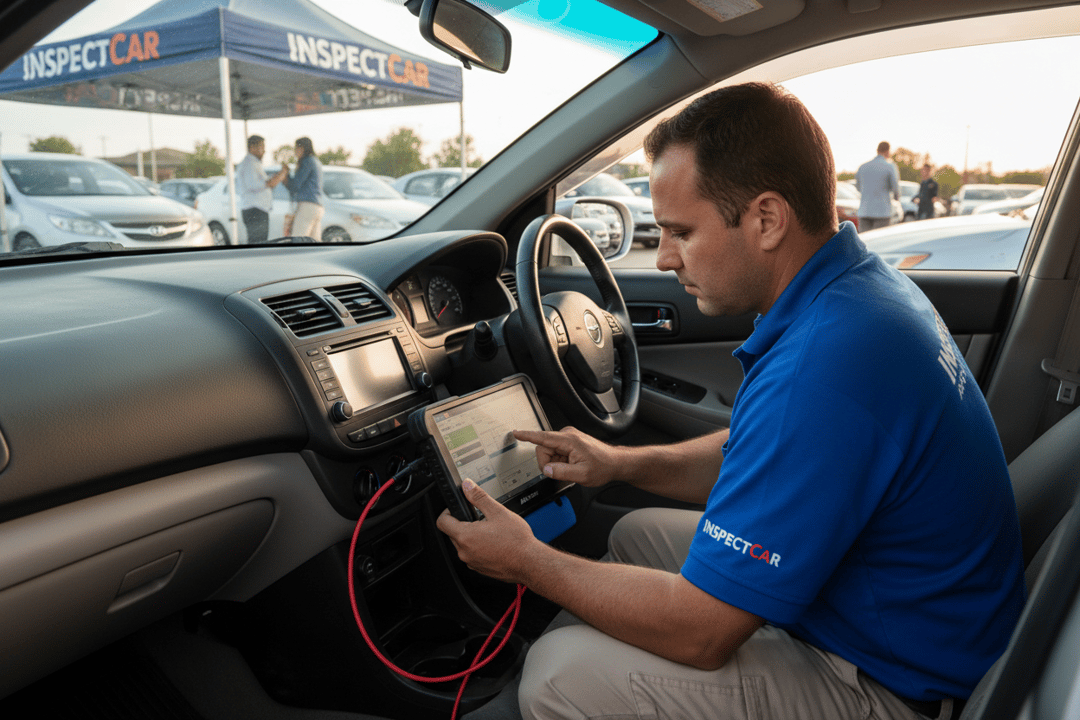
Standard test drives often miss hidden faults caused by sensor errors. An On-Board Diagnostics (OBD) scan is essential to retrieve fault codes from the engine, air conditioning system, anti-lock brakes, and airbag modules. A faulty ABS sensor, for example, can disable brake performance, while an HVAC code indicates a failing compressor. Professional scanning tools provide the data necessary to predict maintenance costs that a casual inspection would miss.
Suspension and Chassis Dynamics
Removing the roof reduces the vehicle's torsional stiffness, causing the chassis to flex more during cornering. This increased flex places higher stress on suspension bushings and ball joints. Inspectors must listen for clunking noises over bumps, particularly at low speeds, which indicate worn rubber mounts or loose chassis components.
Alignment is another critical factor. Because the roof structure dictates the geometry of the front suspension, a collision or frame damage that went unnoticed can cause the vehicle to pull to one side even with new tires. A four-wheel alignment check ensures the vehicle drives straight and prevents uneven tire wear. Suspension components degrade faster in convertibles due to the lack of a rigid roof to absorb road shock, making this a high-priority inspection item.
Electrical Systems and Safety Features
The seatbelt mechanism in a convertible is often more complex than in a fixed-roof vehicle to ensure proper tensioning when the roof is raised. Inspectors must test all seatbelts, including the rear three-point belts, to ensure they lock correctly upon rapid pulling. The rollover sensors and airbag deployment logic must also be verified via the OBD system to ensure the safety system will function during a rollover incident.
Headlight aim is frequently altered during roof removal because the front suspension sags under the new weight distribution. Misaligned headlights can blind oncoming drivers and reduce visibility, making a headlight aim check a safety necessity. Additionally, all exterior lighting, including the "top up/down" brake lights, must be functional, as inoperative brake lights are a guaranteed traffic violation in the UAE.
Inspection Packages and Pricing
Investing in a professional inspection prevents the purchase of a vehicle with hidden structural or mechanical defects. Choosing the right level of scrutiny depends on the vehicle’s age and condition. Below is a breakdown of the available inspection packages designed to cover these specific risks.
| Package Name | Price (AED) | Inspection Scope |
|---|---|---|
| Computer Diagnostic | 99 | Engine and transmission fault codes, ABS, and airbag status. |
| Body & Computer | 250 | Panel-by-panel paint check, frame integrity, OBD scan, and road test. |
| Comprehensive | 399 | Full 410+ checkpoints including fluids, tires, suspension, and frame analysis. |
AutoFay inspects 410+ checkpoints with HD photos and PDF report. Book at autofay.ae or call +971542584458

0 Comments
No comments yet. Be the first to share your thoughts!