

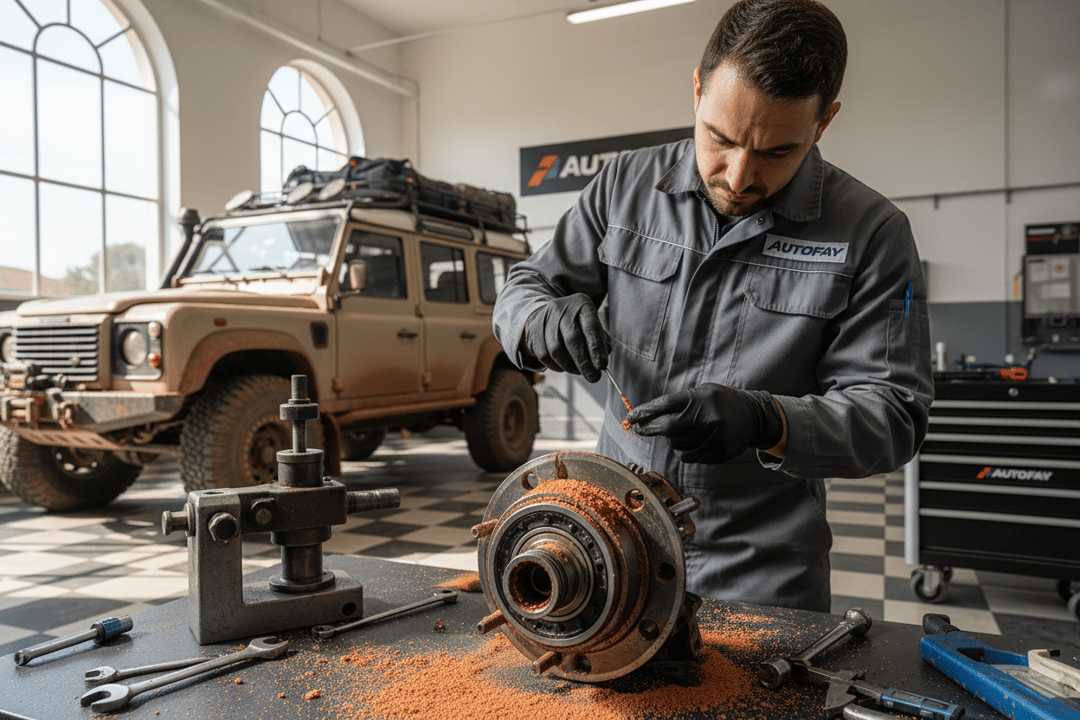
The UAE has a vibrant off-road culture. Every weekend, SUVs head to the desert for dune bashing, wadi exploration, and camping trips. Come Monday morning, those same vehicles join the highway commute. This dual-use pattern creates a unique combination of wear that is different from either pure off-road vehicles or pure highway commuters. A professional inspection reveals the specific stress points that this lifestyle creates.
Underbody and Frame: Desert Impact
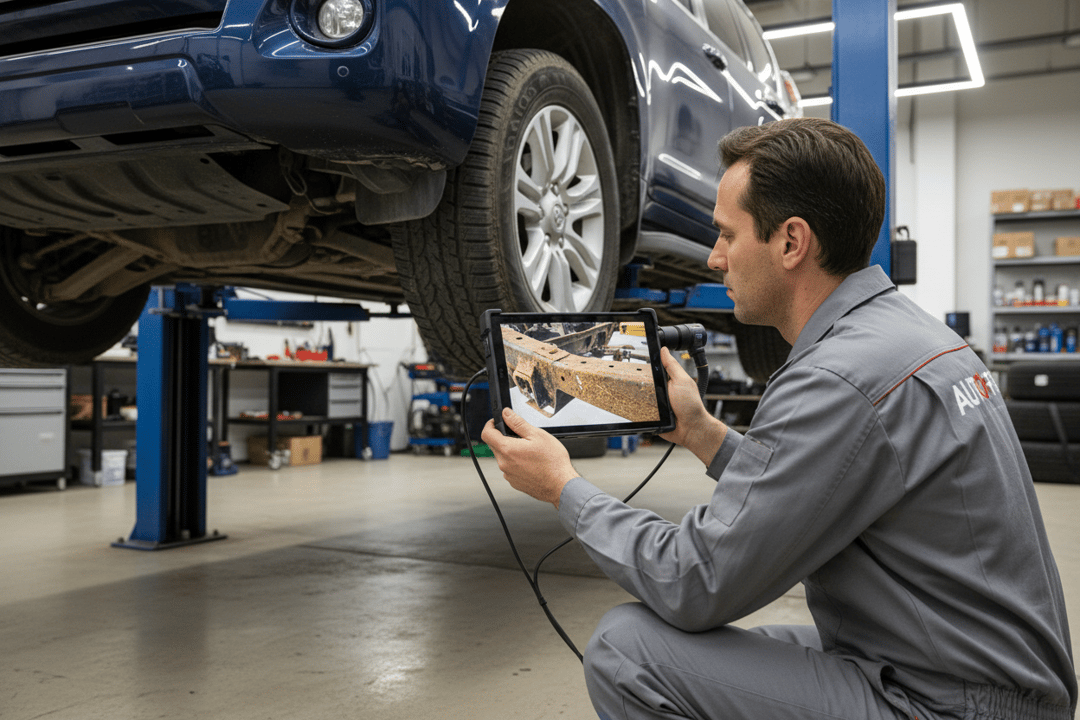
Off-road driving subjects the underbody to impacts that highway driving never produces. AutoFay's frame inspection checks under body shields and covers (No Visible Fault, Missing, or Damaged) — these protective panels take direct hits from rocks and terrain features during off-road excursions. Skid plates (Good, Damaged, Missing, or N/A) show the history of underbody contacts. A skid plate with heavy scraping and dents tells you this vehicle has seen aggressive off-road use.
The floor pan (No Visible Fault, Rusted, Repaired, or Damaged) can be impacted by large rocks or terrain features. The chassis is checked for damage — a chassis that has been bent or twisted from severe off-road impact may not be visually obvious but affects the vehicle's tracking and handling. Cross member condition, front and rear rails, and subframe integrity are all assessed. Weekend off-road use, if done on aggressive terrain, can cause damage that accumulates over multiple outings.
Suspension: Double Duty Wear
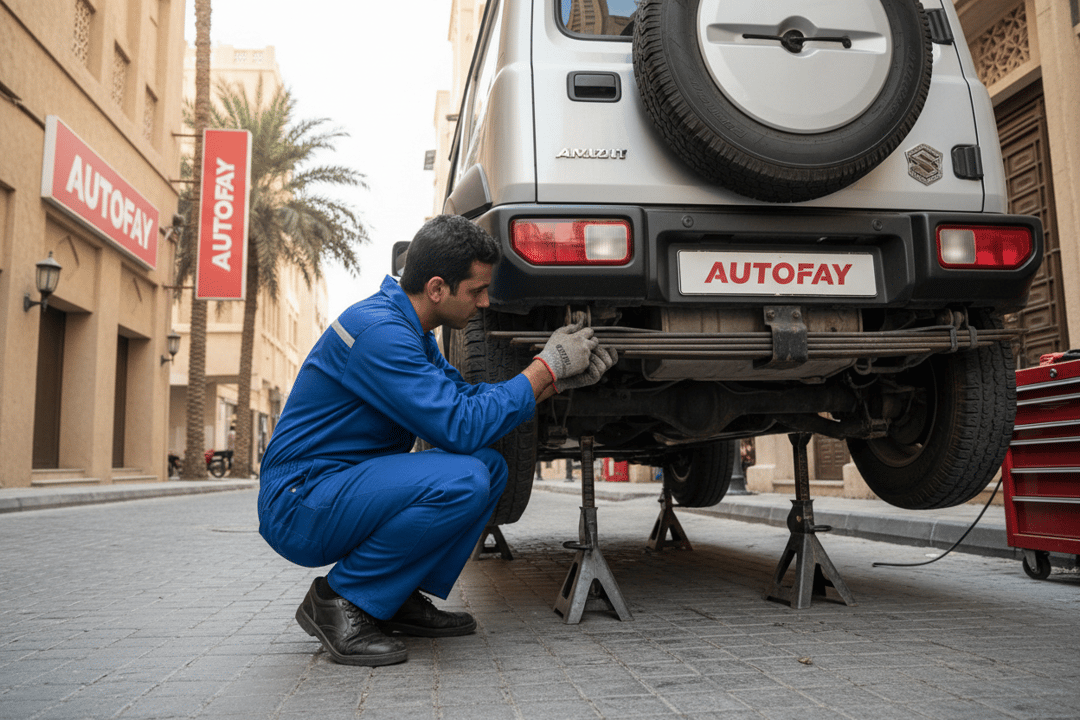
Suspension components on weekend warrior SUVs endure the worst of both worlds. Off-road driving stresses the suspension through extreme articulation, impacts, and lateral loading on uneven terrain. Then highway driving demands precision tracking, stable handling, and quiet operation. Front and rear shocks (No Visible Fault, Worn, Leaking, or Needs Replacement) may show Leaking from the extreme compression cycles during dune driving. Ball joints (No Visible Fault, Worn, Loose, or Needs Replacement) wear from the angular loads that off-road terrain creates.
Control arms — front and rear rated individually — absorb impacts that can bend them subtly, changing the suspension geometry. Bushings (No Visible Fault, Worn, Cracked, or Needs Replacement) deteriorate from sand infiltration and the extreme range of motion during off-road driving. Sway bar links (No Visible Fault, Worn, or Broken) are common failure points because off-road articulation pushes them past their designed range. During the road test, ride comfort rated Bouncy or Harsh and vibrations at speed may indicate off-road-induced suspension damage.
Drivetrain: Transfer Case and Differentials
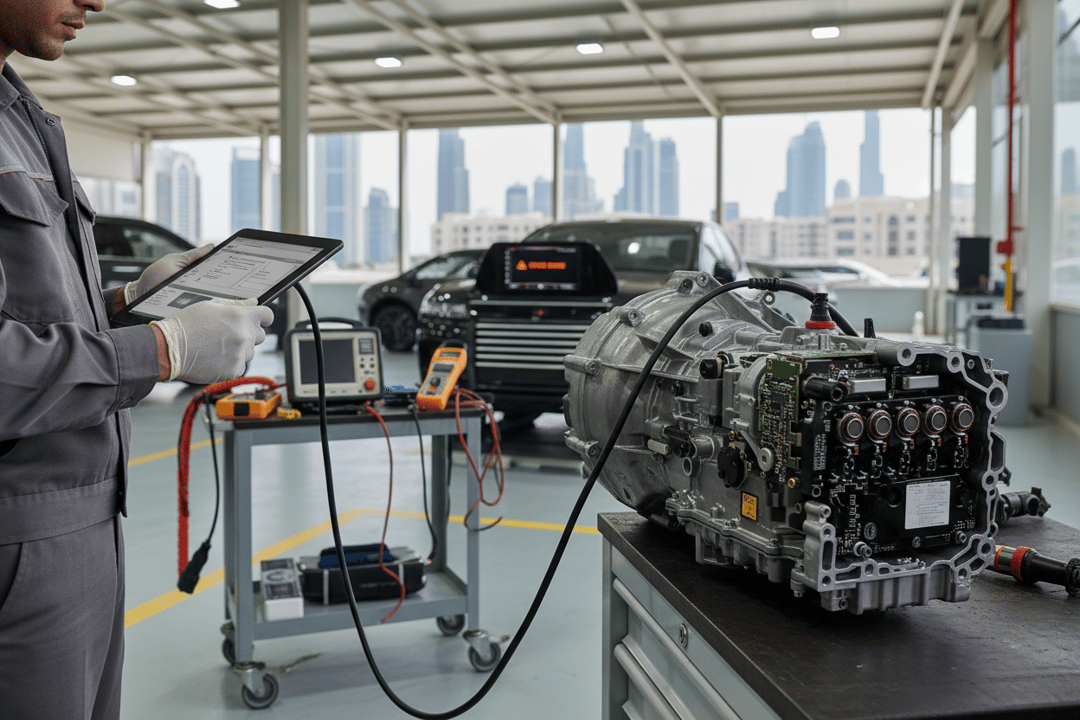
The 4WD/AWD system works hardest on weekend warriors. Transfer case engagement (Working, Delayed, or Not Engaging) is tested — a transfer case that hesitates or does not engage may have been damaged from improper use, such as engaging 4WD on paved roads at speed. Front and rear differentials (Good, Noisy, or Leaking) endure stress from the traction demands of off-road driving, especially in sand where wheels spin at different speeds. Differential fluid may degrade faster from heat generated during sustained off-road use.
CV axles (Good, Clicking, Vibration, or Leaking) and CV boots (Good, Cracked, Torn, or Leaking) are especially vulnerable on weekend warriors. Sand packed around CV boots accelerates their deterioration, and a torn boot allows sand directly into the CV joint, which destroys it rapidly. Universal joints (Good, Worn, or Noisy) on body-on-frame SUVs endure high-angle operation during articulation that accelerates wear.
Engine and Cooling Under Dual Stress
Off-road driving at low speeds in soft sand puts maximum load on the engine with minimal airflow for cooling. The engine works hard to maintain momentum through sand, generating peak heat with the least cooling effect. Then the same engine cruises at highway speed with consistent cooling but sustained high RPM. Cooling system components — radiator (No Visible Fault through Leaking), water pump (Working through Needs Replacement), and cooling hoses — endure both extremes.
The engine air filter (Clean, Dirty, or Needs Replacement) on a weekend warrior needs more frequent replacement than on a highway-only vehicle because desert dust loads the filter much faster than highway air. A dirty air filter restricts intake, reducing performance and fuel economy. The throttle body (Clean, Dirty, or Needs Cleaning) and MAF sensor (Good, Dirty, or Faulty) are also affected by desert particulates.
Tires and Wheels: Sand, Highway, Repeat
Some owners air down their tires for off-road traction, then reinflate for highway use. This repeated cycling can stress tire sidewalls. Tire condition (Good, Cracked, Bulge, Damaged, or Needs Replacement) may show sidewall damage from running at low pressures over rocks. Tire wear pattern (Even, Inner Wear, Outer Wear, Center Wear, or Cupping) may look uneven if alignment was affected by off-road impacts. Wheel rims (No Visible Fault, Scratched, Bent, or Cracked) may show bending from rock impacts that are invisible at a glance but cause vibration at highway speeds.
AutoFay inspects 410 checkpoints covering both on-road and off-road wear patterns, with HD photos and a detailed PDF report. On-location inspection across all 7 Emirates. Book at autofay.ae or call +971-54-258-4458.


0 Comments
No comments yet. Be the first to share your thoughts!