
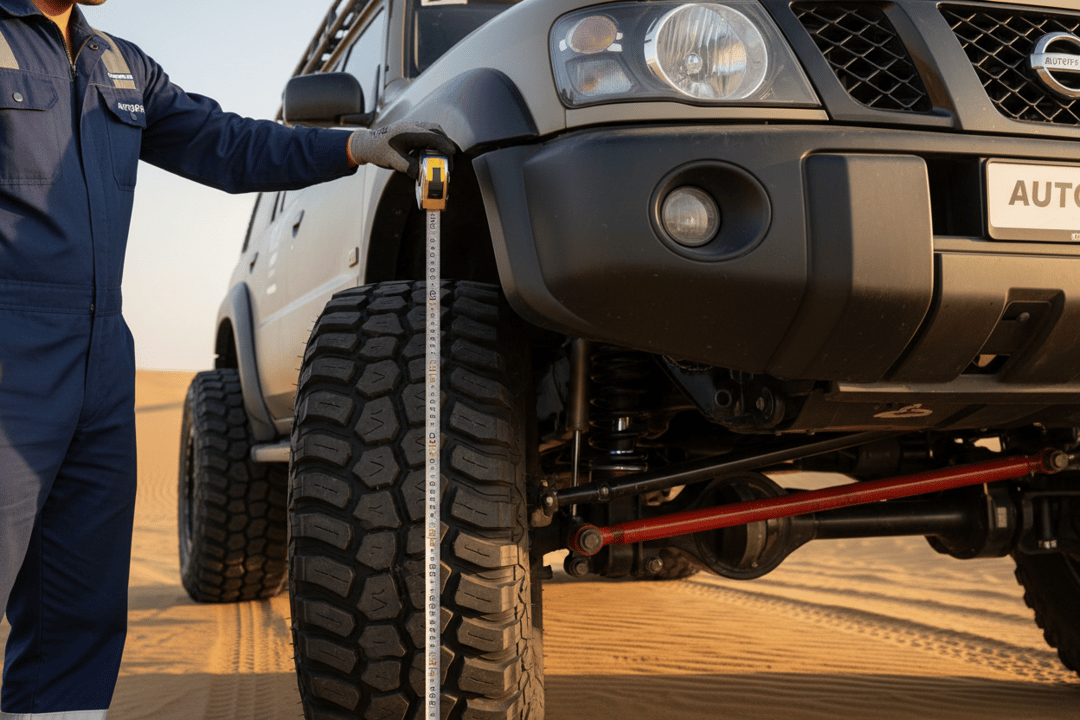
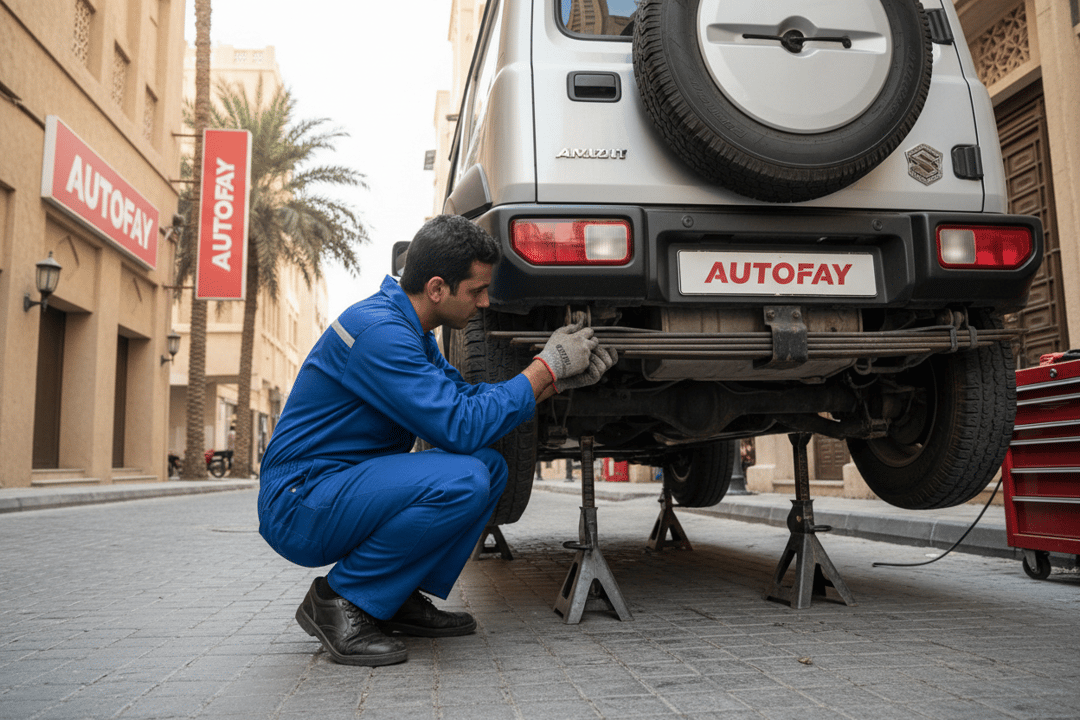
Suspension lift kits are popular on SUVs and trucks in the UAE, particularly on vehicles used for desert driving, Nissan Patrols, Toyota Land Cruisers, and Jeep Wranglers. A lifted vehicle sits higher off the ground, providing additional ground clearance for off-road use and an imposing road presence. But lifting changes the fundamental engineering of the vehicle, and these changes show up clearly across multiple inspection categories.
Steering Geometry and Alignment Changes
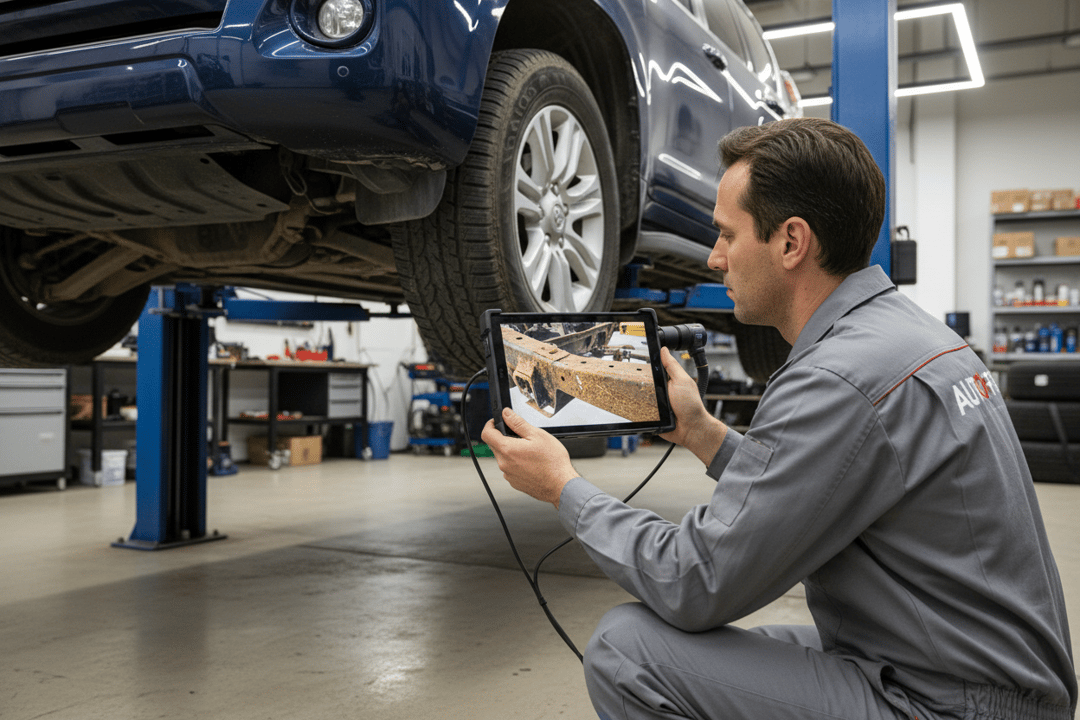
When a vehicle is lifted, the steering and suspension geometry changes. The angles at which control arms, tie rods, and the driveshaft operate are altered from the manufacturer's specifications. AutoFay's suspension and steering inspection rates wheel alignment as Good, Slight Pull, or Needs Alignment. Lifted vehicles frequently show Needs Alignment because the lift changes caster and camber angles. Tie rod ends — rated No Visible Fault, Worn, Loose, or Needs Replacement — wear faster because they operate at steeper angles than designed. Steering play — rated None, Slight, or Excessive — commonly shows Slight or Excessive on lifted vehicles because the altered geometry introduces additional slack in the steering linkage.
The steering rack or gearbox (rated No Visible Fault, Leaking, Worn, or Loose) bears different loads after a lift. The power steering system (Working Fine, Heavy, Noisy, or Leaking) may show Heavy or Noisy as the pump works harder to accommodate the changed geometry. These are not optional concerns — they directly affect the driver's ability to control the vehicle, especially at highway speeds.
Drivetrain Stress: Driveshaft Angles
Lifting the body or suspension changes the angle of the driveshaft, which affects how universal joints and the transfer case operate. AutoFay's drivetrain inspection rates the driveshaft as Good, Vibration, or Damaged. A lifted vehicle with excessive driveshaft angle will show Vibration — a vibration felt through the floor that increases with speed. Universal joints (Good, Worn, or Noisy) wear faster at steeper operating angles. CV axles on independent suspension vehicles (Good, Clicking, Vibration, or Leaking) and CV joints (Good, Worn, or Clicking) are especially vulnerable because they were designed to operate within a specific range of angles that a lift exceeds.
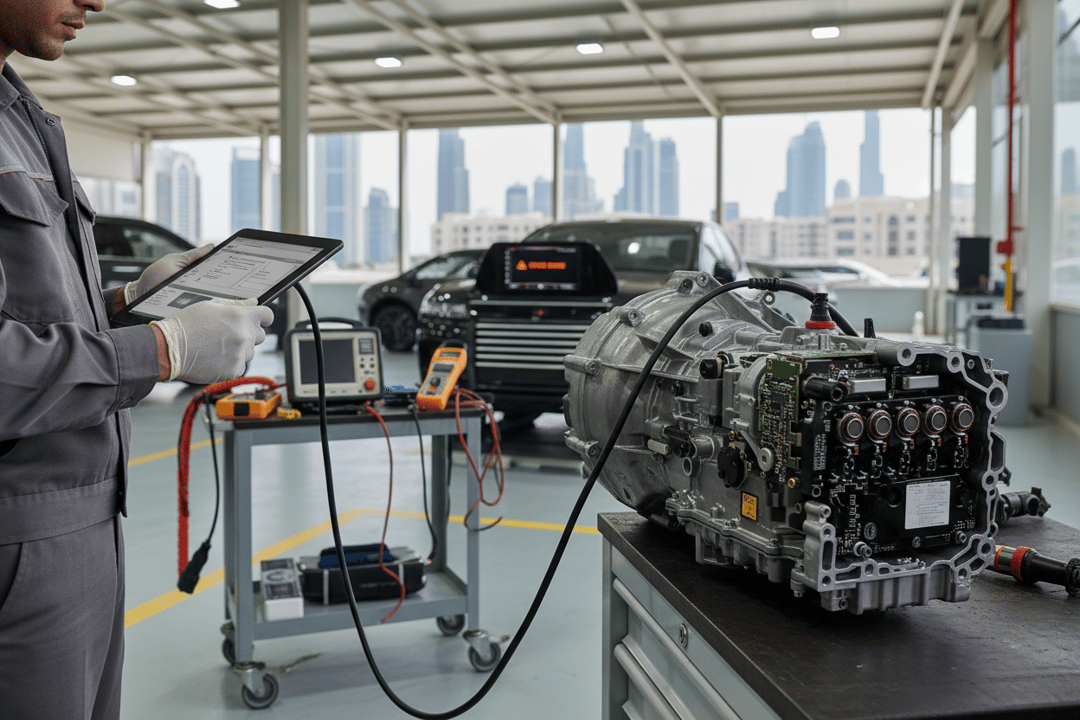
The transfer case (Working, Noisy, or Leaking) handles additional stress from the changed driveshaft angle. On vehicles with significant lift, the transfer case output shaft bearing can wear prematurely, producing noise that the inspection catches. Front and rear differential operation (Good, Noisy, or Leaking) should also be evaluated carefully on lifted vehicles.
Brake System: Longer Stopping Distances
A lifted vehicle has a higher center of gravity. This shifts more weight forward during braking, increasing the load on the front brakes. Front brake pads — rated Good (above 50%), Average (25-50%), Worn (below 25%), or Needs Replacement — wear faster on lifted vehicles from this increased forward weight transfer. Front brake rotors (Good, Scored, Warped, or Needs Replacement) may show Warped more frequently because of the increased thermal load.
If the vehicle also has larger aftermarket tires, which is common with lifts, the braking system works even harder. Larger tires have more rotational inertia, requiring more braking force to stop. The ABS system (Working, Warning Light On, or Not Working) may trigger warnings because the larger tires change the wheel speed sensor readings that the ABS computer uses to detect wheel lock. Brake pedal feel (Firm, Soft, Spongy, or Pulsating) may read Soft on lifted vehicles because the braking system was not upgraded to match the altered weight distribution and tire size.
Suspension Components Under Different Loads
Ironically, a suspension lift kit puts more stress on the remaining stock suspension components. Ball joints (No Visible Fault, Worn, Loose, or Needs Replacement) operate at altered angles and carry loads they were not designed for. Sway bar links (No Visible Fault, Worn, or Broken) are often too short after a lift, causing them to operate at the limit of their travel or break entirely. Bushings (No Visible Fault, Worn, Cracked, or Needs Replacement) deteriorate faster due to the changed geometry.
Shock absorbers — front and rear rated No Visible Fault, Worn, Leaking, or Needs Replacement — must be matched to the lift height. Stock shocks on a lifted vehicle bottom out over bumps and top out on rebound because their travel range no longer matches the suspension travel. This creates a harsh ride and accelerates shock failure. During the road test, ride comfort rated Bouncy or Harsh and vibrations at speed are common findings on improperly set up lifted vehicles.
Stability Control and Safety Systems
Modern vehicles have electronic stability control (ESC/VSC) calibrated for the factory ride height and center of gravity. Lifting the vehicle changes the center of gravity without recalibrating these systems. Stability control (Working, Warning Light, or Not Working) may show Warning Light on lifted vehicles. Traction control operates differently with larger tires. These safety systems may not function as designed in an emergency maneuver, which is a critical safety consideration that buyers should understand.
AutoFay inspects 410 checkpoints on both stock and modified vehicles, with HD photos and a detailed PDF report. On-location inspection across all 7 Emirates. Book at autofay.ae or call +971-54-258-4458.
0 Comments
No comments yet. Be the first to share your thoughts!