
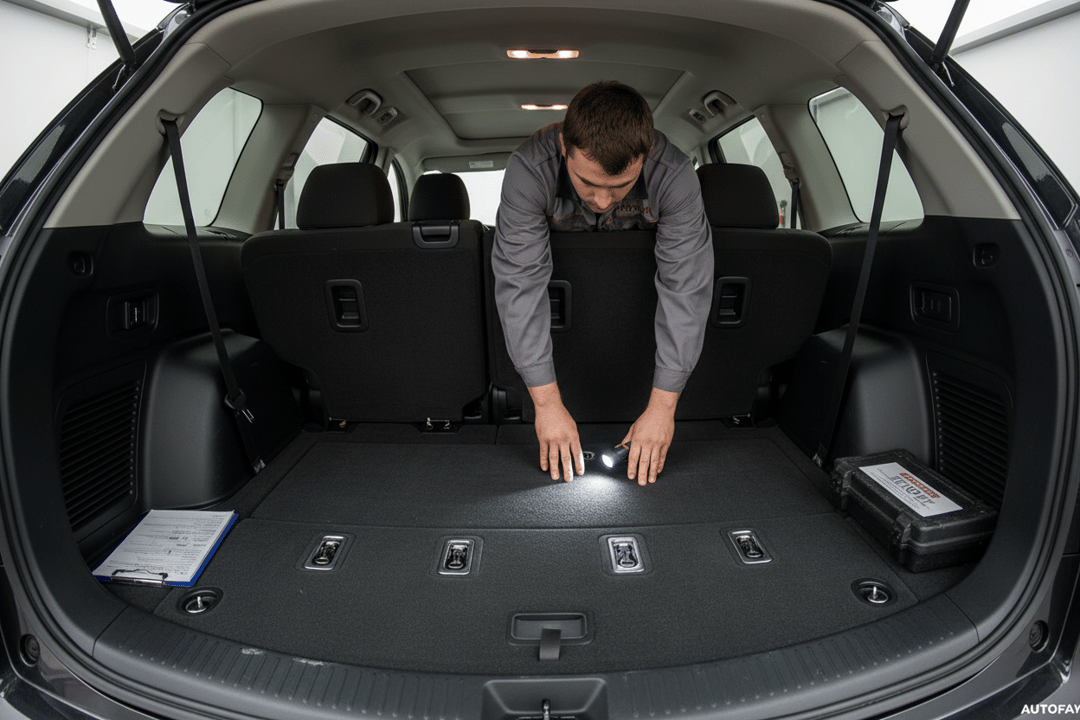
Seven-seater SUVs are among the most popular family vehicles in the UAE. Toyota Land Cruiser, Nissan Patrol, Chevrolet Tahoe, Ford Explorer, and various luxury models from BMW, Mercedes, and Lexus all offer third-row seating. For families, the third row is not a bonus feature — it is where children and passengers sit daily. The safety and functionality of this area deserves focused inspection attention that goes beyond simply checking if the seats fold down.
Third Row Seat Condition and Function
AutoFay's interior inspection rates rear seats condition as No Visible Fault, Good, Fair, Worn, or Damaged. For seven-seater vehicles, the third-row seats receive particular attention. The folding mechanism — rated as Working or Not Working — is tested for smooth operation. Third-row seats that fold electrically should deploy and stow without hesitation, grinding, or partial completion. Manually folding seats should latch securely in both the upright and folded positions. A seat that does not lock securely in the upright position is a serious safety concern — in a collision, an unlatched seat can collapse or shift.
Seat belt condition for the third row is checked as part of the overall seat belt assessment — All Working, Some Worn, or Some Not Working. Third-row seat belts receive less use than front belts and may seem in good condition visually, but the retractor mechanism can fail from disuse. Each belt should retract smoothly and lock firmly when pulled sharply. A belt that does not lock provides no protection in a collision.
Child Seat Anchors and ISOFIX
Child seat anchors (ISOFIX) — rated Present, Missing, or Damaged — are critical for families. Many seven-seater SUVs have ISOFIX points in the second row but not the third row, which limits where child seats can be securely installed. Our inspection notes the presence and condition of ISOFIX anchors at each seating position. Damaged or bent anchors from previous child seat installation reduce the security of the connection and should be repaired before use.
Top tether anchors behind the third row are checked as well. These anchors prevent the child seat from rotating forward in a collision. A missing or damaged tether anchor means the child seat cannot be properly secured, which compromises protection significantly.
Rear AC and Climate Comfort
Third-row passengers in the UAE need effective air conditioning. Our HVAC inspection checks rear AC specifically — rated Working or Not Working. Many SUVs have a separate AC unit for the rear cabin, with its own controls and blower. If the rear AC is not working, third-row passengers in UAE summer conditions face dangerous heat exposure, especially children who are more vulnerable to heat stress.
The blower motor for the rear system (rated All Speeds Working, Some Speeds, Noisy, or Not Working) should function on all speed settings. AC vents for the third row — typically in the ceiling or B-pillar — should direct cold air effectively. A car with a working front AC but non-functional rear AC creates a significant temperature difference between the first and third rows that can make the back seats genuinely uncomfortable or unsafe in extreme heat.
Rear Structural Integrity
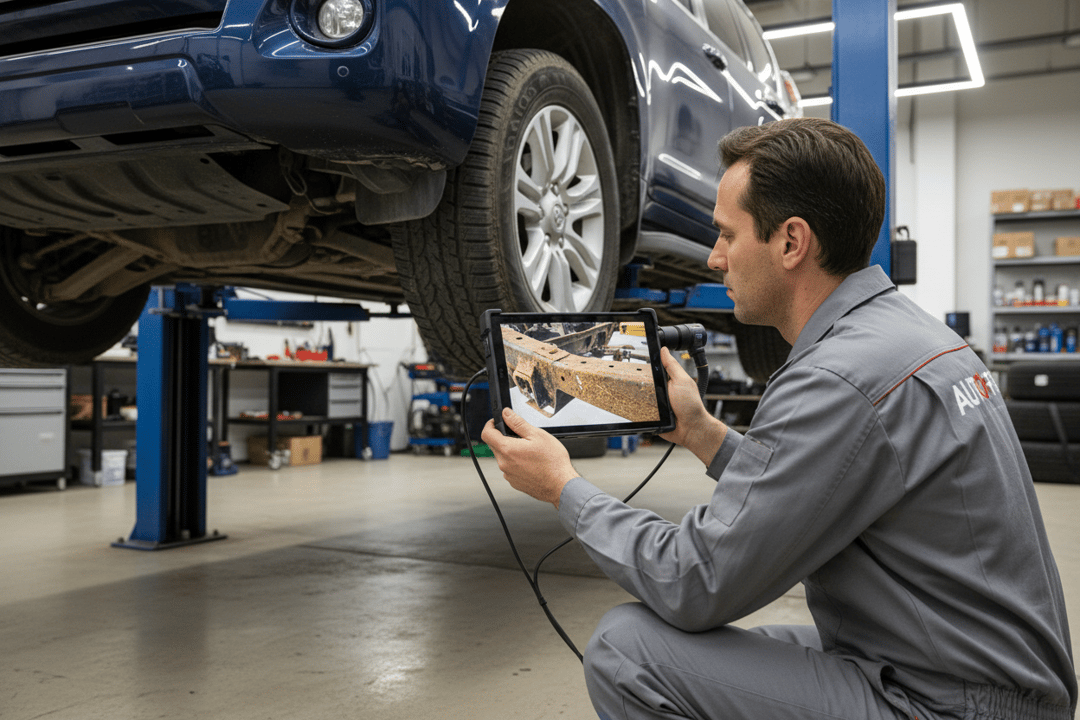
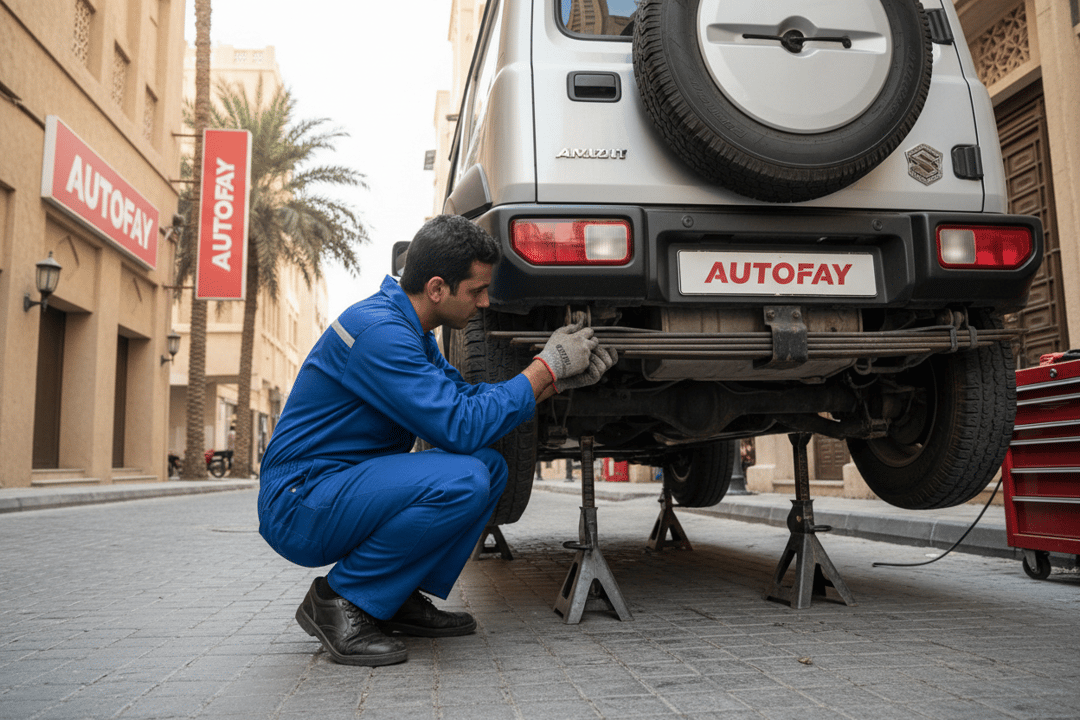
The third row sits directly ahead of the trunk area and rear bumper — the area that absorbs impact in a rear-end collision. AutoFay's frame inspection checks the rear bumper support, rear panel, rear left and right rails, trunk floor, and rear bumper condition. Each is rated from No Damage through Minor Dent, Repaired, Welded, Replaced, to various damage levels. A seven-seater SUV that has been rear-ended may show repaired or replaced rear structural components that directly affect the crash protection for third-row occupants.
Curtain airbags — rated Present, Warning, or Deployed/Missing — extend along the roofline to protect all three rows. A deployed curtain airbag that was not properly replaced leaves third-row passengers without side-impact protection. The airbag system check (No Warning, Warning Light On, or Deployed) is especially important on seven-seaters because the airbag coverage area is larger and more complex.
Visibility and Rear Safety Systems
Seven-seater SUVs have limited rear visibility due to their size and the presence of third-row headrests. This makes rear safety systems more critical. The backup camera (Working, Blurry, Not Working, or N/A) is essential for preventing backup accidents. Rear parking sensors (Working, Partial, or Not Working) provide additional proximity warnings. Rear cross-traffic alert (Working or Not Working) warns of vehicles approaching from the sides when reversing — particularly valuable in parking lots where SUV size limits visibility.
The rear window — rated No Visible Fault, Cracked, Needs Replacement, or Aftermarket — provides the only direct visibility to the area behind the third row. A cracked or heavily tinted rear window on a seven-seater reduces the driver's ability to see what is behind the vehicle, making electronic safety systems even more important.
AutoFay inspects 410 checkpoints with special attention to family-critical safety systems, with HD photos and a detailed PDF report. On-location inspection across all 7 Emirates. Book at autofay.ae or call +971-54-258-4458.
0 Comments
No comments yet. Be the first to share your thoughts!