
The Porsche Cayenne occupies a unique segment — it is an SUV that is engineered to perform like a sports car. This engineering ambition means that every system operates closer to its limits than on a conventional SUV. The brakes stop a heavy vehicle from high speeds. The engine produces significant power while managing heat in a large body. The suspension must balance comfort with cornering capability. All of this makes inspection essential because wear on a Cayenne manifests differently than on a standard SUV.
Brakes: Performance-Level Demands
AutoFay's brake inspection covers front and rear pads, rotors, calipers, brake lines, brake pedal feel, and ABS function. On a Cayenne, brake component wear is one of the most significant inspection findings. Front brake pads rated as Worn under 25% or Needs Replacement on a Cayenne indicate the previous owner drove enthusiastically — the large rotors and calipers dissipate enormous heat during aggressive braking. Front brake rotors are checked for scoring and warping — rotors rated as Warped cause pulsation through the brake pedal and steering wheel under braking.
Brake calipers are checked for sticking or leaking. On Cayenne models with ceramic composite brakes, the rotors are visually inspected for cracks and surface condition. The brake pedal feel rating is particularly telling — a Cayenne should feel Firm with immediate response. A Soft or Spongy pedal suggests air in the lines, a failing master cylinder, or brake fluid that has absorbed moisture and needs replacement.
Engine and Turbo: Precision Under Pressure
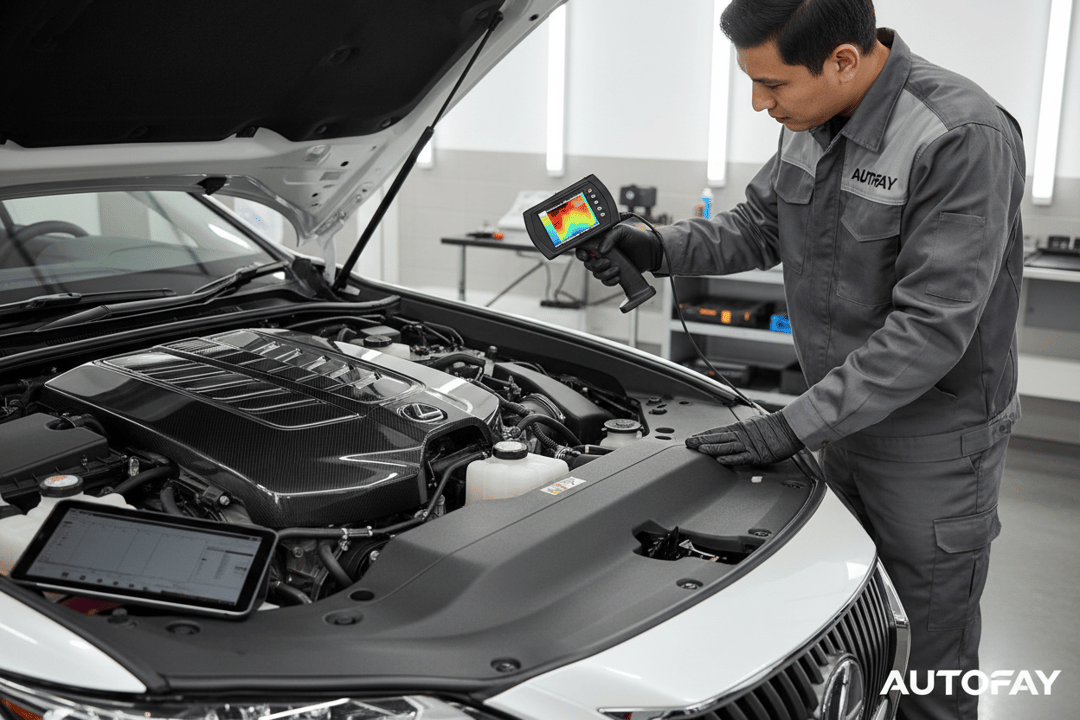
Cayenne engines — whether the V6 twin-turbo, V8 twin-turbo, or turbocharged V6 in newer models — are high-output units that demand precise maintenance. The engine inspection checks start quality, idle behavior, noises, and vibration. A Cayenne should start immediately and idle smoothly without vibration. Any rating other than Normal for engine start or No Noise for engine sound warrants investigation.
Turbocharger condition is critical. Rated as Working Fine, Noisy, or Leaking — a turbo producing whine or whistle under boost indicates bearing wear. Oil leaks are checked specifically — the valve cover gaskets and oil pan gaskets on Cayenne engines are common leak points. The engine bay is checked for cleanliness — a clean engine bay on a Cayenne with significant mileage may have been cleaned to hide evidence of oil leaks, so the inspector looks at the undersides of components where residue accumulates.
Cooling System: Dual Demands
The cooling system on a Cayenne supports both the engine and turbo system, making its inspection critical. Radiator condition, cooling fans, water pump, and all hoses are checked. Cayennes use a multi-radiator cooling layout — main radiator, auxiliary radiators, and turbo intercoolers. Any cooling component rated less than Good on a Cayenne deserves immediate attention because the high-output engine cannot tolerate reduced cooling capacity, especially in UAE summer conditions.
Coolant condition and level are verified. Clean coolant at proper level indicates proper maintenance. The coolant overflow tank is checked for cracks — on Cayennes, a cracked tank can allow slow coolant loss that leads to gradual overheating.
Suspension and Steering: Handling Precision
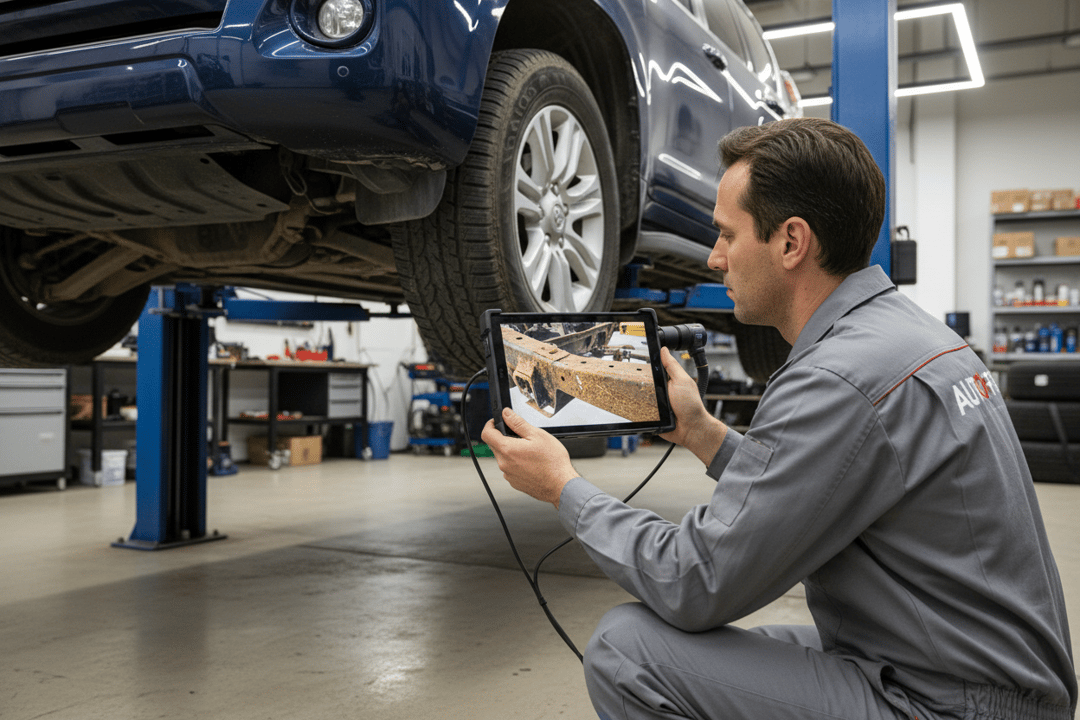
Cayenne suspension is engineered for dual duty — comfortable cruising and capable cornering. Models with air suspension have it checked specifically. Steel spring models have front and rear coil springs checked for sagging. Control arms, ball joints, tie rod ends, and bushings are each assessed — these components wear faster on a Cayenne because the vehicle is both heavy and driven at higher cornering forces than typical SUVs.
Steering precision is expected on a Porsche. Steering play rated as anything other than None requires investigation. The road test assesses steering feel — a Cayenne should rate as Precise. A rating of Loose or Vibrating indicates worn components that compromise the driving character that defines the Cayenne experience.
Drivetrain: All-Wheel-Drive Complexity
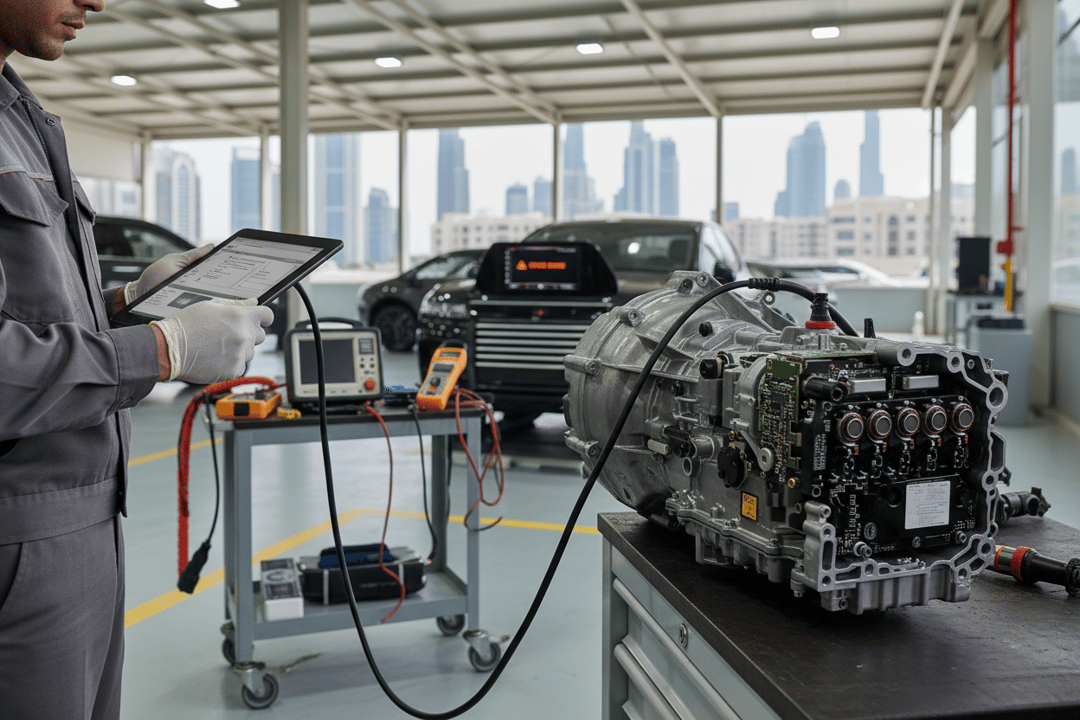
The Cayenne's all-wheel-drive system adds inspection complexity. Transfer case operation, front and rear differentials, CV axles and boots, and driveshaft condition are all checked. The PDK or Tiptronic transmission is assessed for smooth operation — any rating other than Smooth on a Cayenne transmission needs professional evaluation. Transmission fluid condition is critical on these high-performance units — burnt or contaminated fluid indicates the transmission has been stressed beyond its designed operating parameters.
AutoFay inspects 410 checkpoints on every Porsche Cayenne, with HD photos and a detailed PDF report. On-location inspection across all 7 Emirates. Book at autofay.ae or call +971-54-258-4458.
0 Comments
No comments yet. Be the first to share your thoughts!