
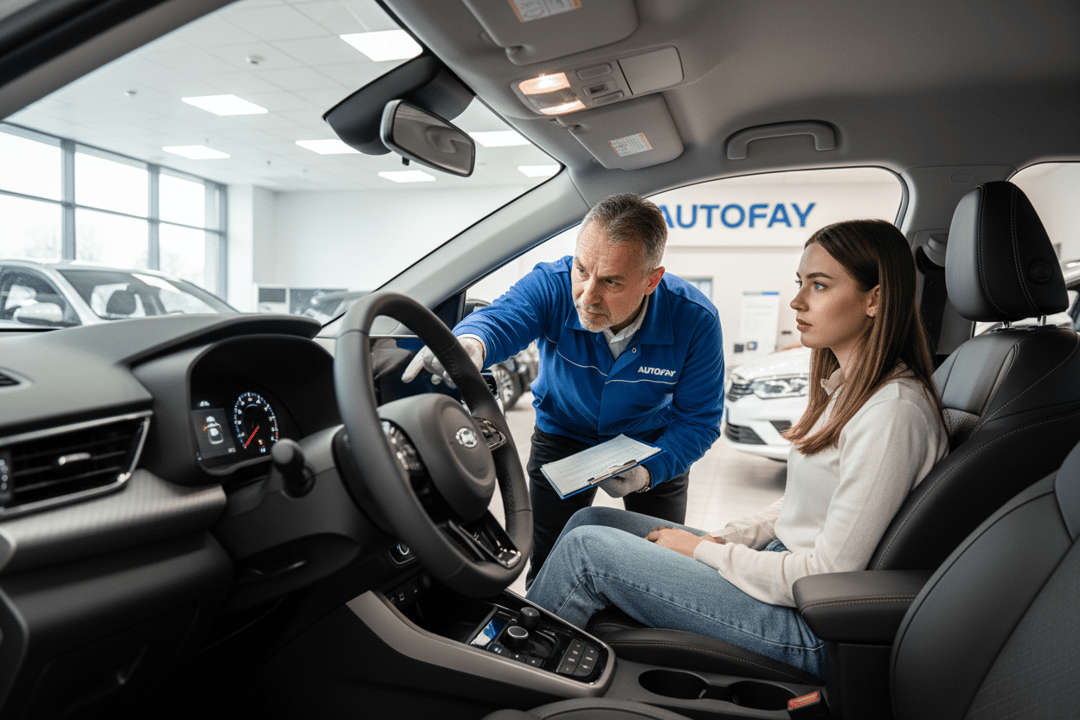
Buying a first car for a young driver is a decision where safety should outweigh every other consideration. A new driver is statistically more likely to be involved in a collision during their first two years behind the wheel. The car they drive during this period needs to protect them when things go wrong — and an inspection tells you exactly which safety systems are present and whether they actually work.
Safety Systems That Matter Most
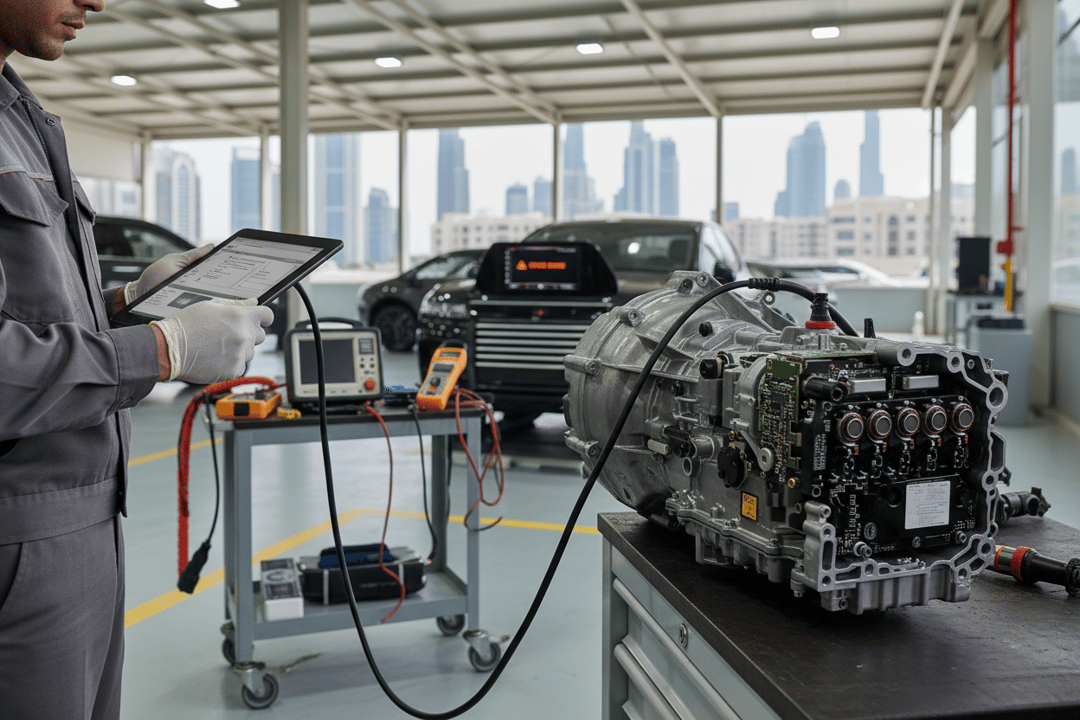
AutoFay's Safety and Security Systems inspection covers 28 individual checkpoints. For a young driver's car, the critical ones start with the airbag system — rated as No Warning, Warning Light On, or Deployed. Front airbags, side airbags, and curtain airbags are each checked separately. A car with a deployed or missing airbag, or one showing an airbag warning light, has a fundamental safety gap that no amount of careful driving can compensate for.
Stability Control (ESC/VSC) is rated Working, Warning Light, or Not Working. This system detects when the car begins to skid and automatically applies individual brakes to bring the vehicle back under control. For a new driver who might overcorrect in a sudden lane change or enter a roundabout too fast, ESC is the single most important electronic safety feature. Traction control is checked separately — it prevents wheel spin during acceleration on wet or sandy roads.
Brakes: The First Line of Defense
The brake inspection becomes critical context for a young driver's car. Front brake pads rated Good (above 50%) mean the car can stop confidently for months ahead. Pads rated Worn (below 25%) or Needs Replacement mean the car should not leave the seller's driveway until they are replaced. Brake rotors are checked for scoring and warping — warped rotors cause pulsation under braking that can unsettle a new driver.
The ABS system is verified as Working — this prevents wheel lockup during hard braking, allowing the driver to steer while stopping. Brake assist, which detects emergency braking and applies maximum pressure, is tested when equipped. The brake pedal feel is rated: Firm is ideal, Soft or Spongy indicates air in the brake lines or worn components, and Pulsating indicates warped rotors.
Visibility and Awareness Systems
Modern cars offer technology that compensates for a new driver's limited experience. The backup camera is checked — Working, Blurry, or Not Working. Blind spot detection alerts the driver to vehicles in adjacent lanes during highway driving. Lane departure warning provides a visual or audible alert when the car drifts without signaling. Forward collision warning detects an impending crash and alerts the driver. Automatic emergency braking takes the decision out of the driver's hands entirely and applies the brakes if a collision is imminent.
Rear cross-traffic alert warns the driver backing out of a parking space about approaching vehicles from either side. Front and rear parking sensors help with parking — rated Working, Partial, or Not Working. These systems are not substitutes for careful driving, but they provide a safety net during the learning period when spatial awareness is still developing.
Which Cars to Consider
For a first car, prioritize models that offer comprehensive safety features even in base trim. Toyota Corolla and Honda Civic from recent model years include stability control, multiple airbags, ABS, and often include forward collision warning and lane departure warning as standard. Mazda 3 offers excellent safety ratings with responsive steering and braking. Hyundai Elantra and Kia Cerato provide good safety equipment at accessible price points.
Avoid the temptation of powerful sports sedans or coupes for a first car. The extra horsepower does not help a new driver, and the higher performance encourages speeds that exceed their skill level. A car with moderate power, good visibility, predictable handling, and comprehensive safety systems is the responsible choice.
What the Inspection Tells Parents
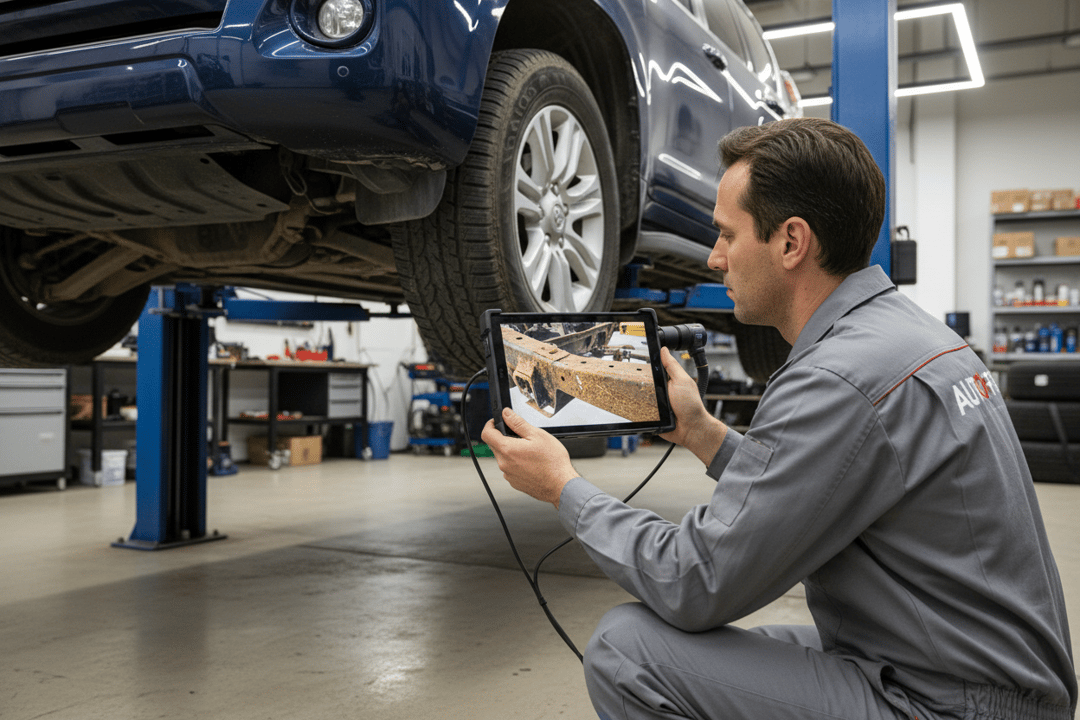
An inspection report gives parents objective data about the car their child will drive daily. The report documents every safety system's status, brake condition with percentage estimates, tire condition and age, all exterior and interior lights, and seatbelt function. It also covers the structural integrity through the frame condition section — ensuring the car has not been in a major accident that compromised its crash protection.
The road test section of the inspection is particularly relevant. Steering feel rated Precise, braking performance rated Good or Excellent, ride comfort rated Comfortable, and overall driving experience rated Good or better confirm the car handles predictably and safely in real-world conditions.
AutoFay inspects 410 checkpoints including 28 safety and security system tests, with HD photos and a detailed PDF report. On-location inspection across all 7 Emirates. Book at autofay.ae or call +971-54-258-4458.
0 Comments
No comments yet. Be the first to share your thoughts!