

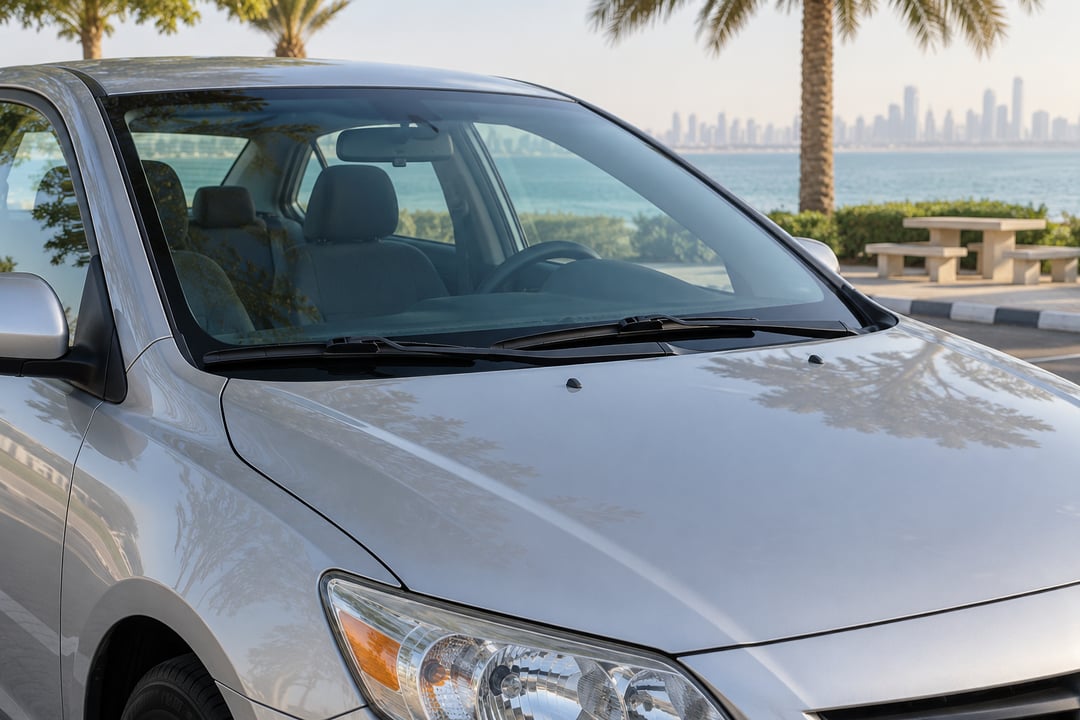
Can a 2010 Corolla suit your highway journeys? The answer depends on the individual car, its maintenance and your trip requirements, rather than model reputation alone. Separate a buying inspection's observations from work needed before a long drive.
Read the records before trying the road
Match the VIN to the documents, identify the version and supplying market, and obtain the correct manual. Arrange service and repair invoices by date and mileage. Ask about long periods out of use, previous overheating or warnings and how they were resolved. Model year alone cannot establish timing components or replacement requirements.
For a car of this age, understand both completed work and unresolved concerns. An old repair invoice cannot guarantee the problem has not returned; low mileage alone cannot establish good storage or maintenance. Record gaps in history and seek assessment of necessary work rather than filling them with assumed failures.
Try visibility and comfort before judging a journey
Set the seat, mirrors and steering wheel while stationary and assess comfort and your view of the road and instruments. Observe glass, wipers, lights and AC, then try passengers and intended luggage. Keep visibility and belts unobstructed and follow the vehicle's loading and restraint instructions.
With permission on a safe, permitted route, observe straight-line behaviour, controlled stopping, gentle acceleration and noise. Do not increase speed to test limits or make aggressive manoeuvres. Record vibration, sound or warnings and their circumstances; an observation does not automatically diagnose an engine or transmission fault.
Observations that should postpone commitment or travel
| Observation | Appropriate next step |
|---|---|
| A warning requiring a stop under the manual | End the drive safely and have its cause assessed before continuing. |
| Abnormal braking or steering | Do not continue the road test; seek specialist assessment. |
| Visible leakage or abnormal temperature | Establish the cause and necessary work; do not open a hot cooling system. |
| Tire damage or an unexplained concern | Have the condition assessed and addressed before a long journey. |
Arrange preparation before departure day
NHTSA's tire guidance explains that appearance alone may not reveal aging. Review condition and manufacturing dates with a tire specialist. Use the car's placard or manual for pressure and size rather than the maximum pressure on the tire.
Its travel preparation guidance includes cooling, AC and lights, alongside route, break and communication planning. These are general principles, not a Gulf-specification Corolla maintenance schedule; use the correct manual and workshop advice for necessary work and values.
Estimate fuel from distance, substantiated consumption where possible and current prices, planning stops without relying on one range prediction. Prepare a phone, charger and suitable supplies. Avoid making a long journey the first trial after a major repair without confirming completion with the repair provider.
Understand AutoFay's report limits
An experienced inspector comes to the vehicle for a visual, non-intrusive, non-mechanical inspection, with computer diagnostics and functional observations according to package and conditions. Paint and visible underbody areas may be assessed within the package where safe access is available. Review the service scope.
The inspection does not dismantle components or examine internal engine or transmission parts. It cannot establish future reliability or replace trip servicing. Some findings require workshop diagnosis. Use the report to understand observed condition and decide whether to buy or obtain further assessment, without treating it as a guarantee that every fault will be found.
Prepared by AutoFay. Editorial update: October 28, 2026.


0 Comments
No comments yet. Be the first to share your thoughts!