

An INFINITI QX80 2016 may be a candidate for highway journeys, but the model name and its launch equipment list cannot establish the suitability of a particular used example. Start with three questions: what equipment is actually fitted, what evidence supports its condition, and do the cabin and journey plan suit your passengers and luggage? Keep those questions separate from any promise of guaranteed comfort or freedom from faults.
Start with the vehicle's market and history
Match the VIN to the vehicle documents and establish its original market, trim and applicable owner's manual. Gather available maintenance records, repair history and invoices, then compare the seller's description with the equipment present. An import described by material from another market does not become equivalent to a Gulf version because the name and year match.
If records are incomplete, identify what remains unverified before agreeing to buy. A quiet short viewing does not establish consistent maintenance. A vibration, noise or warning light does not, by itself, identify a failed part or repair cost either. Seek appropriate diagnosis for symptoms that need explaining rather than assigning an unsupported common fault.
Driver assistance: availability is different from fitment
The official Nissan and INFINITI 2016 model summary listed Intelligent Cruise Control, Lane Departure Warning and Lane Departure Prevention among available QX80 technologies for the US market. That establishes availability in a particular US launch; it does not establish that every QX80 2016 offered for sale here has those systems.
Confirm the example's equipment through its documents and correct manual, then identify the controls and messages for the systems fitted. A button or display symbol does not prove correct operation. Record fault messages and any checks that could not be completed, and ask about relevant previous repairs; specialist assessment may be necessary. Do not deliberately drift out of a lane to test a warning. A computer check or absence of a warning is not calibration certification or a guarantee of driver-assistance performance.
Try the cabin use you actually need
Try the driving position, mirror adjustment and control visibility while stationary. Check passenger access and comfort in the seats you intend to use. Confirm that your planned luggage does not obstruct visibility or require seats needed by passengers. Describing the vehicle as large is no substitute for checking your own requirements.
Check air-conditioning operation at the seating positions you need, along with the available lighting, wiper and demisting functions. Record anything the conditions prevent you from checking: trying a vehicle in different weather from your journey does not establish performance in every climate. Review visible tyre condition, available tyre records and the vehicle manual's requirements, and refer damage or uncertainty to a specialist before travelling.
Assess roof accessories separately if fitted
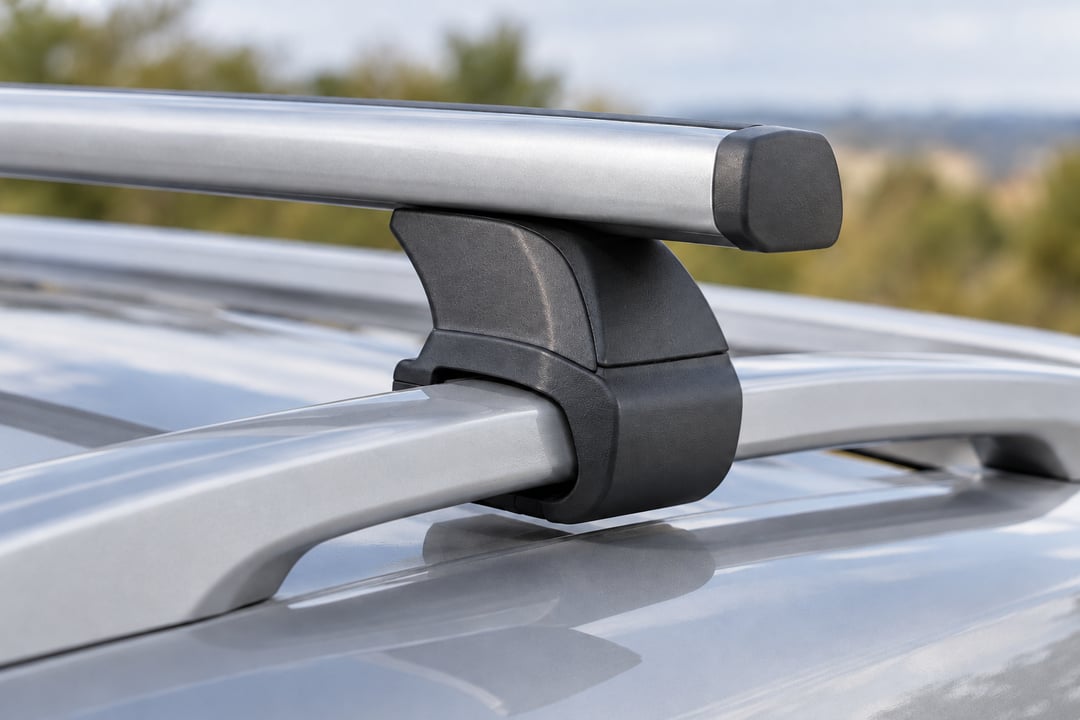
If crossbars, a carrier or a roof box are present, request the accessory instructions and evidence that it suits this vehicle. Follow both vehicle and accessory instructions for attachment, use and loading; do not borrow a figure from a different model or carrier. This guide does not assume every version has roof rails or a particular roof configuration.
Look at accessible parts for damage, missing components or apparently incomplete attachment. Obtain appropriate confirmation if you cannot establish that the installation is sound. The appearance of an external clamp alone does not establish the compatibility or load suitability of the complete assembly.
Include the route in your preparation
Plan stops and fuel opportunities around your actual route, allowing time to rest. NHTSA's summer driving guidance recommends including rest stops in long journeys. Do not infer a fixed driving range from the model year or another vehicle's experience.
Do not postpone stopping because the vehicle has lane assistance or cruise control. NHTSA's drowsy-driving guidance identifies crossing lane markings as a possible sign of drowsiness and advises stopping at a safe, designated place when sleepy. This is general alertness guidance, not a description of this vehicle's equipment or local road rules.
What can a pre-purchase inspection add?
With AutoFay inspection services, an experienced inspector comes to the vehicle. The inspection is visual, non-intrusive and non-mechanical, with computer checks and functional observations according to the package and inspection conditions. It does not include dismantling or examination of internal engine and transmission components, and it does not certify or calibrate driver-assistance systems.
Use the findings to separate established observations from unresolved questions and matters requiring workshop diagnosis. An inspection cannot guarantee detection of every fault or future reliability. The QX80 offered becomes a clearer candidate for your journeys when its documented condition, confirmed equipment and passenger requirements align, with material uncertainties resolved before buying and travelling.
Prepared by AutoFay. Editorial update: October 28, 2026.


0 Comments
No comments yet. Be the first to share your thoughts!