

A 2020 Toyota Corolla may suit a paved-road trip, but the decision depends on the individual car, its maintenance history, passengers and luggage. When buying a used example for a journey, separate the pre-purchase inspection from any servicing needed before departure.
This guide helps you gather evidence, identify issues that need attention and ask the seller useful questions. It does not assign a failure rate to the model or assess an individual car without inspecting it.
Identify the version and its history
Ask for the VIN and service records, and establish whether the car is petrol or hybrid and which market it came from. Do not transfer oil, tire or servicing specifications from another car simply because its model year matches. Toyota's maintenance guidance emphasizes the vehicle's own manual and service schedule.
- Compare invoice dates and recorded mileages with the car's current history. Ask about gaps without supporting documents.
- For previous repairs, ask what the original complaint was, what was replaced, and whether invoices or repair warranties are available.
- Check the VIN through Toyota UAE's recall portal and ask the dealer to confirm outstanding actions. This recommendation does not mean every 2020 Corolla is affected by a recall.
Tires: use a reading specific to the car
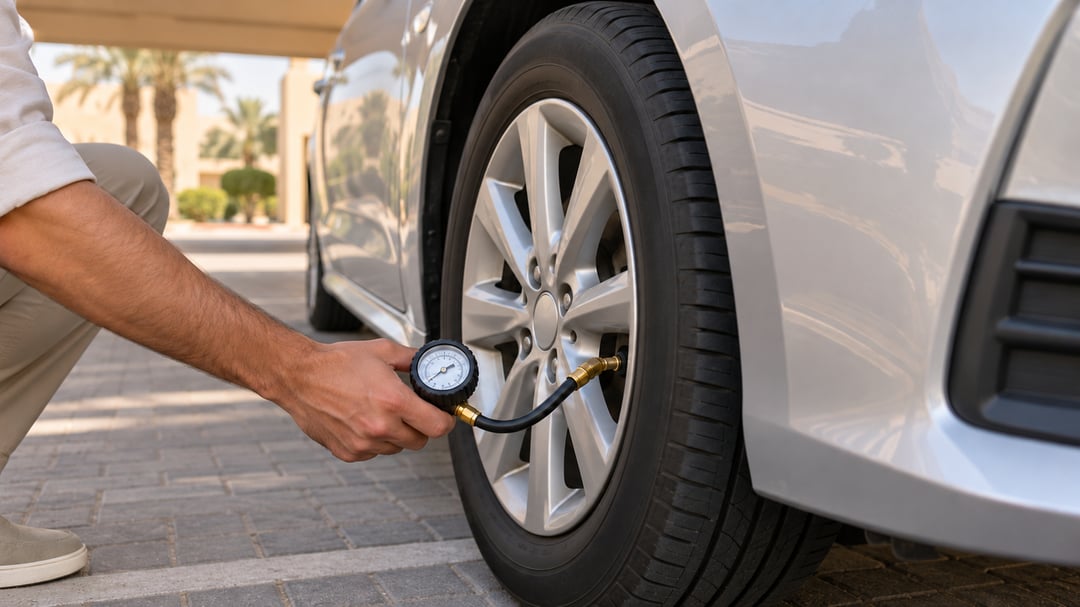
Toyota recommends checking tire pressure before driving or after the tires have cooled, against the driver's-door label and owner's manual. Use a gauge; appearance is not a pressure reading. Check the spare if fitted.
There is no single pressure to assume for every 2020 Corolla. Note the installed tire size and consult the car's specifications. Have bulges, cracks or uneven wear assessed by a tire professional before a long trip. NHTSA's travel guidance also calls for checking tire condition before journeys.
A practical departure checklist
Separate things you can safely observe from work requiring diagnosis or servicing. NHTSA's guidance includes cooling, air conditioning, fluids and lights.
| Area | What to review | Next action |
|---|---|---|
| Cooling | Level according to the relevant manual, visible leak traces and temperature warnings. | Recurring loss or warnings need diagnosis. Never open a hot cooling-system cap. |
| Air conditioning | Cooling and airflow during normal use. | Address weak performance before hot-weather travel; do not assume a gas refill is the answer. |
| Lights and wipers | Lights, indicators, brake lights, clear glass and functioning wipers. | Repair faults before departure. |
| Brakes and steering | Unusual noise, vibration, pulling or response during safe driving. | Record symptoms for diagnosis; they do not identify a failed part by themselves. |
| Starting and dashboard | Starting behavior and warnings that remain displayed. | Interpret warnings using the manual; clearing one is not a repair. |
If a temperature or oil-pressure warning appears, or braking response is impaired, stop the journey safely and seek assistance. Consult the car's manual and a service professional for the warning's meaning and vehicle-specific response. Toyota explains the importance of understanding dashboard warnings.
Try your actual trip requirements
Put your real bags in the boot and try the seating arrangement with your travel companions. Is there usable luggage space? Can passengers access belts and child seats comfortably? Is visibility clear? Check loading limits in your version's manual; luggage volume and permitted load weight are different questions.
Make a route-specific list covering communication and charging, drinking water, assistance contacts and planned stops. If reaching your destination involves sand or unpaved tracks, that falls outside this guide's suitability assessment. This article is not approval for desert driving.
What to request when buying the car
- Ask for important observations to have a location and, where possible, a photograph, rather than a blanket description such as “excellent car.”
- Distinguish an observation from its cause: visible leak traces alone do not establish the source or repair cost.
- Review computer-scan findings and functional or road-test observations where the package includes them and conditions allow them.
- Obtain written repair quotations for issues needing attention and verify completed work before traveling. A broad estimate does not replace diagnosis.
What AutoFay's pre-purchase inspection covers
The inspector comes to the vehicle. Work includes visual observations, computer diagnostics and functional checks according to the selected package and available conditions, with findings documented at the time. The inspection is visual, non-intrusive and non-mechanical. It does not involve dismantling parts or examining internal engine or transmission components. Some findings may need further diagnosis at a specialist workshop.
The report supports a better-informed purchase decision. It does not guarantee against future breakdowns or replace servicing. Review the comprehensive inspection scope before booking an inspection of the Corolla you are considering.
Frequently asked questions
Does a scan with no fault codes mean the car is ready to travel?
No. Computer diagnostics provide part of the picture. Tires, fluids, functions, service records and visible observations still matter. A report also reflects its scope and the time of inspection.
Is there a mileage at which every 2020 Corolla develops a particular fault?
This guide provides no evidence for that generalization. Assess the individual car's records and condition, and investigate actual symptoms instead of assuming a failure from mileage alone.
Sources and editorial approach
- Toyota: checking tire pressure.
- Toyota: maintenance basics and dashboard warnings.
- NHTSA: summer driving and travel preparation.
- Toyota UAE: recall checks.
Prepared by AutoFay. Editorial update: October 28, 2026.

0 Comments
No comments yet. Be the first to share your thoughts!