

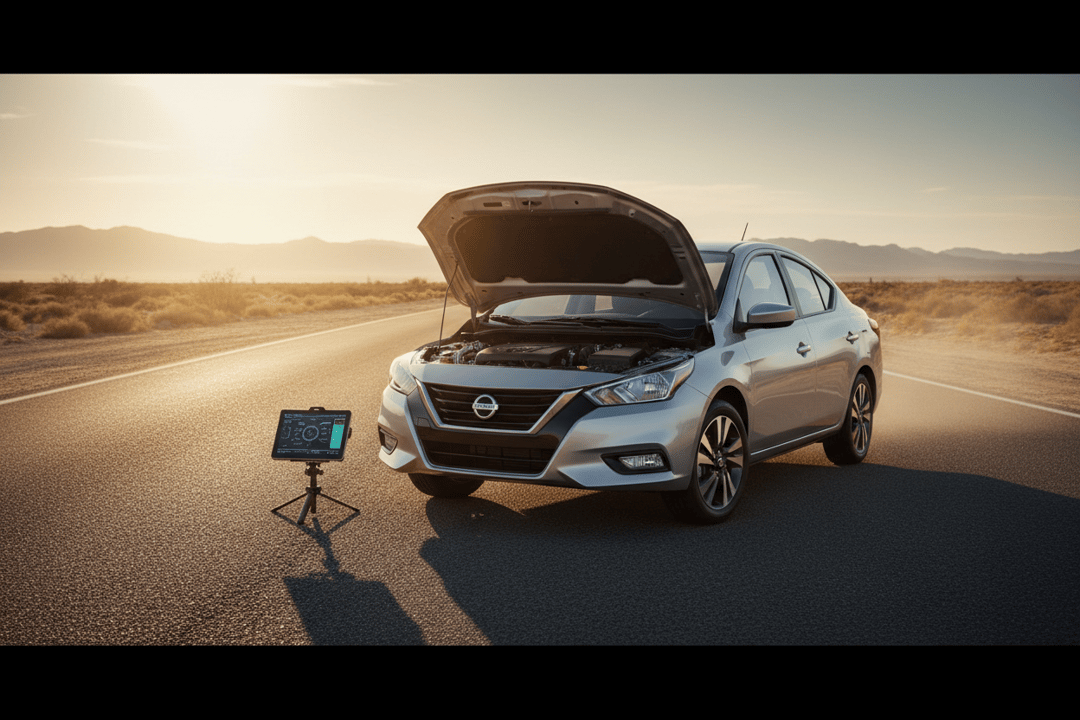
A 2017 Nissan Altima may suit a long journey when the particular car's condition and records are clear, its functions have been checked and you know how to respond to a warning or an unplanned stop. Model year or a short drive does not establish freedom from faults, and an odometer does not set a fixed failure date. Assess the offered Altima and your route plan before relying on it for the journey.
Start with the Altima version and its warning instructions
Verify model year, original supply market, trim, engine and transmission from documents and distributor information for the VIN. Keep the matching manual and review warnings and assistance arrangements before departure. Another market's equipment or instructions do not automatically apply to your car.
The US 2017 Altima manual describes a protection mode for overheated CVT fluid that can limit power and speed. Confirm applicability to your version; this does not diagnose hesitation or establish a common defect or Gulf-market equipment.
Resolve potential interruptions before the departure date
If buying the car, request maintenance invoices, a sequence of recorded odometer readings and previous repair details. Establish servicing due from the correct manual and history, and have unexplained observations assessed before travelling. Do not leave this until departure morning or order parts from a generic failure list.
While safely parked, review visible tyre condition and the vehicle placard's inflation instructions, lights, wipers, washers, belts and locks. Try your phone, navigation and air conditioning before moving. Secure luggage clear of visibility and pedals and follow the vehicle's loading instructions instead of assuming capacity from the model name.
During a safe, authorised drive, note take-off, response, unusual noise, vibration or warnings without deliberately stressing the car to provoke a fault. After stopping, record when an observation occurred and the conditions. That helps diagnosis more than immediately attributing it to a timing chain or transmission.
Plan the route and a manageable interruption
Identify suitable fuel and rest stops and an alternative route if needed. Allow time for breaks rather than a schedule that makes stopping feel impossible. NHTSA's journey guidance advises allowing time for rest stops on longer trips. Base fuel planning on comparable usage evidence rather than an unverified monthly bill or driving range.
Have a means of communication and contact details for assistance appropriate to your car, and know how to share your location and road description. Check the emergency equipment you choose to carry, its condition and accessibility, and familiarise yourself with assembling any warning device in a safe place before departure. Its presence does not establish standard Altima equipment or replace safe-use instructions and conditions at a stop.
If a warning or performance change occurs while driving
Concentrate on controlling the vehicle and reaching a safe place when necessary, following the warning instructions for your version. Do not become distracted photographing the display while driving. Once safely stopped, record the message or symbol and circumstances, then contact an appropriate assistance or service provider to determine the next step.
The cited manual warns against driving while overheating or opening a hot radiator cap. Follow your version's emergency instructions and obtain help; a cleared warning does not prove the cause is resolved.
When requesting roadside help, give your location, problem description and passenger situation. Do not enter moving traffic to set up equipment or inspect the vehicle, or attempt unsuitable repairs or towing. Use the appropriate assistance provider's directions and the correct vehicle manual rather than experimenting with a remedy that could cause further damage.
When should the journey or purchase wait?
Postpone relying on the car when an important warning remains unexplained, a response problem recurs or essential servicing is unresolved. Obtain diagnosis and a written quotation showing the repair, parts, labour, tax, warranty and expected timing. Alternative transport or a changed departure date is preferable to assuming a potential fault will disappear on the road.
An experienced AutoFay inspector comes to the vehicle for a visual, non-intrusive, non-mechanical inspection, with computer diagnostics and functional observations according to the package and available conditions. This does not include dismantling parts or examining internal engine or transmission components, and some observations need workshop diagnosis. An inspection does not guarantee detection of every fault or prevent future failures. Review the available inspection packages before booking.
Prepared by AutoFay. Editorial update: October 28, 2026.

0 Comments
No comments yet. Be the first to share your thoughts!