

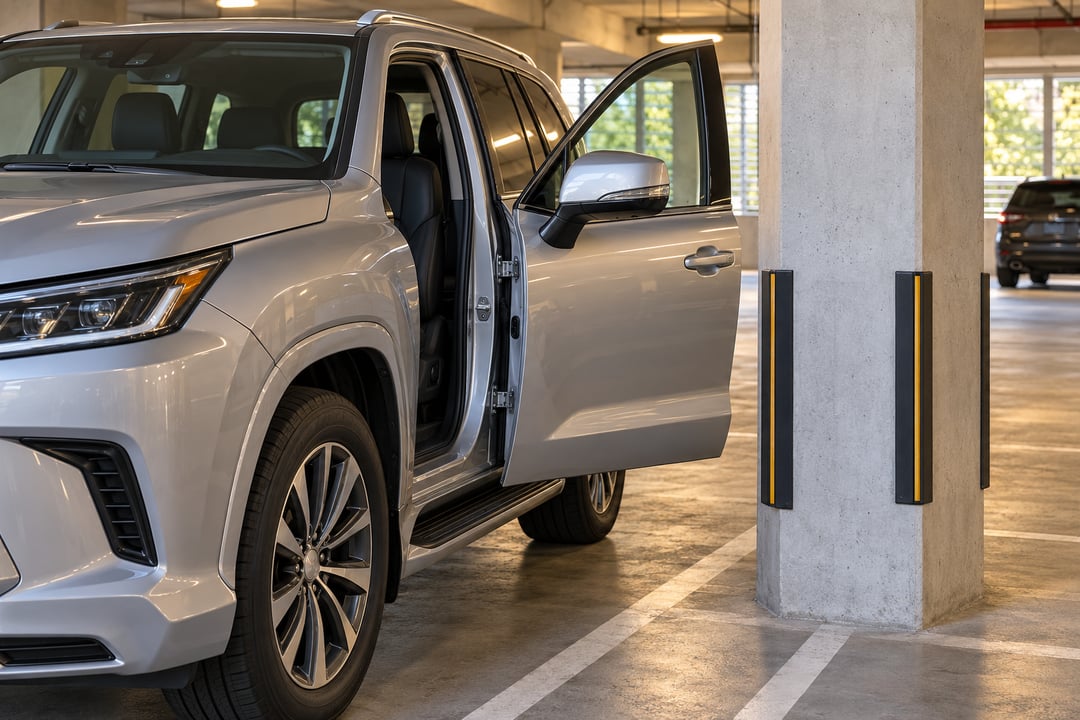
Before buying a 2026 Lexus LX 700h for use with a tight parking space, establish available clearance and passenger access. Fitting between two lines is insufficient if you cannot open the door or reach the boot. Assess the actual space safely without relying on cameras alone.
Separate entrance clearance from usable space
Check actual vehicle dimensions in the correct version's documents, accounting appropriately for mirrors and accessories. Compare them with the entrance, ramp, overhead clearance and columns. No dimensions or turning-circle figures for another version are assumed here, nor identical specifications across supplying markets.
Once inside, you still need room for doors, passenger exit and loading. Ask the parking operator about unclear dimensions or restrictions. Where clearance remains uncertain, arrange measurement rather than trying entry by guesswork or touching a mirror against an obstacle.
Identify each assistance feature before relying on it
Obtain the manual and grade information and establish which cameras and sensors are actually fitted and how their displays work. A screen or icon does not prove every assistance function exists or operates correctly. Observe the image in a generous, safe space and record any delay, interruption or distortion needing explanation.
NHTSA's driver assistance guidance explains that reversing cameras do not replace mirrors or looking around. Some systems warn while others intervene; do not infer a function from marketing terminology or a beep alone. This explains technology generally, not the actual LX's equipment or local requirements.
Try access gradually without putting anyone at risk
With permission in a permitted location, set the seat and mirrors before moving and begin with generous space. Watch the surroundings and stop if visibility or distance is uncertain. Do not place a person behind the vehicle or use an obstacle to test automatic braking or sensors.
Assess doors and boot access with the vehicle fully stopped, then try your passengers' and luggage needs. Do not fold mirrors while moving simply to force entry; follow the manual and establish in advance whether the space is practical for daily use.
Observe wear without assuming a diagnosis
Look at accessible mirror edges, doors, bumpers and wheels, and ask about visible damage or repairs. A scratch alone does not establish a major collision; its absence cannot establish every system's condition. Record observations alongside documents and appropriate assessment.
Obtain written confirmation of any warranty or cover claimed by the seller. Do not assume a particular damage type is included or excluded. A cleared message is not a repair of an inoperative function. Seek diagnosis where needed and quotations for defined work before estimating costs.
What an AutoFay inspection contributes
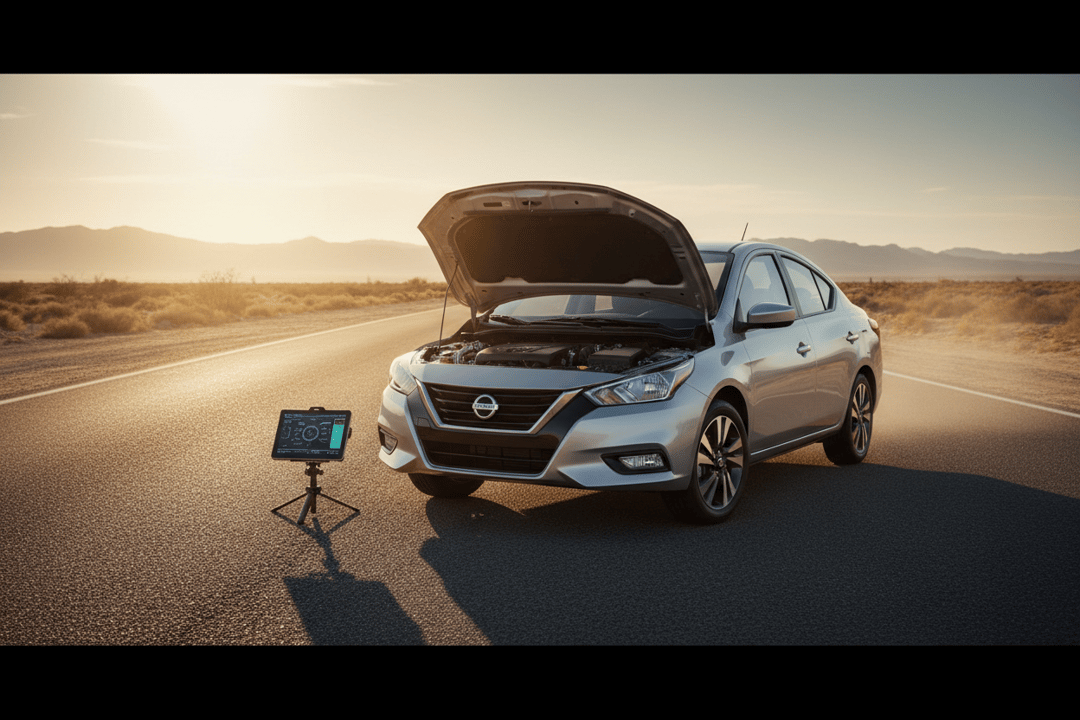
An experienced inspector comes to the vehicle for a visual, non-intrusive, non-mechanical inspection, with computer diagnostics and functional observations according to package and conditions. Paint and visible underbody areas may be assessed within the package where safe access is available. Review the service scope.
The inspection does not dismantle components or examine internal engine and transmission parts. It cannot guarantee every fault will be found, calibrate assistance systems or certify your parking space's suitability. Some findings need workshop diagnosis. Combine the report with measurements and a safe access assessment to decide whether the vehicle fits your parking routine.
Prepared by AutoFay. Editorial update: October 28, 2026.

0 Comments
No comments yet. Be the first to share your thoughts!