
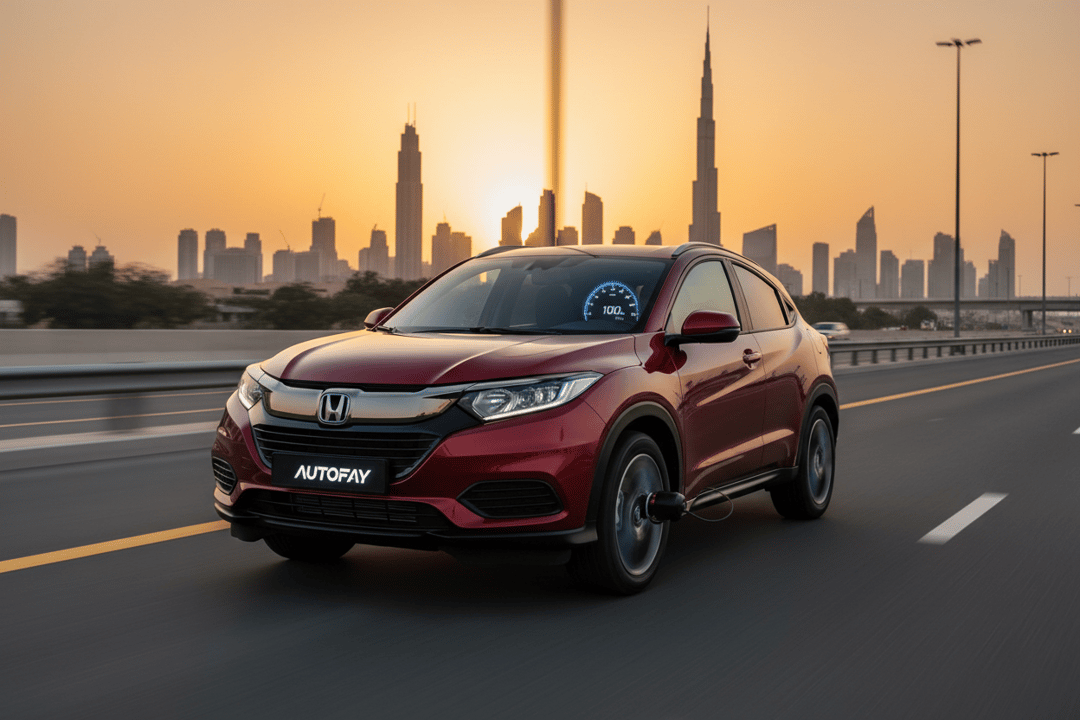
Many first‑time buyers assume a compact SUV like the Honda HR‑V 2022 will handle long highway runs without a detailed check.
What the Inspection Covers
The inspection focuses on Engine Start & Operation, Road Test, Suspension & Steering, Tires & Wheels, Brakes, HVAC, and Safety & Security because these systems directly affect stability and comfort at highway speeds. Inspectors verify that the engine starts cleanly, that the idle is steady, and that no warning lights illuminate; any active fault on the OBD scanner is recorded as Active Faults, while stored codes are flagged for further diagnosis.
Body, Paint & Damage and Frame Condition receive special attention. Each panel—from the front bumper to the roof—receives a rating of, Repainted, or Replaced, and a Repainted hood paired with a Repaired front bumper often signals prior collision work. Frame rails, bulkhead, and cross members are examined for bends or welds, with any deviation marked as Structural Damage, a critical finding for high‑speed confidence.
Under the Hood, the inspector checks the air filter, belts, battery health, and starter condition, assigning a status of Good, Worn, or Needs Replacement. Engine health is evaluated for abnormal noises, oil seal integrity, and exhaust smoke color, while the Fluids category records level and condition of oil, coolant, brake, and transmission fluids; a dark transmission fluid is noted as Contaminated, indicating possible wear.
What Buyers Miss Without Inspection
Hidden OBD fault codes frequently escape casual observation; a stored ABS code can reveal intermittent sensor failure that only appears under heavy braking, potentially compromising safety on long descents.
Paint depth readings expose surface refinishing that the eye cannot see. A Repainted roof combined with a low paint thickness on the rear quarter panel often points to accident repair work, which may affect rust resistance in the UAE’s humid coastal climate.
Frame rail condition is another blind spot. Even a minor bend in the front rail can alter wheel alignment, leading to uneven tire wear and a pulling sensation at 120 km/h—issues that only a structural check will uncover.
Transmission fluid color and brake pad wear percentages are easy to overlook. Fluid that appears milky suggests coolant mixing, while brake pads below 25 % thickness are flagged as Near‑End‑Life, a condition that can cause longer stopping distances during high‑speed travel.
UAE‑Specific Considerations
The desert heat forces AC compressors to operate at full load for ten months a year; the inspection of the HVAC system includes compressor clutch wear and refrigerant pressure, ensuring the cabin remains cool on long motorway stretches.
Sand infiltration through worn door seals can damage interior electronics and clog cabin air filters. Inspectors evaluate door rubber condition and filter cleanliness, reporting any excessive grit that could shorten the life of the infotainment screen or climate control sensors.
Brake rotors and pads experience accelerated fade in temperatures above 45 °C. The Brakes category measures pad thickness and rotor surface condition, while the Suspension & Steering check confirms that bushings have not hardened, which would otherwise increase vibration on hot asphalt.
AutoFay evaluates over 410+ checkpoints, provides HD photographs, and delivers a detailed PDF report to your inbox. The on-site team operates across all seven Emirates, ensuring the Honda HR‑V 2022 you consider is examined where you are. Book the inspection at autofay.ae or call 971‑50‑8066937.
0 Comments
No comments yet. Be the first to share your thoughts!