

Hyundai vehicles dominate the UAE market due to their blend of reliability, fuel efficiency, and modern design. However, despite their engineering robustness, specific components are prone to accelerated wear driven by our harsh climate and road conditions. As a certified vehicle inspector, I often see owners surprised by failure points that manifest shortly after purchase. A professional pre-purchase inspection is not merely a formality; it is a critical diagnostic tool that exposes latent defects before they become financial liabilities.
The Engine: Diagnostics and Timing Components
The internal health of a Hyundai engine is generally resilient, but the ancillary systems require constant vigilance. One of the most common failure points is the timing belt and water pump assembly. In many Hyundai models, these components are integrated into a single unit that is designed to fail simultaneously. If the belt snaps while the engine is running, it can cause catastrophic internal damage to the pistons and valves, turning a routine replacement into a complete engine rebuild.
Another frequent repair item is the valve cover gasket. Over time, the heat cycles in the UAE cause this rubber seal to harden and crack, leading to oil leaks. While not immediately catastrophic, these leaks can drip onto hot engine components, creating smoke and the risk of an electrical fire. Furthermore, catalytic converters can become clogged due to burning oil or coolant, resulting in a significant loss of engine power and the need for expensive exhaust system replacement.
During an inspection, the technician verifies the health of these systems through a computer diagnostic scan and a visual smoke test for leaks. The OBD scan checks for stored error codes in the engine and transmission control units, revealing potential issues like oxygen sensor failures or transmission solenoid faults.
Suspension: The Impact of UAE Roadways
The suspension system bears the brunt of the UAE terrain, which includes sharp potholes and uneven asphalt. Common wear items in this category include shock absorbers, struts, and ball joints. Shock absorbers are hydraulic devices that control the bounce of the vehicle; when they fail, the car loses stability and control during braking or cornering. A visual inspection reveals oil leaks from the shock body, while a road test identifies excessive body roll and nose-dive.
Ball joints are the pivot points that connect the steering knuckles to the control arms. Their failure can cause the wheel to separate from the suspension, resulting in a total loss of steering control. These components often fail silently, but a comprehensive inspection checks for play in the steering linkage and listens for knocking noises over bumps. Worn suspension parts also accelerate tire wear unevenly, leading to premature tire replacement costs that could have been avoided with early detection.
Braking System and Tire Integrity
Brake pads and rotors represent a wear item that must be monitored closely. The brake pads are the only component in the system that actually creates friction to stop the vehicle, and they wear down based on driving habits and the quality of the brake fluid. A thorough inspection assesses the remaining thickness of the brake pads and the condition of the rotors for warping or scoring. If the rotors are too thin, they cannot be resurfaced and must be replaced, increasing the repair bill.
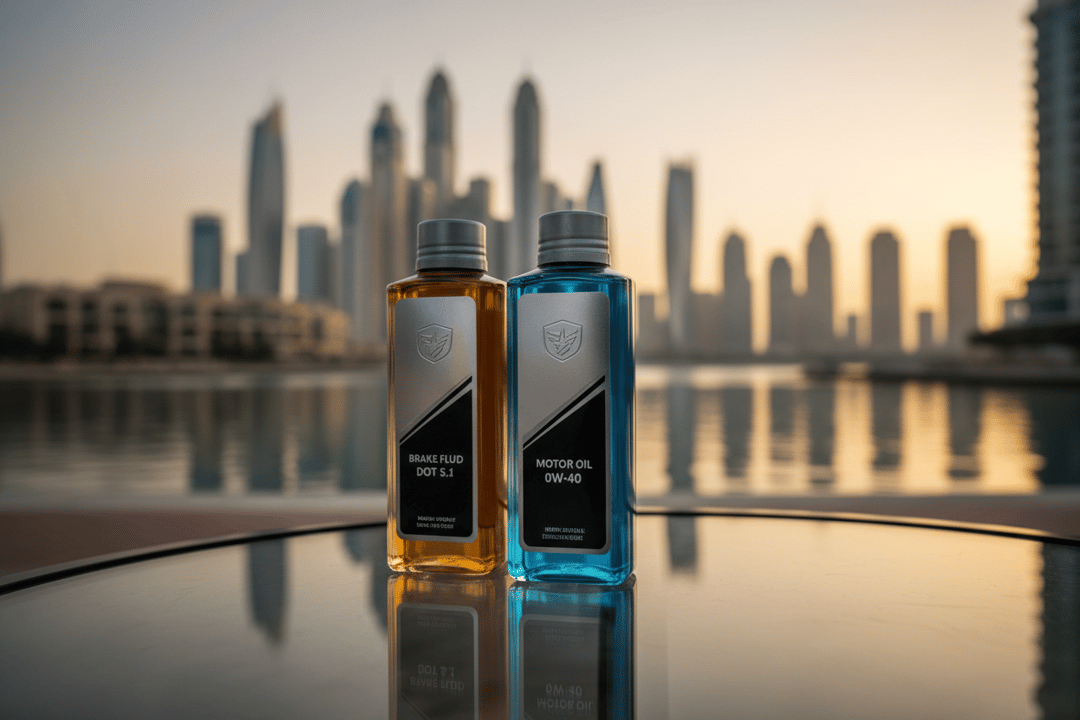
Brake fluid is a hygroscopic substance, meaning it absorbs moisture from the air. Over time, this moisture lowers the boiling point of the fluid, causing the brakes to fade under heavy use. A contaminated fluid can also cause corrosion inside the brake lines and calipers. Equally critical is the condition of the tires. In the UAE heat, tires degrade faster than in temperate climates. Inspectors check the manufacturing date on the sidewall to ensure the tires have not reached their five-year service life, as aged tires become brittle and prone to blowouts.
Fluids and Cooling System Health
The cooling system is under immense stress in the Gulf region. The coolant fluid degrades over time due to high operating temperatures, losing its ability to prevent corrosion and boil over. A coolant system failure can lead to engine overheating, which causes warped cylinder heads and blown head gaskets. The inspection includes checking the coolant reservoir level and condition, ensuring the radiator is free of damage and the hoses are flexible and not brittle.
Transmission fluid is another vital fluid that often goes unnoticed. In modern Hyundai automatic transmissions, the fluid serves as both a lubricant and a hydraulic fluid. If the fluid is burnt or low, the transmission may slip, shudder, or fail to engage gears. A fluid flush is generally recommended every 60,000 to 100,000 kilometers, depending on the driving conditions. A lack of service history for this fluid is a significant red flag that requires further investigation.
Body, Paint, and Structural Safety
While structural integrity is not the primary focus of engine maintenance, the condition of the unibody frame is essential for safety. A vehicle that has been in an accident may have the body panels replaced, but the underlying frame rails and pillars may have been bent and subsequently straightened. This compromise can affect the vehicle's alignment, handling characteristics, and safety in a future collision. Inspectors look for panel gaps that are inconsistent between matching doors and hoods, which indicate previous repair work.
The paint is also a diagnostic tool. Original paint is usually consistent in color and gloss across panels, including the door jambs and trunk lip. Discoloration, overspray, or uneven texture suggests a repair attempt to hide accident damage. Additionally, inspectors check for rust, particularly in the wheel wells and lower panels where road salt and sand accumulate. Even minor rust can spread quickly, compromising the structural metal of the vehicle.
The AutoFay Inspection Methodology
Unexpected repairs are the primary reason for buyer anxiety. The solution lies in a rigorous, systematic inspection process that covers every aspect of the vehicle's condition. AutoFay provides a on-location inspection across all seven Emirates, bringing the workshop to the vehicle's location for your convenience.
The inspection process is systematic, utilizing a checklist of 410+ checkpoints organized into 25 categories. This exhaustive approach ensures no component is overlooked. The process begins with a computer diagnostic scan to read engine, transmission, ABS, and airbag codes, ensuring the electronic brain of the car is functioning correctly. This is followed by a detailed visual inspection of the engine bay, checking for leaks, corrosion, and damage to wiring harnesses.
| Package | Price | Core Focus |
|---|---|---|
| Computer Diagnostic | AED 99 | Engine and Transmission OBD codes |
| Body & Computer | AED 250 | |
| Comprehensive | AED 299 |
The inspection integrates a road test to evaluate acceleration, braking, and noise levels. This dynamic assessment is the only way to truly gauge the health of the suspension and drivetrain. The inspector checks tire manufacturing dates and wear patterns, looking for signs of alignment issues or damage. The body inspection is performed panel-by-panel to determine if the paint is original or has been refinished to hide prior accidents. The frame is checked for straightness to ensure the vehicle has not been involved in a collision that could compromise its safety structure.
AutoFay inspects 410+ checkpoints with HD photos and PDF report. Book at autofay.ae or call +971542584458.



0 Comments
No comments yet. Be the first to share your thoughts!