
The United Arab Emirates presents a unique challenge for vehicle maintenance, specifically regarding engine lubrication. Temperatures frequently exceed 45 degrees Celsius, placing immense thermal stress on automotive fluids. Selecting the correct lubricant and adhering to strict maintenance schedules is not merely a recommendation; it is a requirement for vehicle longevity. This guide examines the technical specifications of engine oils suitable for the region and explains why standard maintenance advice often fails in extreme environments.
Understanding Viscosity Grades: 5W-40 vs. 0W-20
Viscosity represents the measure of an oil's resistance to flow. In the context of the UAE, this property determines how effectively the oil protects engine components during rapid heating and high-speed operation. The Society of Automotive Engineers (SAE) classifies oils using a numeric system indicating flow at different temperatures. The "W" stands for Winter, though in hot climates, the high-temperature rating is the critical factor.
5W-40 oil is a multi-grade lubricant designed to maintain a thicker consistency at operating temperatures. This higher viscosity provides a robust physical barrier between moving metal parts, such as pistons and cylinder walls. It is particularly suitable for high-performance engines, older engines with wear, or vehicles that frequently engage in heavy towing or sustained high-speed driving on Emirates highways.
Conversely, 0W-20 oil is significantly thinner at room temperature. The "0W" ensures rapid flow during cold starts, reducing friction immediately. However, the "20" indicates a lower viscosity rating at high temperatures. While this improves fuel economy and reduces internal engine friction in modern engines with tight tolerances, it offers less protection against wear in extreme heat compared to 5W-40. Modern manufacturers often recommend 0W-20 to meet strict emissions and efficiency standards, but this choice demands that the oil maintains its chemical integrity longer than heavier oils.
| Viscosity Grade | Viscosity at 100°C (cSt) | Thermal Stability | Best Suited For |
|---|---|---|---|
| 5W-40 | 12.5 to 16.3 | High | High mileage, turbocharged, high-performance vehicles |
| 0W-20 | 9.3 to 12.5 | Medium | Fuel-efficient cars, modern direct-injection engines |
Synthetic vs. Conventional Lubricants
The distinction between synthetic and conventional oil is defined by molecular structure and refining processes. Conventional mineral oil is extracted from crude petroleum and undergoes minimal refining. While adequate for temperate climates, its molecular structure is irregular. Under the relentless heat of the UAE, conventional oil oxidizes rapidly, forming sludge and varnish that clog oil passages.
- Thermal Stability: Synthetic base stocks are engineered to have uniform molecular sizes. This uniformity allows the oil to resist thermal breakdown at temperatures where mineral oil would turn into a gel-like substance.
- Shear Stability: High temperatures cause viscosity to drop through a process called viscosity shear. Synthetic oils resist this thinning far better than conventional oils, ensuring the oil remains thick enough to protect bearings throughout the oil change interval.
- Wear Protection: Synthetic oils typically contain higher levels of detergents and anti-wear additives. This chemical environment is essential for protecting timing chains and camshafts in variable valve timing systems found in most modern UAE vehicles.
Using conventional oil in an engine designed for full synthetic protection leads to accelerated wear on critical components. The lack of thermal stability results in sludge buildup, which can cause oil pump failure and blockage of the oil filter.
Change Intervals in Extreme Temperatures
Standard oil change intervals, often cited as 7,500 to 10,000 miles, assume a moderate climate. In the UAE, these intervals are dangerously optimistic. High ambient temperatures accelerate the rate at which oil molecules break down. The additives that prevent corrosion and foam degrade much faster, reducing the oil's ability to carry heat away from the engine.
Consequences of extended intervals in extreme heat include a drop in oil pressure. As the oil becomes contaminated and thin, it fails to lubricate the engine bearings effectively. This can lead to "oil starvation" damage to the crankshaft and connecting rods. Furthermore, the oil filter, which is designed to catch contaminants, may become saturated with combustion byproducts before the oil is changed, rendering it ineffective.
For synthetic oils, the interval may extend to 12,000 miles or one year, depending on the manufacturer's severe service schedule. However, this relies on driving conditions. If a vehicle is used for stop-and-go traffic in Dubai city centers, where temperatures rise rapidly and the engine does not reach optimal operating temperature, the oil degrades faster. In such mixed conditions, adhering to a strict calendar schedule rather than a mileage-based schedule is the safer approach.
Visual and Auditory Indicators of Oil Failure
Vehicle owners must recognize the physical signs of engine oil degradation. The oil pressure warning light on the dashboard is the final warning before significant failure. However, inspection of the oil itself provides earlier, actionable data.
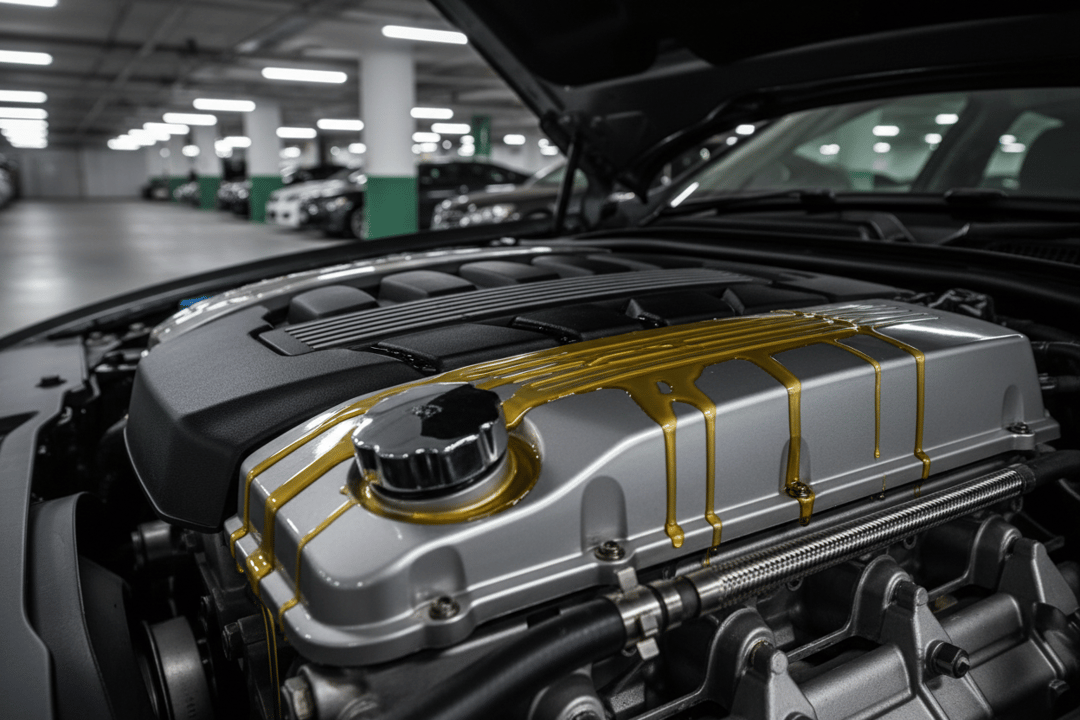
- Color and Consistency: Fresh oil is amber or golden. If the oil appears black, dark brown, or grayish, it indicates thermal breakdown and the presence of contaminants. If the oil appears milky or foamy, it suggests coolant contamination, often due to a failing head gasket.
- Sludge: Checking the oil dipstick or the oil fill cap can reveal a thick, tar-like substance. This sludge is a primary cause of oil pump failure and blocked oil passages.
- Engine Noise: Metallic knocking or tapping sounds usually indicate lack of lubrication. The pistons and rods rely on a film of oil to separate metal surfaces; without it, the impact creates permanent damage.
The Role of Professional Vehicle Inspection
Changing the oil is a necessary maintenance task, but it does not guarantee the health of the engine. A professional inspection evaluates the condition of the oil alongside the mechanical components that rely on it. Engine oil carries heat away from hundreds of moving parts; if the oil fails, the engine suffers.
At AutoFay, the inspection process goes beyond fluid levels. Our certified team evaluates the engine category, checking for unusual sounds, smoke color, and mount condition. We inspect the Fluids category, verifying not only the oil level but its physical condition. If sludge is detected, it indicates neglect. If the engine mounts are broken, vibrations can stress the oil pump, leading to premature failure.
Investing in a comprehensive inspection helps identify hidden issues before they result in engine replacement. A vehicle with degraded oil may have minor mechanical issues that become catastrophic when the lubrication is compromised. Identifying these risks early prevents the expense of major repairs.
AutoFay inspects 410+ checkpoints with HD photos and PDF report. Book at autofay.ae or call +971542584458.




0 Comments
No comments yet. Be the first to share your thoughts!