

The school run in the United Arab Emirates is a routine daily activity for thousands of families, yet it represents one of the highest-risk windows for vehicle failure. Unlike long-distance highway journeys, this trip involves frequent acceleration, braking, and navigating congested residential areas where reaction times are critical. As a certified vehicle inspector, I have observed that the most common reason for mid-day breakdowns is a lack of preparation for these short, high-demand trips. Ensuring a vehicle is mechanically sound before the academic year begins requires a systematic approach to maintenance and safety verification. This guide outlines the essential checkpoints required to validate a family car's readiness for the daily school circuit.
Braking Systems: The Foundation of Safety
The braking system is the single most critical component regarding occupant safety. In the context of school runs, the vehicle must be able to stop quickly and predictably to avoid colliding with pedestrians or stationary school buses. A thorough inspection begins by checking the friction material thickness of the brake pads. If the lining has worn down to the metal backing, the metal-on-metal contact will generate excessive heat, warp the rotors, and significantly increase stopping distances.
- Fluid Levels: Brake fluid absorbs moisture over time, which lowers the boiling point of the fluid. In high-performance braking scenarios, this moisture can cause vapour lock, leading to a complete loss of braking power.
- Rotor Condition: Inspectors must look for scoring, cracks, or an uneven surface finish. Warped rotors cause a vibrating steering wheel, which can cause driver fatigue and loss of control during panic stops.
- Absence of Leaks: Any fluid seepage from the calipers or hydraulic lines indicates a breach that could lead to a gradual fluid loss during the school run.
Tires: Contact Points and Traction
Tires act as the only interface between the vehicle and the road surface. In the UAE climate, high temperatures accelerate the degradation of rubber compounds. A vehicle equipped with tires that are past their manufacturing date or have insufficient tread depth presents a severe hazard, particularly during sudden heavy rainstorms in winter. The legal limit for tread depth is 1.6 millimeters, but safety margins dictate that vehicles should be serviced well before reaching this point.
- Manufacturing Date: Tires older than six years old are structurally compromised regardless of tread depth. The four-digit code on the sidewall indicates the week and year of manufacture; numbers indicating a year before the current year require immediate replacement.
- Tread Depth and Pattern: Worn tires lose the ability to channel water away, increasing the likelihood of hydroplaning. Bald tires also offer no grip on loose gravel roads often found near school zones.
- Uneven Wear: Bald spots or cupping on the tire tread usually indicate suspension issues, such as worn shock absorbers or ball joints, which were missed during previous maintenance checks.
Structural Integrity and Accident History
Many vehicles appear cosmetically pristine but suffer from hidden structural damage caused by previous minor accidents. As an inspector, I utilize a panel-by-panel analysis to detect inconsistencies that signal a compromised frame. Even a small impact at low speeds can misalign the vehicle's structural rails, leading to poor handling and accelerated tire wear. Ignoring this aspect of vehicle safety can result in the cabin collapsing during a high-impact collision.
Frame and Rail Inspection
The unibody frame must be checked for stress fractures or misalignment. Inspectors look for rust or welding marks on the interior of the pillars and floor pans. A damaged frame alters the vehicle's geometry, meaning the steering wheel may not align straight when driving in a straight line, and the brakes may pull to one side.
Paint and Panel Analysis
Discrepancies in paint color, texture, and gloss levels reveal past repairs. A vehicle with mismatched paint or rough edges around a panel gap has likely been involved in an accident. Such repairs often use filler materials that crack over time, allowing water ingress into the cabin and compromising electrical systems.
Electronic Reliability and Diagnostics
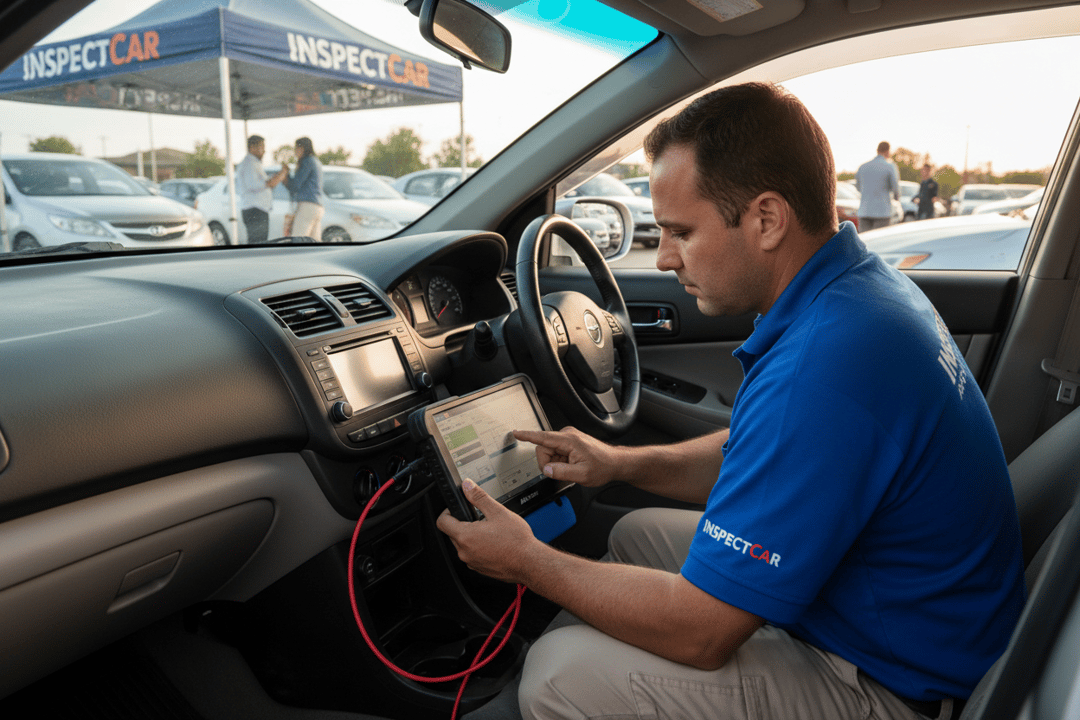
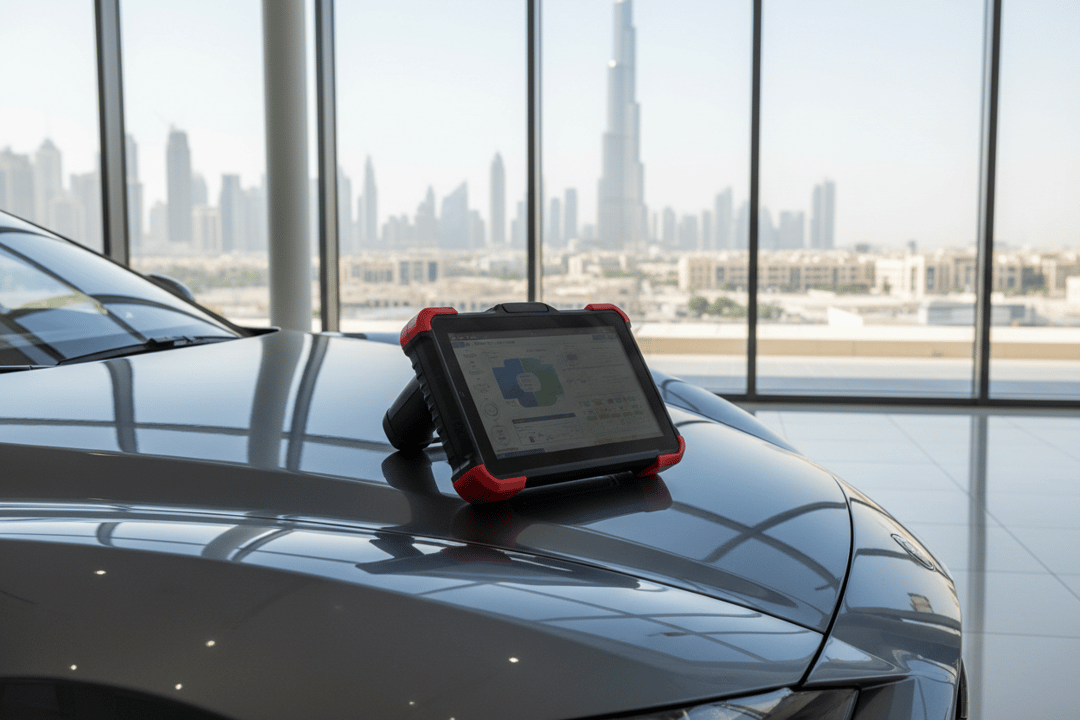
Modern vehicles rely on a complex network of sensors and computers to manage safety systems. A malfunctioning sensor can disable the Anti-lock Braking System (ABS) or the Airbag SRS unit without the driver ever seeing a warning light on the dashboard. Computer Diagnostics is the only way to uncover these latent defects. A standard visual inspection cannot detect a faulty wheel speed sensor hidden behind a brake caliper.
| Inspection Category | AutoFay Checkpoint |
|---|---|
| Engine Health | Sound analysis for knock or ping, inspection of engine mounts for vibration transfer. |
| Transmission | Gear engagement smoothness and shift timing verification. |
| ABS & Airbag | Scanning for error codes in safety-critical control modules. |
| Body & Paint | Panel-by-panel assessment of original paint, panel gaps, and rust. |
Fluids and Suspension Dynamics
Suspension components are the unsung heroes of road handling. Over the course of a school year, springs and dampers degrade, causing the vehicle to "bottom out" over speed bumps. This not only damages the suspension parts but also affects the tires and the passengers' comfort. Equally important is the condition of the transmission and coolant fluids. Old transmission fluid loses its viscosity and friction-modifying additives, leading to rough shifting and increased wear on the clutch packs.
- Shock Absorbers: A bounce test on each corner reveals if the dampers are unable to control the spring's rebound. Weak dampers keep the tires in contact with the road longer during cornering, improving stability.
- Transmission Fluid: The fluid should be bright red or pink and smell sweet. Black, burnt-smelling fluid indicates overheating and imminent transmission failure.
The Value of Professional Inspection
Attempting to self-diagnose these issues with a flashlight and a mirror is insufficient for a family vehicle that carries children. The consequences of missing a fault range from minor inconveniences, such as requiring a tow truck, to catastrophic mechanical failure. Professional inspection services provide a detailed report that highlights risks before they become incidents. This ensures that the vehicle meets the strict standards required for transporting minors.
For comprehensive vehicle safety, automated inspection technologies offer a standardized approach to identifying faults. By integrating visual checks with computer diagnostics, inspectors can verify that 250+ specific checkpoints have been met across 25 different categories.
AutoFay inspects 410+ checkpoints with HD photos and PDF report. Book at autofay.ae or call +971542584458


0 Comments
No comments yet. Be the first to share your thoughts!