

Before investing in a professional inspection, a test drive helps you eliminate cars with obvious problems. Think of it as a screening step — if the car fails your basic checks during the test drive, there is no need to pay for a full 410+ checkpoint inspection. But if the car passes your screening, the inspection catches everything a test drive cannot reveal. Here is a structured approach to get the most from your 15 minutes behind the wheel.
Before Starting the Engine
Walk around the car and look at the body panels. Check for uneven gaps between panels — between the hood and fenders, between doors, and around the trunk. Significant misalignment suggests previous accident repair. Look at the paint from a low angle — repainted panels often have a slightly different texture or sheen compared to original panels. Check all four tires for matching brands and sizes — mismatched tires indicate the owner replaced them individually rather than maintaining them properly.
Open the hood and look without touching. Check for oil stains, coolant puddles, or white residue around the engine. Look at the engine bay for signs of steam cleaning — an overly clean engine bay on an older car may be hiding leaks. Check the coolant reservoir level and color through the translucent tank if visible.
When You First Start the Engine
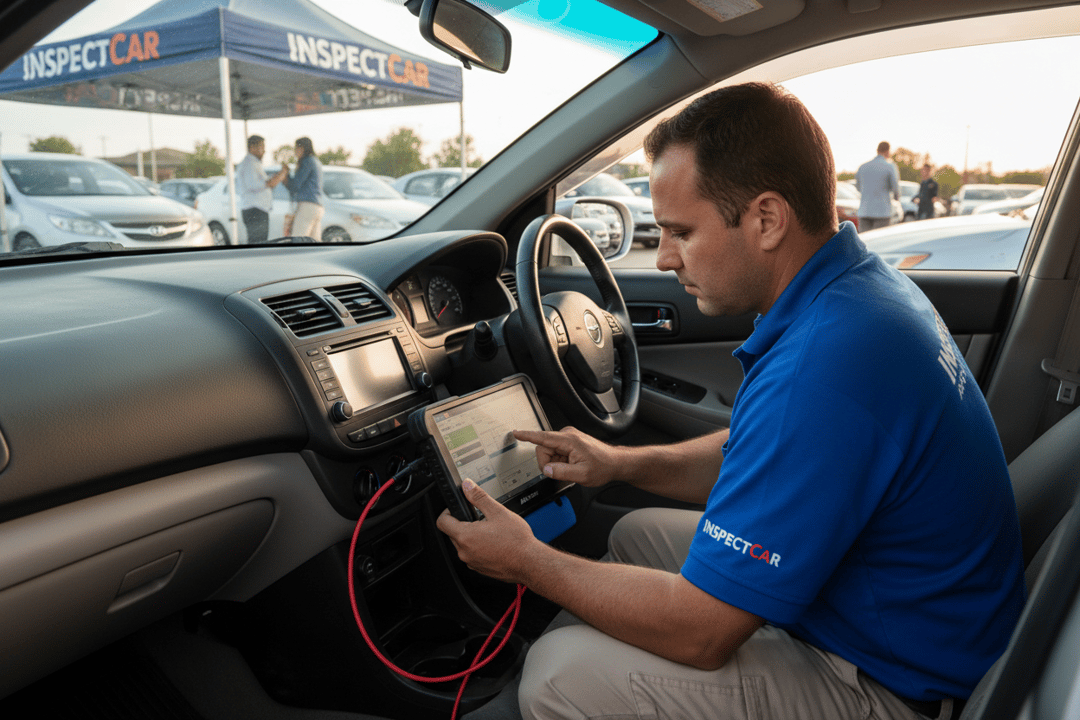
Watch the dashboard carefully when turning the key or pressing the start button. All warning lights should illuminate briefly during the startup self-test, then turn off. If the check engine light, ABS light, airbag light, or oil pressure light stays on after the engine starts, that is a problem. If a warning light does not illuminate at all during startup, it may have been disconnected to hide a fault — the full inspection checks this through OBD scanning.
Listen to the engine at idle. A healthy engine idles smoothly without vibration felt through the steering wheel or seat. Rough idle — the engine shaking or hunting for RPM — suggests misfires, vacuum leaks, or throttle body issues. Listen for knocking, ticking, or whining noises. A slight ticking from the valve train on a cold start that fades after warming up may be normal. A persistent knock that continues after warmup indicates internal engine problems.
During the Drive: Steering and Handling
On a straight, flat road, briefly let go of the steering wheel — does the car track straight or pull to one side? A pull indicates alignment problems, uneven tire wear, or a sticking brake caliper. At highway speed, feel for vibrations through the steering wheel. Vibrations at speed often indicate unbalanced wheels, bent rims, or worn suspension components. During turns, listen for clicking or clunking sounds from the front — clicking during turns is a classic sign of worn CV joints.
Test the steering response. Turn the wheel slightly left and right — there should be minimal delay between your input and the car's response. Excessive play means worn tie rod ends or steering rack issues. The steering should feel smooth throughout its range — notchiness or heavy spots indicate power steering problems.
During the Drive: Brakes
Find a safe straight stretch and brake firmly from moderate speed. The car should stop straight without pulling left or right. The brake pedal should feel firm — a soft or spongy pedal indicates air in the brake lines or worn components. Listen for grinding, squealing, or scraping noises during braking. A slight squeal on first application after sitting may be surface rust on the rotors, but persistent noise indicates worn pads or damaged rotors. Feel for pulsation through the brake pedal — a pulsating pedal means warped rotors.
During the Drive: Transmission
Accelerate gradually and feel for how the transmission shifts. Shifts should be smooth and nearly imperceptible on an automatic. Hard shifts — a noticeable jolt between gears — indicate transmission wear. A delay between selecting Drive and the car moving forward suggests internal problems. On the highway, the transmission should not hunt between gears — constantly shifting up and down at steady speed indicates a control issue.
AC and Interior Checks
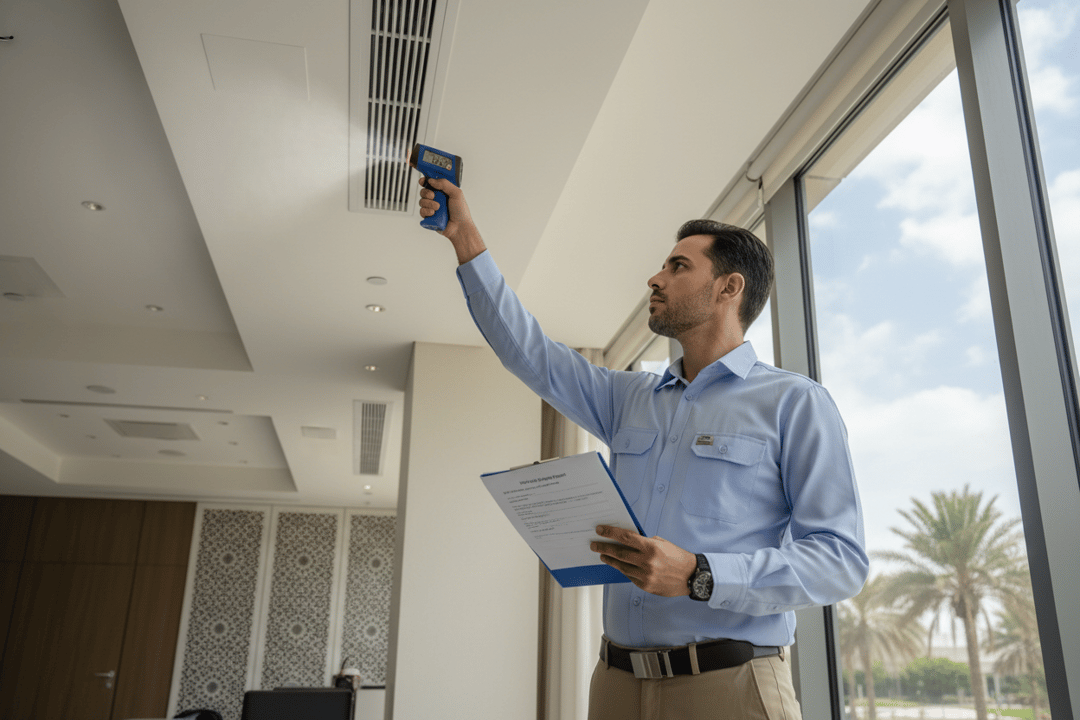
Turn the AC to maximum cold and maximum fan speed. In the UAE, a properly working system should blow very cold air within a minute or two. If the air is only cool, not cold, the system needs attention. Test all fan speeds — a blower that only works on the highest setting has a failing resistor. Listen for clicking noises from behind the dashboard when adjusting temperature — that is a blend door actuator failing.
Test every power window, the sunroof if equipped, the infotainment screen, Bluetooth, and USB ports. Try the backup camera and parking sensors. These are all items the full inspection checks, but finding multiple non-working features during the test drive gives you early warning about the car's overall maintenance level.
When to Skip the Inspection
If the test drive reveals a check engine light, rough idle, hard transmission shifts, weak brakes, or no AC cooling, you can likely move on to the next car without paying for an inspection. These are problems that will only be confirmed — and likely joined by additional findings — in the full report. Save the inspection for cars that pass your basic screening but need professional verification of what a test drive cannot reveal: frame condition, OBD codes, paint history, brake pad measurements, and fluid conditions.
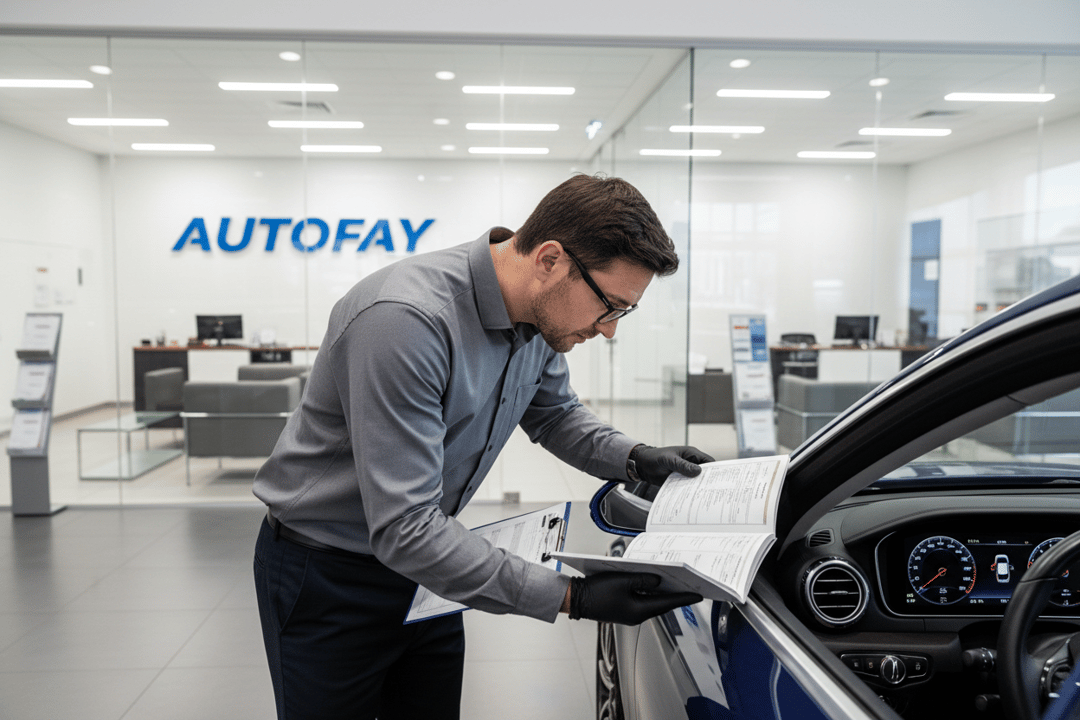
When a car passes your test drive, book AutoFay for the 410+ checkpoint inspection that catches what 15 minutes behind the wheel cannot. HD photos, detailed PDF report, on-location inspection across all 7 Emirates. Book at autofay.ae or call +971-54-258-4458.

0 Comments
No comments yet. Be the first to share your thoughts!