
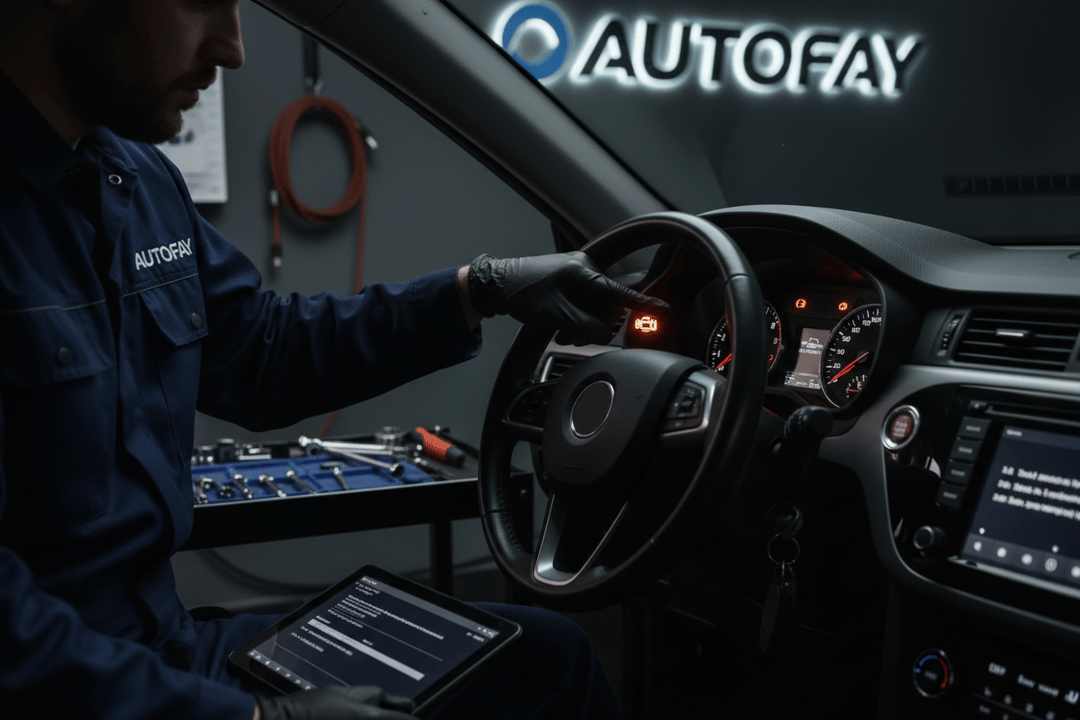
Modern cars communicate through dashboard warning lights. Each light connects to a specific sensor or system that has detected an abnormal condition. Some lights are informational — a fuel level warning, for example. Others indicate conditions that can destroy the engine, disable safety systems, or cause a breakdown on Sheikh Zayed Road during rush hour. AutoFay's inspection checks each of these systems directly, but understanding what these lights mean helps you make better decisions both when buying and when driving.
1. Check Engine Light
The check engine light is rated Off, On, or Flashing in AutoFay's Engine Start and Operation inspection. When it is On, the engine management computer has detected a fault — anything from a loose fuel cap to a misfiring cylinder. The OBD scanner reads the specific fault codes to determine the actual problem. A steady check engine light means a non-emergency fault that should be diagnosed soon. A Flashing check engine light means active misfires are occurring that can damage the catalytic converter within minutes of continued driving.
Sellers who clear the check engine light before showing the car leave a trace — the OBD readiness monitors will show as incomplete, indicating a recent code reset. The light will return once the system completes its self-tests, typically within a few drive cycles.
2. Oil Pressure Warning
The oil pressure warning light appears under the Warning Lights checkpoint, which tracks ABS, Airbag, Oil, Battery, and Multiple warnings. An oil pressure warning means the engine is not receiving adequate oil pressure to lubricate moving parts. This can result from low oil level, a failing oil pump, or oil that has become too thin from overheating or contamination.
Driving with the oil pressure light on causes metal-to-metal contact between bearings, camshafts, and cylinder walls. Engine damage from oil starvation can occur within minutes. During the fluid inspection, the engine oil level and condition are checked independently — correlating a low oil level finding with an oil pressure warning tells the full story.
3. ABS Warning Light
The ABS system is rated Working, Warning Light On, or Not Working in the brake inspection. When the ABS light is on, the anti-lock braking system is disabled. Conventional braking still works — the car will stop — but the wheels can lock up during hard braking, causing the car to skid rather than stop in a controlled manner. ABS fault codes from the OBD scanner pinpoint the specific cause — typically a wheel speed sensor, hydraulic pump, or control module issue.
On wet roads or sandy surfaces common in the UAE, ABS is critical for maintaining control during emergency stops. A car showing an ABS warning should not be driven at highway speeds until the system is repaired.
4. Airbag/SRS Warning Light
The airbag system is rated No Warning, Warning Light On, or Deployed in the safety inspection. An airbag warning light means the supplemental restraint system has a fault — the airbags may not deploy in a collision. This could be caused by a faulty sensor, a disconnected wiring harness, or a previously deployed airbag that was not properly reset after replacement.
Airbag/SRS fault codes from the OBD scanner reveal whether the issue is a sensor fault or a deployment history. A car with an active airbag warning light has compromised crash protection — a fact that should be weighed heavily in any purchase decision.
5. Battery/Charging System Warning
The battery warning light indicates the alternator is not charging the battery adequately. The under-hood inspection checks the alternator — rated Working, Weak Output, or Not Working — along with battery terminals (Clean, Corroded, Loose), battery cables (Good, Worn, Damaged), and battery mount (Secure, Loose, Missing). A weak alternator will eventually drain the battery, leaving the car unable to start.
In the UAE, battery life is shorter than in temperate climates. Extreme heat accelerates the chemical degradation inside the battery. The battery capacity is recorded during inspection as a text field, providing specific data on remaining battery life.
6. Temperature Warning
The engine temperature warning indicates the engine is overheating. The cooling system inspection checks the radiator, cooling fans, water pump, coolant hoses, and coolant level — any failure in these components can cause overheating. In the UAE, where ambient temperatures push cooling systems to their limits, a temperature warning during normal driving indicates a system that is already at its breaking point.
Continued driving with an overheating engine can warp the cylinder head, blow the head gasket, and cause catastrophic engine failure. The coolant condition check — particularly the Oily rating — helps determine whether overheating has already caused internal damage.
7. Stability Control/Traction Control Warning
Stability Control (ESC/VSC) is rated Working, Warning Light, or Not Working. Traction Control is also checked independently. When the stability control warning light stays on permanently — not just the momentary flash during wheel slip — the system is disabled. The car will not have electronic intervention to prevent skidding during emergency maneuvers.
A permanent stability control light often indicates a problem with a wheel speed sensor, which is shared between the ABS and stability control systems. A single faulty sensor can disable both systems simultaneously, which is why an ABS warning and stability control warning often appear together.
What Warning Lights Mean for Buyers
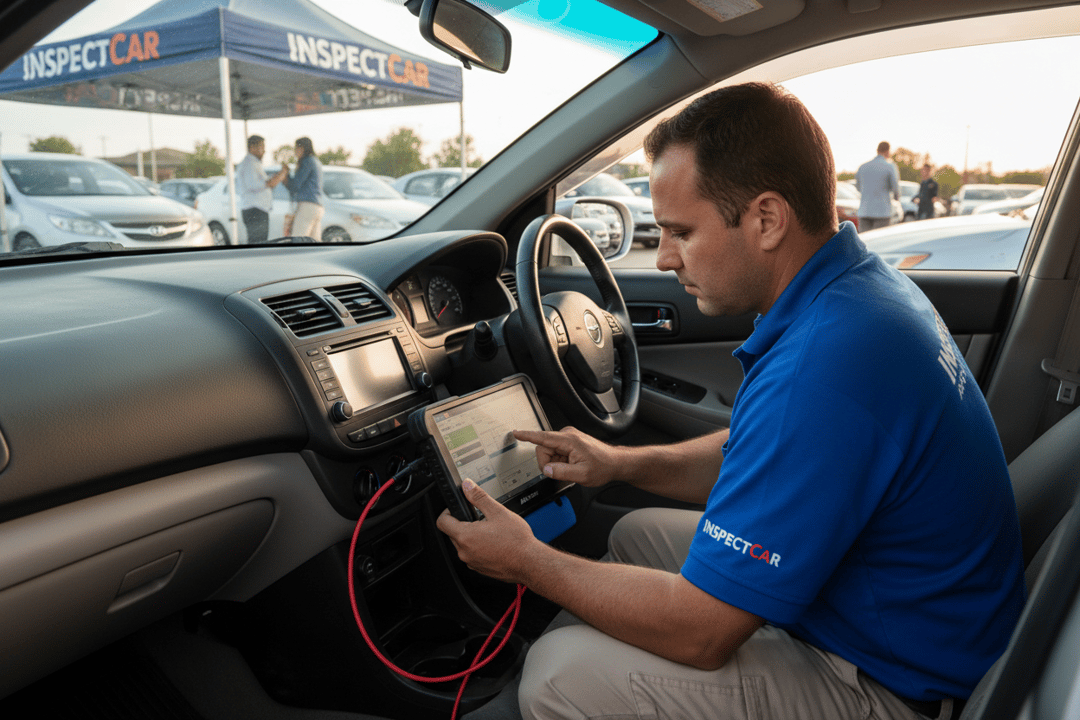
During a pre-purchase inspection, active warning lights are documented in the engine start section and confirmed through OBD scanning. A car with no warning lights and no stored fault codes is in good electronic health. A car with active warnings has known problems that represent either repair costs or safety compromises — both of which should be factored into the purchase decision and price negotiation.
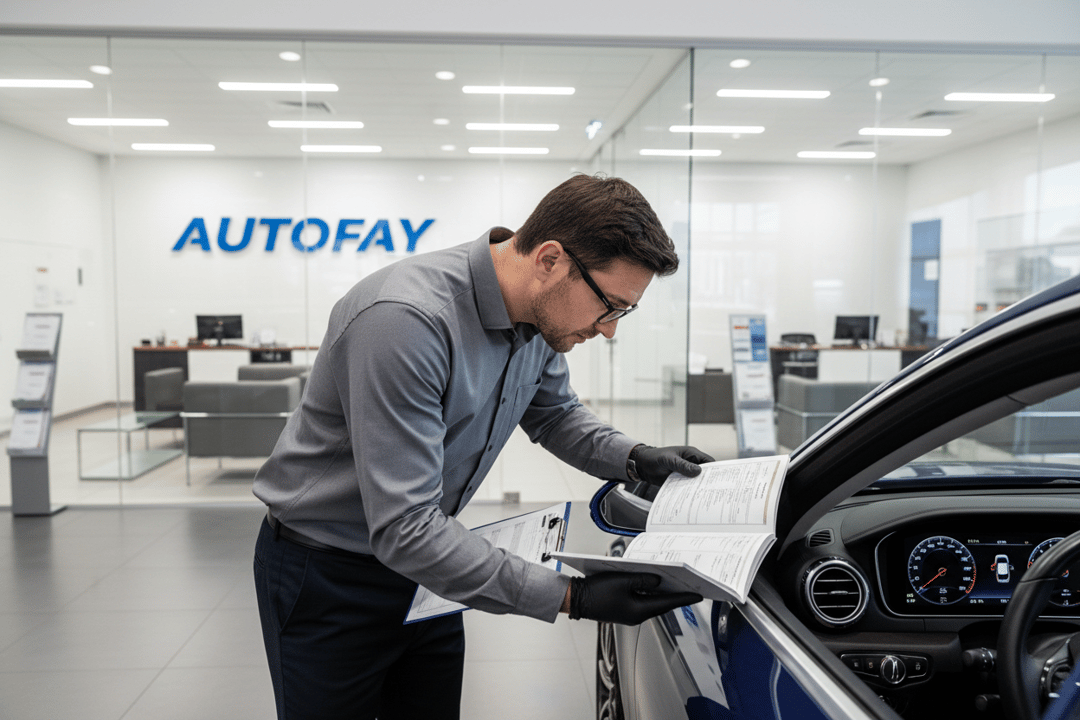
AutoFay inspects 410 checkpoints covering every dashboard warning system, with HD photos and a detailed PDF report. On-location inspection across all 7 Emirates. Book at autofay.ae or call +971-54-258-4458.

0 Comments
No comments yet. Be the first to share your thoughts!