

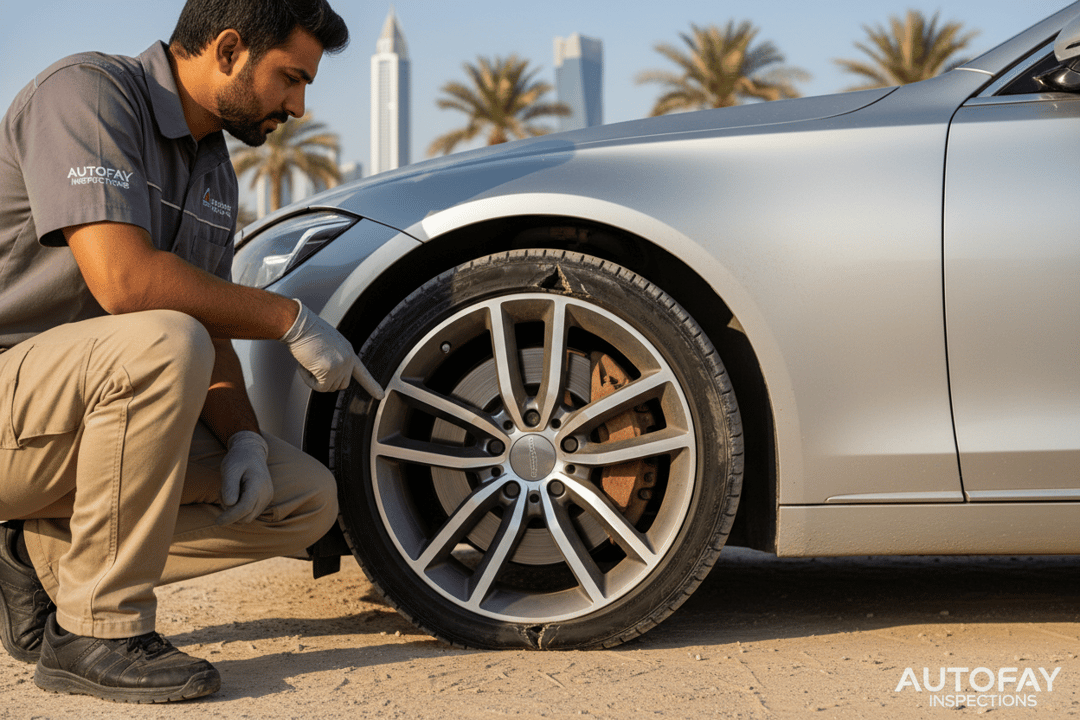
Low mileage is the most overvalued metric in used car buying. A car with higher mileage on a 5-year-old odometer sounds like a bargain — barely driven, hardly worn. But cars are designed to be driven, and vehicles that spend extended periods sitting develop problems that are completely different from high-mileage wear. These sitting-related issues are often invisible during a casual viewing and only emerge during professional inspection.
Rubber Components: Dry Rot from Disuse
AutoFay's tire inspection checks manufacturing year and condition for each tire individually. On low-mileage cars, tires often have substantial tread remaining but are rated as Cracked due to dry rot. Rubber hardens and cracks from UV exposure and temperature cycling regardless of whether the car is driven. A tire with 8mm of tread but visible sidewall cracking is unsafe at highway speed. In UAE conditions, tires degrade even faster from constant sun exposure.
The same principle applies throughout the car. Cooling hoses checked under the cooling system category can be rated as Cracked even on a low-mileage car — the rubber dried out from heat exposure while the car sat. CV boots in the drivetrain inspection may show cracks despite minimal use. Door rubber seals can be rated as Worn or Torn from drying and compression set. Brake hoses under the brakes category may be rated as Cracked or Swollen — aged rubber that never flexed enough to maintain its resilience.
Fluids: Age Matters More Than Mileage
The fluids inspection checks level and condition of engine oil, coolant, brake fluid, power steering fluid, and transmission fluid. On a low-mileage car, these fluids may never have been changed because the owner followed mileage-based service intervals rather than time-based intervals. Engine oil rated as Dark or Dirty on a car with higher mileage means the oil has been sitting in the engine for years, accumulating moisture and losing its protective properties.
Brake fluid condition is particularly important. Fluid rated as Dark or Contaminated on a low-mileage car has absorbed moisture from the atmosphere over years of sitting. This moisture lowers the fluid's boiling point, which can cause brake fade during hard braking — a hidden safety issue that the low odometer reading does nothing to prevent. Coolant condition can also degrade with time — contaminated coolant in a low-mileage car indicates the coolant has been sitting long enough for its anti-corrosion additives to break down.
Battery and Electrical: Discharge Damage
The under-the-hood inspection checks battery terminals, cables, mount, and capacity. A car that sits for extended periods discharges its battery repeatedly. Each deep discharge cycle damages the battery cells. Battery terminals rated as Corroded on a low-mileage car suggest the battery was not maintained during storage periods. The alternator is checked — rated as Working, Weak Output, or Not Working — because an alternator that does not regularly run can develop brush or bearing issues from inactivity.
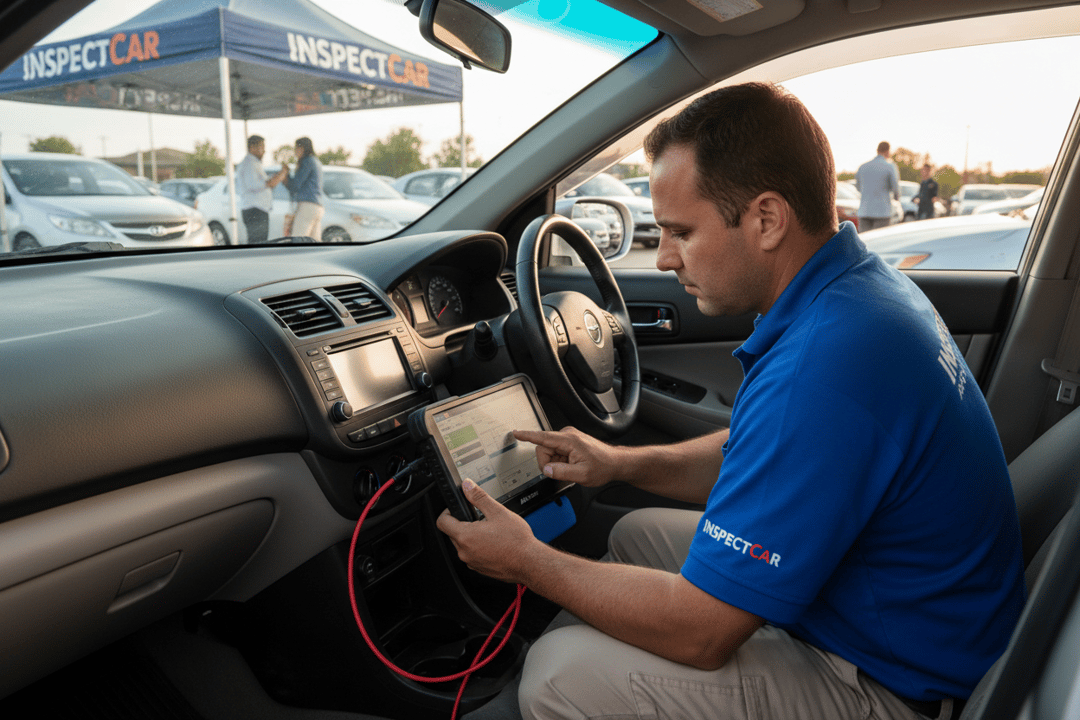
Electronic systems throughout the car can develop issues from extended inactivity. The OBD scanner report may show body control module codes related to battery voltage drops. The infotainment system is checked — extended periods without power can reset settings and occasionally corrupt software. Power window motors and seat motors that sit unused for months can develop stiffness that manifests as slow operation or intermittent function.
Brakes: Surface Rust and Seized Components
The brake inspection checks pads, rotors, calipers, and all related components. On a car that has sat for extended periods, brake rotors develop surface rust that creates a rough surface and causes noise and vibration during the first drives. Front and rear brake rotors may be rated as Scored from this surface corrosion. More concerning, brake calipers can develop sticking from corrosion on the caliper slides and pistons. A caliper rated as Sticking causes uneven brake wear and pulling during braking.
The parking brake cable can seize from disuse — a parking brake rated as Not Working or Not Holding on a low-mileage car often indicates the cable has corroded in position from extended engagement during storage.
Interior: Surprisingly Revealing
The interior inspection checks dashboard condition, seat condition, headliner, and interior smell. A low-mileage car with interior smell rated as Musty indicates moisture accumulation during storage — possibly from a parked car in a non-ventilated garage or outdoor storage where humidity cycles caused condensation inside the cabin. The headliner may be rated as Sagging if adhesive degraded from heat cycles. The cabin air filter rated as Dirty or Needs Replacement on a low-mileage car confirms the car sat without the air being circulated regularly.
AutoFay inspects 410 checkpoints and catches problems that low mileage cannot prevent, with HD photos and a detailed PDF report. On-location inspection across all 7 Emirates. Book at autofay.ae or call +971-54-258-4458.


0 Comments
No comments yet. Be the first to share your thoughts!