
Insurance companies in the UAE inspect vehicles before issuing or renewing policies. Their inspection serves their interests — documenting pre-existing damage so it cannot be claimed later, and assessing the vehicle's risk profile. Understanding what insurers look for, and how it differs from a comprehensive vehicle inspection, helps you make better decisions about both your insurance and your car.
Pre-Existing Damage Documentation
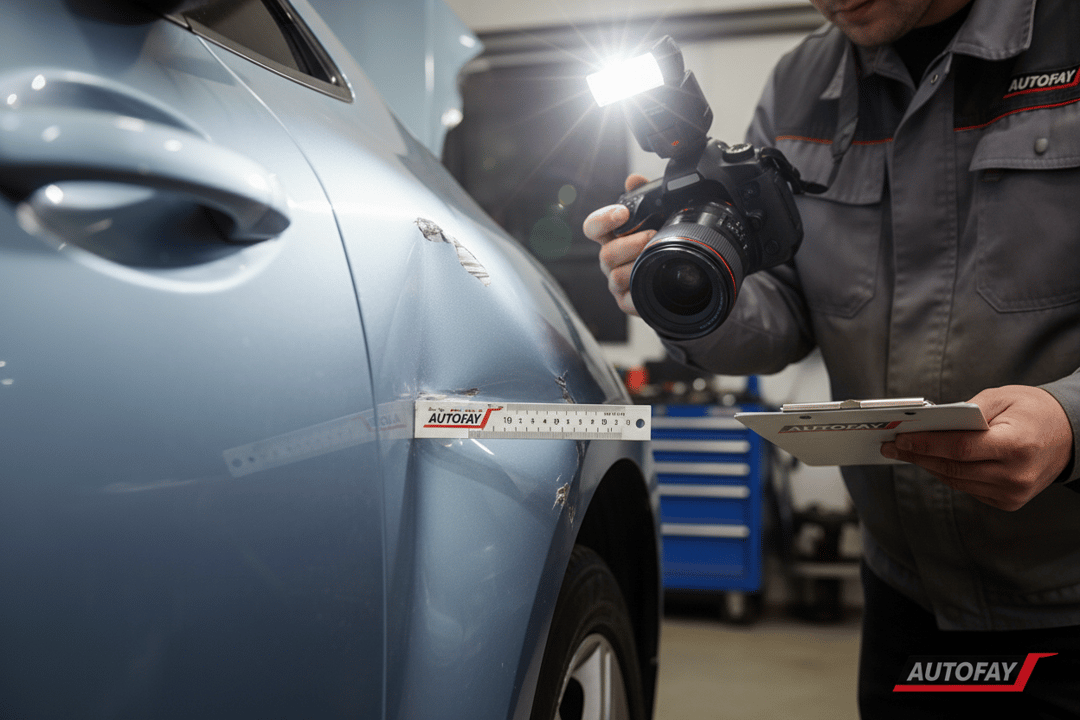
The primary purpose of an insurance inspection is to photograph and record all existing damage before the policy starts. This includes body panel condition — dents, scratches, repainted areas — on every visible surface. The insurer wants to ensure that any future claim represents new damage, not something that existed before coverage began.
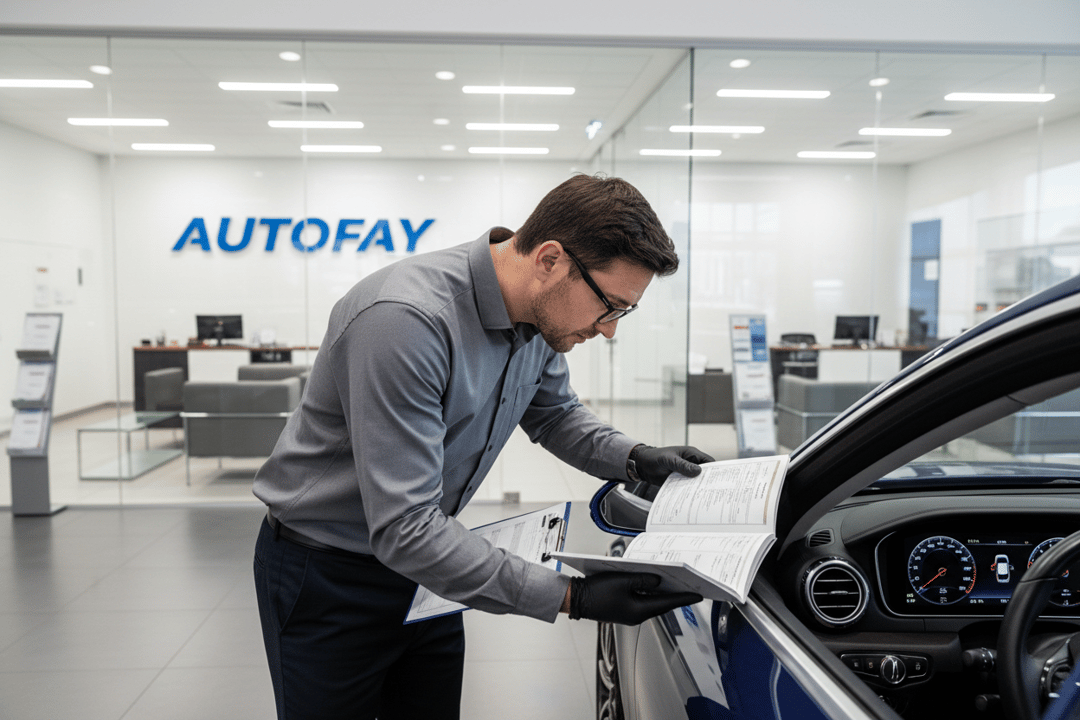
AutoFay's body inspection goes deeper than what insurers typically check. We assess each panel for both condition and paint originality — distinguishing between Original, Repainted, and Total Repainted on every surface from front bumper to rear bumper, including the roof and all pillars. Insurers photograph damage; we identify repair history. A panel that looks perfect but has been repainted tells a story about a previous incident that affects both insurance risk and vehicle value.
Safety Systems That Affect Premiums
Vehicles with advanced safety features often qualify for insurance discounts. Insurers look for working ABS, airbag systems, stability control (ESC/VSC), and increasingly for ADAS features like automatic emergency braking, forward collision warning, blind spot detection, and lane departure warning. AutoFay verifies each of these individually as Working, Not Working, or N/A.
A vehicle with a non-functional safety system may not only miss discount eligibility but could complicate claims. If an airbag warning light is on and the vehicle is in an accident, the insurer may investigate whether the malfunctioning safety system contributed to the severity of injuries. Knowing the status of every safety system before purchasing insurance — or before buying the car — gives you a clear picture.
What Insurance Inspection Misses
Insurance inspections are typically brief and focused on exterior condition. They generally do not include mechanical assessment — no OBD scan, no brake pad measurement, no fluid analysis, no suspension check, no road test. An insurer will not tell you that the transmission has stored fault codes, that the brake pads are under 25%, or that the cooling system is on the verge of failure.
This is where independent inspection fills the gap. AutoFay's 410+ checkpoint inspection covers every mechanical, electrical, and structural system in addition to the cosmetic assessment. The insurer tells you what damage exists on the surface; we tell you what condition the entire car is in, inside and out, above and below.
Comprehensive vs Third-Party Coverage
The thoroughness of the insurance inspection often varies based on the type of coverage. Comprehensive insurance policies typically require more detailed vehicle assessment because the insurer's exposure is greater. Third-party policies may require minimal or no inspection since the insurer is only covering damage to other vehicles, not yours.
For comprehensive coverage on a used vehicle, having an independent inspection report can actually work in your favor. It demonstrates that you know the vehicle's condition and can provide detailed documentation of the car's state at the time of policy inception. Some insurers may accept a professional inspection report as supplementary documentation.
After an Accident: Inspection vs Adjuster Assessment
After an accident, the insurance adjuster assesses damage to determine claim value. Their assessment focuses on visible damage and repair costs. An independent inspection before buying the car creates a documented baseline — you can prove the exact condition of every component before the accident occurred. This prevents disputes about whether damage was pre-existing or accident-related.
Frame condition is particularly relevant here. If an accident claim involves structural damage, having a pre-purchase inspection showing the frame was in No Damage condition across all checkpoints provides clear evidence that any current frame damage is accident-related. Without that baseline, the insurer may argue that frame repairs were pre-existing.
AutoFay checks 410+ checkpoints with HD photos and a detailed PDF report. On-location inspection across all 7 Emirates. Book at autofay.ae or call +971-54-258-4458.

0 Comments
No comments yet. Be the first to share your thoughts!