

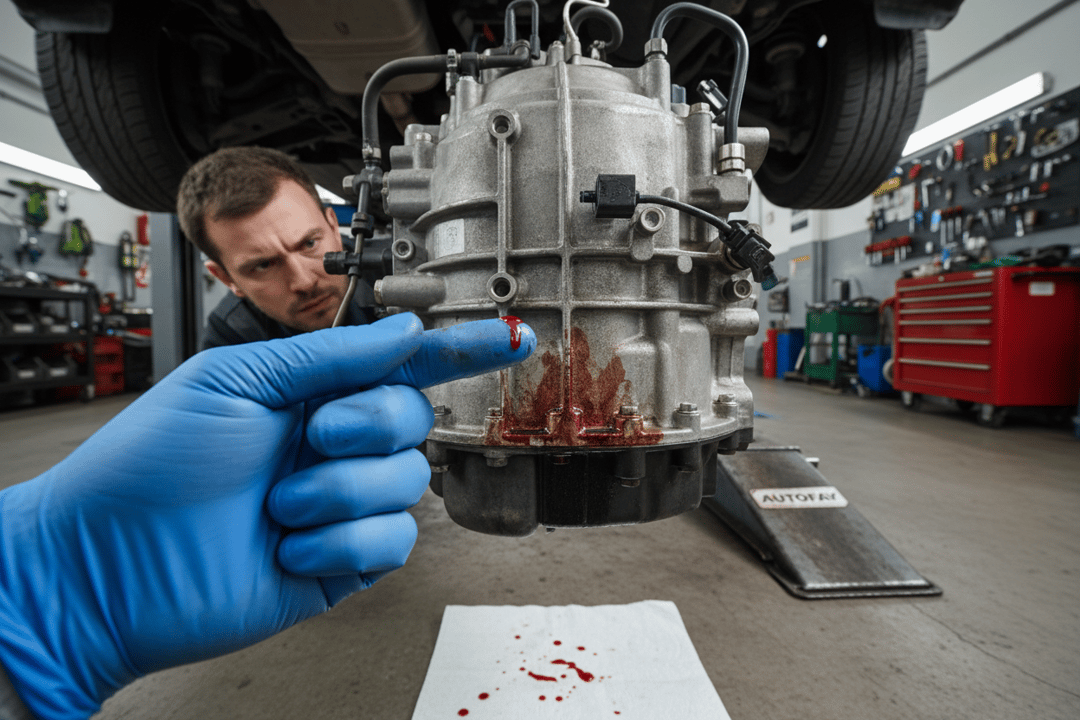
Every used car buyer fears the same thing: buying a car that looks perfect but hides a problem that costs more to fix than the car is worth. A pre-purchase inspection exists to find these problems before money changes hands. Here are the most expensive repairs that AutoFay inspectors catch — problems that were invisible during the test drive but clearly documented in the inspection report.
Transmission Failure
The transmission inspection spans multiple checkpoints. Transmission operation is rated Smooth, Slight Delay, Hard Shifting, or Slipping during the road test. Transmission fluid condition is rated Good through Burnt Smell. Transmission fault codes from the OBD scanner reveal stored or active problems. Transmission mounts are checked for wear or breakage.
A transmission rated as Slipping or showing Hard Shifting combined with burnt transmission fluid is approaching failure. A transmission rebuild or replacement is one of the most expensive mechanical repairs on any vehicle. The signs during a short test drive can be subtle — a slight delay when shifting from Park to Drive, or a barely noticeable shudder at highway speed. The inspection documents these systematically, giving the buyer evidence to either negotiate a significant discount or walk away.
Air Suspension System Failure
Air suspension is rated Working, Leaking, or Not Working. Many luxury SUVs — Range Rover, Mercedes GLE and GLS, BMW X5, and Lexus LX — use air suspension that provides a comfortable ride when new but becomes a major expense as components age. The air springs develop leaks, the compressor wears out from running constantly to compensate for leaks, and the valve blocks that distribute air to each corner can fail.
An inspector catches air suspension problems by observing whether the vehicle sits level, listening for the compressor running after the car has been parked, and checking for stored suspension fault codes in the OBD scan. A car sitting lower on one corner with a constantly running compressor needs air spring replacement at minimum. Converting from air to conventional suspension is an even larger expense.
Head Gasket Failure
The fluid inspection catches head gasket failure through two related findings: engine oil condition rated Milky and coolant condition rated Oily. The engine inspection adds supporting evidence — exhaust smoke rated White indicates coolant entering the combustion chambers. Coolant level rated Low with no visible external leak suggests internal consumption.
Head gasket replacement requires removing the cylinder head, machining it flat if it has warped from overheating, replacing the gasket and all related seals, and reassembling. On V-configuration engines common in larger UAE vehicles, both cylinder heads may need service. This repair requires extensive labor and precision reassembly, making it one of the costliest engine repairs short of a full replacement.
Frame Damage from Previous Accident
The frame condition inspection checks 27 structural points. Finding Frame Repaired on front or rear rails, welding on A-pillars or B-pillars, or a replaced trunk floor tells the buyer this car was in a significant collision. The body and paint inspection adds context — multiple adjacent panels rated Repainted on the same side confirms the extent of the damage.
Frame damage affects the car's crashworthiness — its ability to protect occupants in a future collision. A repaired frame does not absorb energy the same way as an original structure. Beyond safety, frame damage reduces resale value significantly. A car with documented frame repair will be difficult to sell later and will command a lower price. The inspection gives the buyer this information before committing to the purchase.
Turbocharger Failure
The turbocharger is rated Working Fine, Noisy, or Leaking in the engine inspection. Turbocharged engines are increasingly common in the UAE market — BMW, Mercedes, Audi, Ford EcoBoost, and many others. A turbo that is noisy (whining on acceleration) or leaking (oil around the turbo housing) is failing. Blue exhaust smoke — oil burning in the combustion chamber — can indicate turbo seal failure allowing oil to enter the intake.
Turbo replacement involves the turbocharger unit itself, associated oil and coolant lines, and often the exhaust manifold gaskets. On twin-turbo configurations, both units typically need service at similar mileage. The under-hood inspection checks related components — drive belts, air intake system, and throttle body — that can reveal whether a turbo failure has caused secondary damage.
Catalytic Converter Replacement
The catalytic converter is rated No Visible Fault, Rattling, Clogged, or Missing in the exhaust inspection. Oxygen sensors rated Faulty or Code Present, combined with OBD codes P0420 or P0430, indicate a converter that is no longer functioning properly. A rattling converter has internal substrate that has broken apart — this debris can enter the engine through exhaust backpressure. A clogged converter restricts exhaust flow, reducing power and potentially causing engine overheating.
Catalytic converters contain precious metals and are expensive to replace with genuine parts. Some vehicles use multiple converters, multiplying the cost. The inspection catches converter problems through a combination of exhaust system visual check, OBD codes, and exhaust smoke observation — providing clear evidence of a repair that buyers would otherwise discover only after purchase.
AutoFay inspects 410 checkpoints designed to catch these and other expensive hidden problems, with HD photos and a detailed PDF report. On-location inspection across all 7 Emirates. Book at autofay.ae or call +971-54-258-4458.



0 Comments
No comments yet. Be the first to share your thoughts!