
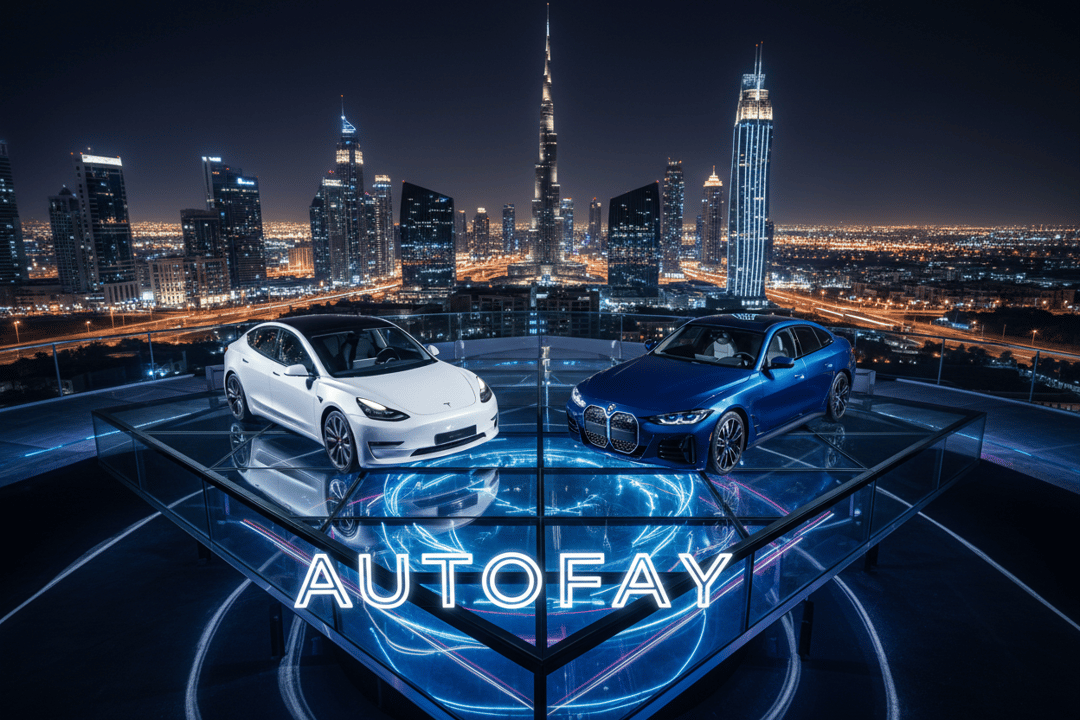
The electric vehicle landscape in the UAE is dominated by two distinct philosophies: the American innovator and the German luxury engineer. The Tesla Model 3 and the BMW i4 offer compelling arguments for buyers seeking zero-emission performance, but they differ significantly in construction, maintenance needs, and inspection vulnerabilities. A experienced inspector understands that these vehicles require different approaches to verification. This comparison outlines the critical checkpoints an expert would look for when evaluating both models across reliability, common failures, and overall vehicle health.
Structural Integrity and Body Verification
When inspecting the chassis of an electric vehicle, the priority is determining if the vehicle has been involved in a collision. The Tesla Model 3 utilizes a high-strength steel unibody, which is durable but can suffer from "cowl shake" or alignment issues if the front subframe is compromised. The BMW i4, constructed with a mix of high-strength steel and aluminum, offers superior torsional rigidity but presents a significant repair challenge. Aluminum repairs require specialized equipment and training; a standard body shop often damages the metal during straightening, creating hidden weak points.
Inspectors must examine the frame rails and pillars meticulously. Even a minor impact on the i4’s front bumper can transfer stress to the aluminum wheels or the front subframe, requiring expensive replacement parts that may not be readily available in the UAE market. The Tesla Model 3 is generally more resistant to misalignment from minor impacts, but the rocker panels are prone to corrosion due to the vehicle's low ground clearance and the UAE’s road salts. An expert uses paint thickness gauges to detect overspray, a common sign of previous repairs that could affect the structural integrity of the panels.
AutoFay’s inspection process includes a thorough Body & Computer AED 250 package, which scans every panel for originality. This service verifies whether the vehicle has undergone repair work that might have compromised its safety cage, providing a clear picture of the car’s history before purchase.
The Electric Powertrain: Diagnostics and Reliability
The heart of the inspection lies in the diagnostics of the powertrain. The Tesla Model 3 is renowned for its simplicity, relying on a single electric motor with fewer moving parts than its competitors. This simplicity translates to higher reliability in terms of motor failure, but it relies heavily on software. A dead battery management system (BMS) can render the car undrivable. Inspectors check the battery cells for swelling, which indicates internal degradation or thermal damage—a common failure mode in older Li-ion packs.
Conversely, the BMW i4 employs a more complex high-voltage architecture. The M50 variant features dual motors and a sophisticated inverter, increasing the potential failure points. While the drivetrain is generally robust, the high-voltage wiring harnesses are sensitive to heat. In the UAE’s extreme climate, these harnesses can degrade faster than in temperate climates. Inspectors look for signs of heat stress, such as brittle insulation or melted connectors. Unlike a combustion engine, an EV fault often manifests as a check engine light that codes for a high-voltage system error, requiring specific diagnostic tools to interpret.
Utilizing Computer Diagnostic AED 99 is essential for uncovering these hidden faults. This service scans the vehicle's onboard computer for error codes in the engine, transmission (in hybrids), battery, ABS, and airbag systems. A vehicle may appear to run smoothly, yet harbor dormant codes that will trigger a failure upon registration or future use.
Suspension and Brake System Wear
Regenerative braking is the primary factor influencing wear on these vehicles. The Tesla Model 3 uses "one-pedal driving," which relies heavily on the friction brakes for emergency stops. Consequently, brake calipers on Teslas are prone to seizing if the vehicle is not driven hard enough to exercise them regularly. A seized caliper will drag the wheel, causing uneven tire wear and overheating the brake fluid, which leads to a spongy pedal feel and reduced stopping power. An inspector listens for a dragging noise during the road test and measures brake pad thickness on all four wheels.
The BMW i4 offers selectable regenerative braking levels, meaning the driver can coast or recover energy with much less reliance on the friction brakes. This results in significantly longer brake pad life and cleaner wheels. However, the i4’s suspension components are subjected to higher loads due to the heavier battery pack. Control arm bushings and shock absorbers wear out faster in the BMW than in the Tesla. Worn bushings cause a clunking noise over bumps and negatively affect the vehicle's alignment, leading to premature tire degradation.
The Comprehensive AED 299 package from AutoFay is designed to catch these issues. It includes a detailed brake pad percentage rating, suspension health checks, and a full road test to identify noise, vibration, or harshness (NVH). This ensures that potential repair bills for suspension and brakes are identified before the vehicle is signed over.
Fluids and Cooling System Maintenance
Fluids in an electric vehicle are often overlooked, yet they are critical for longevity. The Tesla Model 3 requires a specific 50/50 mixture of distilled water and electric vehicle coolant. Failure to maintain this ratio leads to freezing in winter or boiling over in summer, resulting in expensive thermal management failures. Inspectors check the coolant reservoir level and the temperature of the coolant coming from the radiator during a test drive. Dark, sludgy coolant indicates a breakdown of corrosion inhibitors, a common issue in older electric vehicles.
The BMW i4 uses a proprietary coolant with different chemical properties. The cooling system is more complex, incorporating a heat exchanger for the battery and the cabin. If this system is not flushed at the manufacturer’s recommended intervals, the coolant can become acidic, attacking the aluminum components of the engine block and transmission. This corrosion leads to leaks that are notoriously difficult to repair. The "Fluids" category in our inspection checks not just the level, but the condition and color of the liquids, ensuring the thermal management system is protected.
- Tesla Model 3: Focus on brake caliper maintenance and coolant pH levels.
- BMW i4: Focus on complex cooling system integrity and transmission fluid condition.
Inspection Readiness: Which Passes Cleaner?
When evaluating which vehicle will pass a standard UAE inspection cleaner, the BMW i4 often presents fewer immediate failures. Its dashboard is more conventional, meaning lights and indicators are less likely to trigger a "check engine" refusal. However, the Tesla Model 3’s minimalist design can be a liability. A dead 12-volt battery will disable the central screen, preventing the driver from seeing the speedometer or steering lock status, which can result in a vehicle being towed from the inspection center.
Tires present another challenge. The Tesla Model 3, especially the Performance variant, has a tendency to chew through tires due to its torque delivery. Bald tires will fail the inspection immediately. The BMW i4 is more forgiving on tires but requires precise alignment due to its rear-wheel steering system in higher trims. Misalignment will cause rapid feathering of the tire edges.
Ultimately, the BMW i4 tends to pass the visual inspection with fewer cosmetic issues, while the Tesla Model 3 requires more rigorous checking of the electrical systems and brakes. A pre-purchase inspection is the only way to confirm that the electrical systems are stable and the physical condition matches the seller's description.
| Inspection Category | Tesla Model 3 Key Risks | BMW i4 Key Risks |
|---|---|---|
| Brakes | Caliper seizure due to underuse; uneven pad wear. | Longer life, but possible sensor failure. |
| Powertrain | Battery cell degradation; 12V battery failure. | High-voltage isolation faults; inverter overheating. |
| Structure | Corrosion on rocker panels; frame alignment issues. | Expensive aluminum repairs; Order Your Tesla Inspection Certificate with AutoFay - From AED 99 (Sharjah & Ajman) Our inspector comes to your vehicle across all 7 UAE emirates. Same-day digital inspection report. Share:  Related ArticlesComparison Nissan Sunny 2022 vs Nissan X‑Trail 2017: Handling UAE HeatImagine driving home and the engine seizes on Sheikh Zayed Road, leaving you stranded and facing a repair bill that reaches a notable sum. One missed flaw... Comparison Nissan Altima 2017 vs Nissan Sunny 2024: Inspection & PerformanceImagine driving home and the engine sputters on Sheikh Zayed Road, then a cracked exhaust pipe forces an unexpected a notable sum repair bill. Skipping a car... Comparison Lexus RX450h 2021 vs RX 450H 2021: Inspection Findings and SuitabilityImagine driving your new Lexus in Al Barsha when the steering suddenly drifts and a repair quotes a notable sum for a damaged rack‑and‑pinion. That hidden...  Comparison Nissan Sunny 2024 vs X‑Trail 2017: Performance in UAE InspectionsImagine driving home and the AC stops mid‑August, while the dashboard flashes a red brake warning. The repair could run a notable sum and you’ll be stuck in... |
0 Comments
No comments yet. Be the first to share your thoughts!