
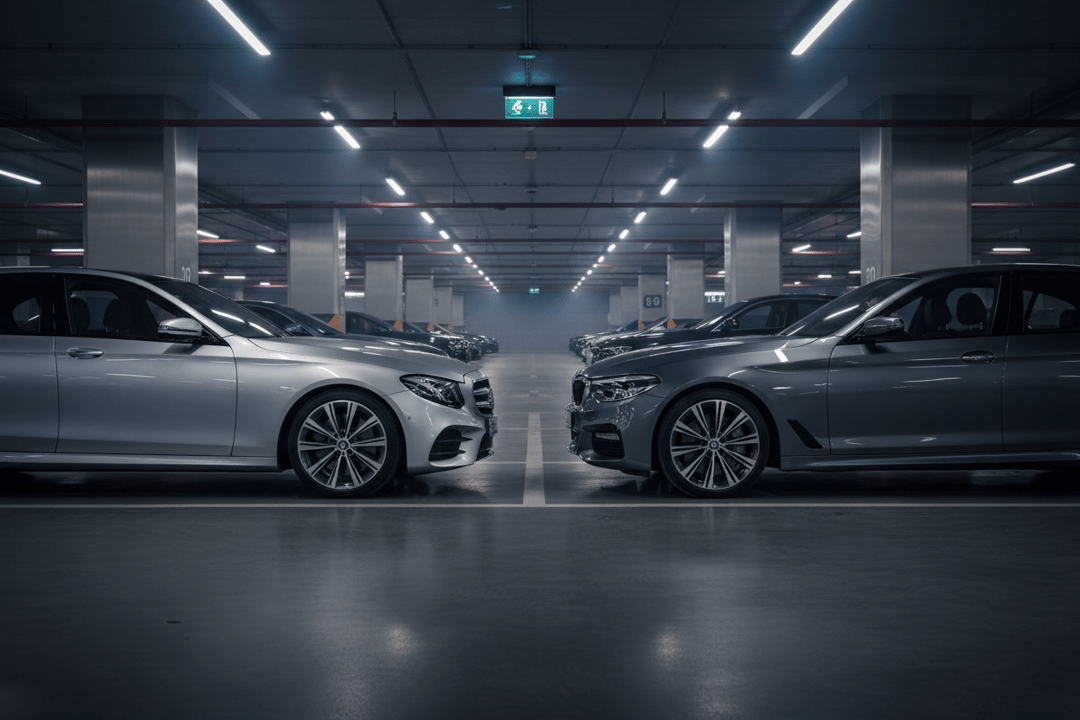
The UAE luxury sedan market is dominated by two formidable names: the Mercedes-Benz E-Class and the BMW 5 Series. Both vehicles offer premium interiors, advanced technology, and a commanding presence on Sheikh Zayed Road and in the deserts of Abu Dhabi. However, for a prospective buyer, the choice is rarely just about brand loyalty or aesthetics. It is a decision rooted in engineering philosophy, long-term reliability, and hidden maintenance costs. Purchasing a used luxury vehicle without a rigorous pre-purchase inspection exposes the buyer to significant financial risk. A professional inspection goes beyond visual inspection; it utilizes data, technology, and decades of automotive history to predict future failures.
The Reliability Landscape: Engine and Transmission Focus
The heart of any vehicle determines its lifespan, and the competition between Mercedes and BMW in the E-Class and 5 Series generations is intense. Mercedes engines, particularly the diesels historically popular in the region, are renowned for their torque and refinement but have specific timing chain vulnerabilities that age with the vehicle. Conversely, BMW inline-six engines are high-revving machines that demand precise maintenance to prevent oil consumption and timing chain failures. An engine failing to maintain correct pressure can lead to catastrophic rod knock, rendering the engine unfixable without full replacement.
When inspecting these vehicles, a experienced technician must listen for abnormal noises during a road test. A ticking sound from the valve train could indicate lifter failure, while a rattling noise at idle suggests worn timing chain components. The engine mounts play a crucial role in isolating vibration; worn mounts transmit excessive shock to the chassis, accelerating the failure of other components. Additionally, the color and smell of exhaust smoke are immediate indicators of internal health. White smoke usually points to a blown head gasket, while blue smoke indicates burning oil, which suggests worn piston rings or valve seals.
- Timing Chain Tensioners: Check for stretch or wear on high-mileage models, as failure leads to catastrophic engine damage.
- Oil Consumption Rates: Monitor for excessive oil burn-off, which indicates piston ring or cylinder wall wear.
- Transmission Shift Quality: Ensure smooth engagement in all gears without hesitation or jerking, which signals clutch or solenoid issues.
Structural Integrity: Body, Paint, and Frame Assessment
Climate and road conditions in the UAE accelerate vehicle aging. The intense UV radiation and sand exposure degrade paintwork and accelerate corrosion. A thorough inspection must look beyond the surface to identify vehicles that have suffered accidents. Panel alignment is the first indicator of collision history. Gaps between doors, hoods, and trunks that are uneven suggest previous repairs that did not restore the vehicle to factory specifications. Misalignment can lead to wind noise at speed and water ingress during rain.
Paint thickness gauges reveal the true history of a vehicle's exterior. A significant variance in paint thickness between a repaired panel and the original bodywork indicates a respray, which may hide corrosion underneath. The Computer Diagnostic package is essential here to check for airbag deployment codes, which are often hidden even if the steering wheel was replaced. Furthermore, the frame rails and floor pans must be inspected for rust or previous repair. A compromised chassis frame can affect the vehicle's handling and safety, making it a dangerous asset regardless of its brand prestige.
- Panel-by-Panel Analysis: Verify that all body panels match in gloss and texture, ruling out mismatched repairs.
- Frame and Rail Inspection: Check the chassis for corrosion, especially in the wheel arches and rocker panels.
- Glass and Trim Condition: Inspect for chipped windshields and faded trim, which affect resale value.
The High-Speed Test: Suspension and Braking Systems
Driving on UAE highways requires a suspension system capable of absorbing high-speed vibrations and potholes. Worn suspension components do not just cause a bumpy ride; they lead to premature tire wear and can compromise steering response. A professional inspection includes a test drive to evaluate noise, vibration, and harshness (NVH). Clunking noises over bumps indicate worn control arm bushings or ball joints, while a "floaty" feeling at high speeds suggests worn shocks or struts.
Braking performance is non-negotiable for safety. The brake pads are rated by percentage remaining, and worn pads can damage the rotors, leading to expensive replacements. A pulsation in the brake pedal during braking usually indicates warped rotors, which are often caused by overheating due to worn brake fluid or aggressive driving. Modern luxury vehicles use complex braking systems with electronic sensors that require a full diagnostic scan to ensure functionality.
The Electrical Labyrinth: Diagnostics and Sensors
Modern Mercedes and BMW vehicles are essentially computers on wheels. The complexity of their electrical systems is a double-edged sword: they offer incredible functionality, but they also offer many points of failure. A single sensor failure can trigger the check engine light and negatively impact fuel economy or performance. Common issues include failing battery modules, inoperative parking sensors, and malfunctioning electronic power steering.
Reliance on a computer diagnostic scan is the only way to read the vehicle's "health" from its internal computer. Without this step, a buyer might purchase a vehicle with a check engine light that has been turned off, masking underlying issues. The scan reveals stored fault codes for the engine, transmission, ABS, and airbag systems. Addressing electrical faults early is significantly cheaper than repairing the collateral damage they cause to other components.
The Maintenance Reality: Fluids and Component Age
Luxury vehicles demand higher-grade fluids and more frequent changes than standard economy cars. Engine coolant degrades over time and can cause overheating if its lubricity properties diminish. Transmission fluid, if left unflushed, can become sludge, leading to poor shifting and transmission failure. A professional inspection checks the fluid level and condition. Dark, burnt-smelling transmission fluid is a red flag that the vehicle has been abused or neglected.
To manage the cost of ownership, prospective buyers should consider professional inspection packages rather than relying on a visual glance at the dipstick. A comprehensive inspection covers the critical fluids and provides a roadmap for maintenance. Skipping a fluid change leads to sludge buildup, which restricts oil flow and causes bearing failure. The cost of a proactive inspection is negligible compared to the cost of a seized engine or a failed transmission.
| Inspection Category | Mercedes-Benz E-Class Focus | BMW 5 Series Focus |
|---|---|---|
| Engine Systems | Timing chain tensioners, valve cover gaskets, oil consumption sensors. | Oil pump wear, thermostat failures, high-pressure fuel pump issues. |
| Electronics | Suspension level control modules, COMAND system failures. | Leaking valve cover gaskets (VCG), battery health, driver assist sensors. |
| Body & Frame | Rust issues in the wheel arches, rear subframe corrosion. | Damage to the kidney grilles, front bumper sensors, door alignment. |
Choosing between the Mercedes E-Class and the BMW 5 Series requires understanding the specific maintenance demands of each brand. The Mercedes typically offers a smoother ride but may require attention to its air suspension systems (if equipped) and electrical modules. The BMW offers superior driving dynamics but often demands tighter adherence to fluid change intervals and tire rotation schedules. The "smarter" purchase is not the one that looks better on the showroom floor, but the one whose maintenance history has been validated by a professional.
AutoFay inspects 410+ checkpoints with HD photos and PDF report. Book at autofay.ae or call +971542584458
0 Comments
No comments yet. Be the first to share your thoughts!