
The Mercedes S-Class, BMW 7 Series, and Lexus LS are the flagship sedans of their respective brands. In the UAE used market, these vehicles offer extraordinary luxury at a fraction of their original price — depreciation on flagship sedans is steep. But the technology that makes these cars special when new is the same technology that generates expensive repair bills when old. Understanding how each brand ages helps buyers choose wisely.
Air Suspension: All Three, Different Outcomes
All three flagships use air suspension systems, making this the most critical inspection category. AutoFay checks air suspension as Working, Leaking, or Not Working. The Mercedes S-Class AIRMATIC system provides excellent ride quality but the air springs are known to fail after five to seven years — accelerated by UAE heat that degrades the rubber bellows. An S-Class that sags on one corner overnight has an air spring that needs replacement.
The BMW 7 Series air suspension is similarly capable but shares the same heat-vulnerability. The electronic damping control adds another failure point — when the adaptive dampers lose their adjustment capability, ride quality becomes inconsistent across different road surfaces. The road test captures this — ride comfort should rate as Comfortable, and any inconsistency between smooth and rough surfaces indicates damper issues.
The Lexus LS air suspension system tends to last longer before issues develop — reflecting the brand's reliability advantage. However, when it does fail, the repair is equally expensive. LS models with hydraulic-adaptive suspension have fewer air-related failures but can develop leaks in the hydraulic components that manifest as ride height changes.
Electronics: Complexity vs Reliability
The OBD scanner report tells dramatically different stories on these three flagships. The Mercedes S-Class typically shows the most stored fault codes — not because it is poorly built, but because its systems have the tightest tolerances and the most interconnected modules. Body control module codes on an S-Class can cover gesture control, ambient lighting sequences, fragrance systems, and seat kinetics. Many stored codes are informational rather than critical, but sorting critical from informational requires experience.
The BMW 7 Series OBD report often shows codes related to its advanced driver assistance systems and the iDrive infotainment platform. The digital instrument cluster and heads-up display are checked — BMW's full-digital cockpit is sophisticated but can develop pixel issues or brightness inconsistencies over time. The gesture control system is verified where present.
The Lexus LS typically produces the cleanest OBD report. Fewer stored codes, fewer active faults, and generally fewer system complaints. The infotainment system, while sometimes considered less cutting-edge than competitors, functions with greater consistency. The digital instrument cluster is checked but rarely shows issues.
Interior Luxury: Feature Verification
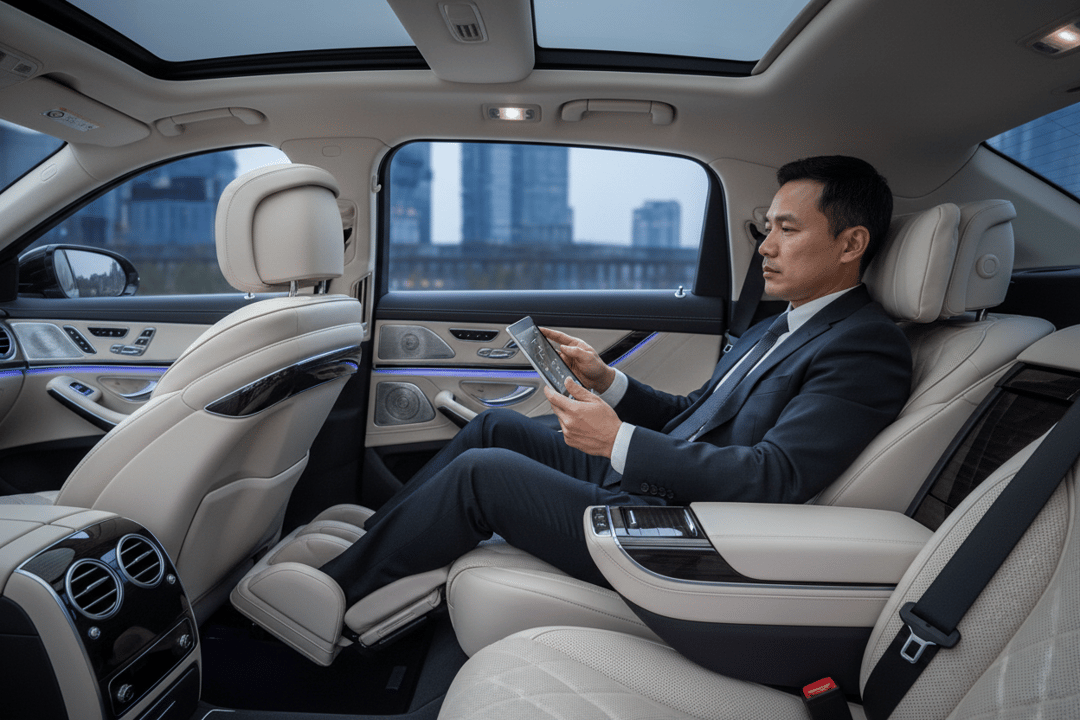
The interior inspection on flagship sedans must verify an extensive list of luxury features. Heated seats, cooled seats, massage seats, seat memory, lumbar support, and power steering column are all checked individually. On the S-Class, the rear seats may include executive seating with recline, massage, and individual climate — each feature is tested. The 7 Series rear executive lounge package, where present, includes a fold-out tablet and foot rest that must function. The LS offers similar rear comfort features with different technology.
The rear entertainment system is checked on all three — screens, headphone jacks, and dedicated controls for rear passengers. Power rear sunshades are tested. Auto-dimming mirrors, ambient lighting, and night vision systems are verified where present. On a flagship sedan, every feature must work — a non-functional massage seat or broken rear sunshade on a luxury sedan represents a failure to deliver the experience the buyer is paying for.
Engine and Drivetrain: Performance Standards
Each flagship uses different engine strategies. The S-Class offers turbocharged inline-six and V8 options, plus hybrid variants. The 7 Series uses turbocharged inline-six and V8 engines with mild hybrid assistance. The LS uses a twin-turbo V6 or a hybrid V6 powertrain. Each engine type has its own inspection characteristics — turbocharger condition, engine oil condition, and exhaust smoke patterns are evaluated against the specific engine type.
Transmission operation should rate as Smooth on any flagship sedan. Any deviation — Slight Delay, Hard Shifting — is unacceptable on a vehicle of this class and indicates a problem that needs professional evaluation. The road test is where these cars should shine — engine performance rated as Excellent, steering rated as Precise, and overall driving experience rated as Excellent.
AutoFay inspects 410 checkpoints on every luxury sedan, with HD photos and a detailed PDF report. On-location inspection across all 7 Emirates. Book at autofay.ae or call +971-54-258-4458.

0 Comments
No comments yet. Be the first to share your thoughts!