
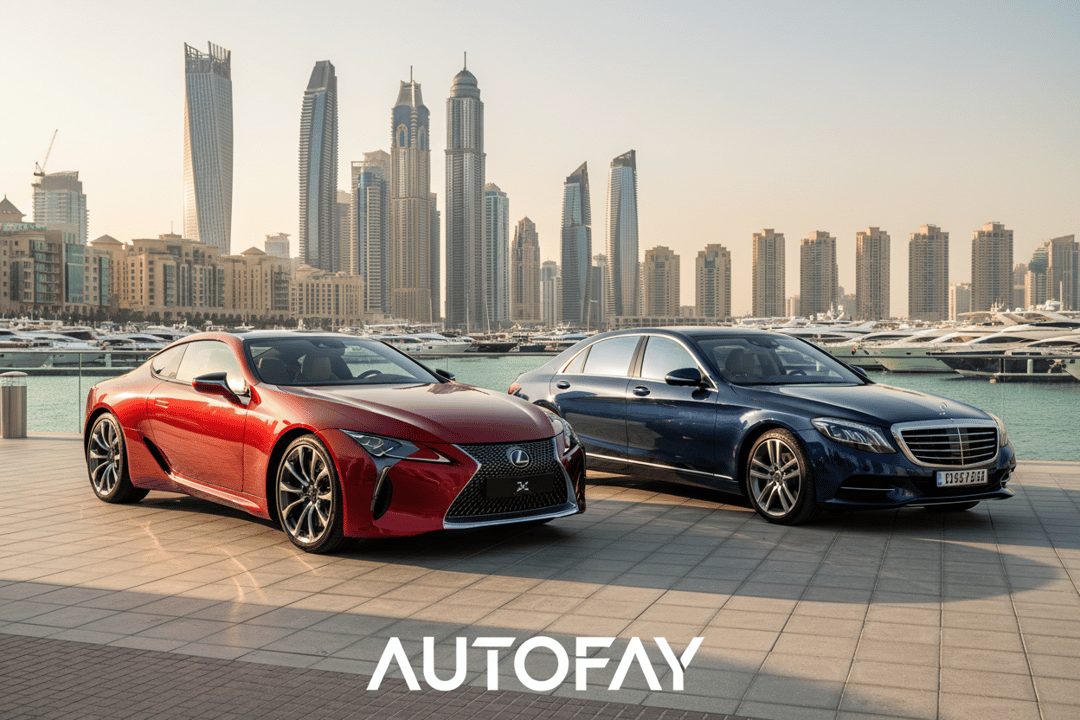
The UAE automotive market is defined by a distinct duality: the rugged, practical Japanese sedan dominating highways, and the sophisticated German luxury vehicle turning heads in Dubai's high-end districts. Both origins offer compelling advantages, yet they operate under fundamentally different engineering philosophies. Understanding the divergence between the "build to last" mentality of Japanese manufacturers and the "engineering excellence" approach of German automakers requires more than just brand loyalty; it demands a technical understanding of ownership economics and vehicle health. The harsh desert environment—characterized by intense heat, abrasive sand, and saline air—tests vehicle durability differently depending on the chassis and materials used.
The Economics of Maintenance
Japanese vehicles are generally engineered for simplicity and longevity, often designed to run for hundreds of thousands of kilometers with minimal intervention. Routine maintenance usually aligns with the manufacturer's oil change intervals, often extending to 10,000 kilometers or more. Conversely, German vehicles are precision instruments that demand strict adherence to service schedules. Their complex timing chains, high-compression engines, and sophisticated emissions controls require more frequent attention. In the UAE, where vehicles are often used heavily, the difference in maintenance frequency becomes a significant monthly cost.
Investing in a vehicle inspection is a critical financial safeguard against these disparities. A Computer Diagnostic scan for AED 99 provides immediate insight into the health of the Engine and Transmission control units. This package allows buyers to detect latent error codes that might indicate pending failures, saving thousands in unexpected repairs. For a more thorough evaluation of the vehicle's mechanical soundness, the Body & Computer package at AED 250 evaluates the condition of the engine mounts, shock absorbers, and the integrity of the body structure. This service is particularly vital for German imports, where electrical gremlins can manifest years after leaving the factory.
Parts Availability and Accessibility
Availability of spare parts plays a pivotal role in long-term ownership in the Emirates. The ubiquity of Japanese models—from Toyota Camrys to Honda Accords—ensures that parts are sourced easily from local warehouses and are often priced competitively. Aftermarket alternatives are abundant, reducing downtime in the event of a breakdown. German vehicles, while widely available in the UAE, often require parts that are sourced directly from specialized distributors or the manufacturer. Items such as specific sensors, electronic control modules, or luxury interior components can sometimes face import delays or higher premiums.
This logistical difference impacts the total cost of ownership. While a Japanese car might require a new alternator every six years, a German car might require a sensor replacement annually. Furthermore, the quality of replacement parts matters. Using generic parts on a precision German engine can lead to drivability issues that are difficult to diagnose. The Comprehensive inspection package at AED 299 covers a wide array of systems, including the OBD scan, Brakes, Suspension, and Tires. By identifying wear levels in these areas before purchase, buyers avoid the immediate influx of generic parts that often fail to meet the standards of German engineering.
Inspection Failures: Where the Two Origins Diverge
When analyzing vehicle health through a rigorous inspection lens, distinct patterns emerge regarding failure points. Japanese vehicles tend to excel in structural rigidity and basic functionality. During a road test, Japanese sedans often demonstrate smoother acceleration and quieter cabins due to isolation technologies that prioritize comfort over sportiness. However, they can be susceptible to rust, particularly in the wheel arches and undercarriage, given the coastal humidity in parts of the UAE.
German vehicles, built with high-tensile steel and aluminum to reduce weight, perform exceptionally well under load but are more prone to specific failure modes in the UAE environment. The OBD scan often reveals more "check engine" lights in older German models due to complex emissions systems sensitive to heat. Furthermore, the suspension systems on many German models are designed for European road quality, which can lead to premature wear on shock absorbers and struts when driven over the corrugated surfaces common in Abu Dhabi or Sharjah. The inspection report will specifically flag the Brakes (pad percentage rating) and Suspension components, as these are the areas where German engineering is most tested and often compromised by local road conditions.
Resale Value Dynamics
Depreciation is an unavoidable reality, but the rate at which a vehicle loses value differs significantly between the two origins. Japanese vehicles typically hold their value much better in the second-hand market. Because they are perceived as reliable workhorses, buyers are willing to pay a premium for low mileage examples with clean service records. A vehicle that has passed a comprehensive inspection with high marks for Fluids (level + condition) and Engine sound signals a low-risk investment, preserving its market value over time.
German cars generally depreciate faster. The high cost of entry and the perceived risk of high maintenance costs later in the vehicle's life often deter buyers at the lower end of the price spectrum. While a German luxury car offers a superior driving experience and premium interior materials, its long-term resale value relies heavily on documentation proving that the vehicle has been maintained to factory specifications. Without proof of service history, a German car will lose value rapidly. Buyers must be wary of vehicles with high mileage on the odometer, as the cost of bringing them up to standard can outweigh the purchase price.
Comparative Analysis
The following table outlines the primary differentiators between Japanese and German origins regarding ownership in the UAE.
| Factor | Japanese Origin | German Origin |
|---|---|---|
| Maintenance Philosophy | Simple, high service intervals, lower running costs. | Precise, strict intervals, higher component complexity. |
| Common Inspection Failures | Rust in wheel arches, suspension clearance, minor electronics. | Corrosion in air con pipes, electrical sensors, brake wear. |
| Parts Logistics | High availability, affordable aftermarket options. | Specialized availability, often require OEM or dealer sourcing. |
| Resale Stability | High, maintains value with clean history. | Moderate to High, depends heavily on documented maintenance. |
Choosing the Right Vehicle for the UAE Context
Selecting between Japanese and German engineering should be dictated by usage patterns rather than marketing hype. If the primary goal is daily reliability with minimal fuss, a Japanese vehicle is the pragmatic choice. It offers excellent fuel economy, easy repairs, and a chassis that endures the UAE climate with relative ease. For those prioritizing driving dynamics, luxury appointments, and performance, a German vehicle remains the superior option, provided the buyer is prepared for the higher frequency of maintenance checks.
Regardless of origin, the most critical step in the buying process is verification. A vehicle that appears pristine on the outside may hide mechanical skeletons that will emerge once the car is driven. Utilizing a on-location inspection service allows buyers to verify the condition of the Frame (rails, pillars, floor pan) and the condition of the Tires (manufacturing year, wear) without leaving the seller's location. Detailed checks of Fluids, including oil condition and coolant quality, reveal the true age of the car better than the odometer. The road test, covering acceleration, braking, noise, and vibration, is the final arbiter of mechanical health.
AutoFay inspects 410+ checkpoints with HD photos and PDF report. Book at autofay.ae or call +971542584458.


0 Comments
No comments yet. Be the first to share your thoughts!