

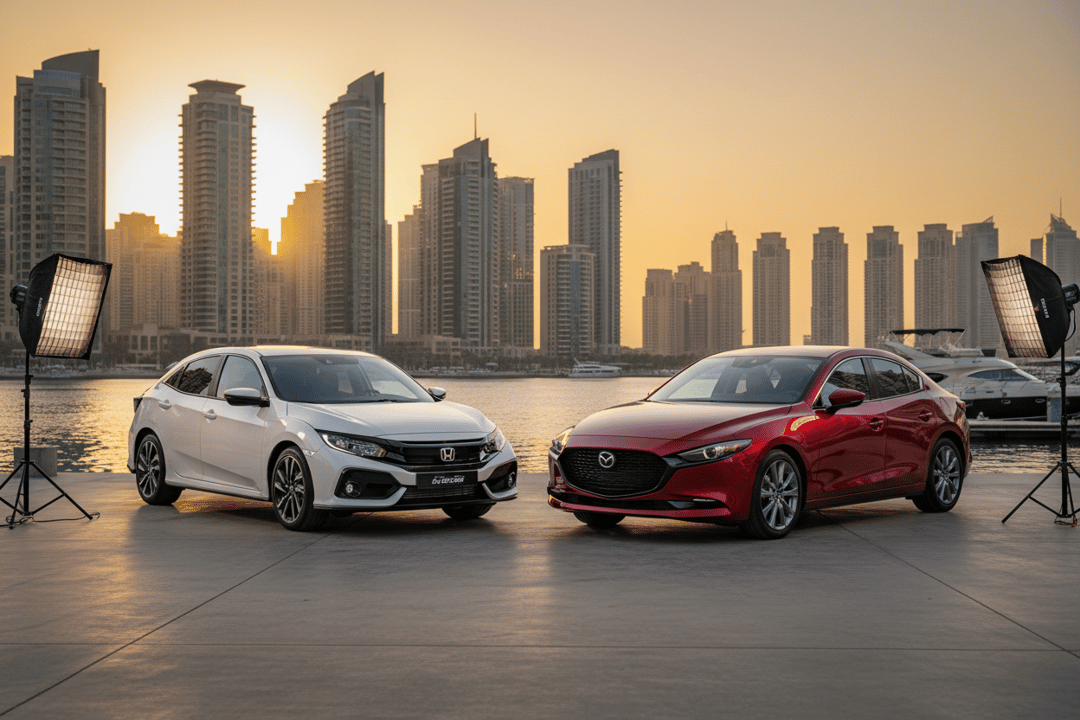
The UAE market is saturated with two of the most enduring nameplates in compact sedans: the Honda Civic and the Mazda 3. Both vehicles have carved outsized reputations for delivering a premium driving experience at a value price point. However, when purchasing a used model in the Emirates, where high temperatures and aggressive driving styles are the norm, surface appeal is deceiving. A vehicle that looks pristine may hide a history of overheating or suspension abuse. This comparison examines the reliability of these two icons through the lens of professional inspection methodology, helping buyers avoid expensive pitfalls.
Reliability Record & Longevity
The Honda Civic has historically been the benchmark for reliability in the compact segment. Its engines, particularly the K-series found in models like the 2012-2015 generation, are renowned for their robustness. These units are designed to run for hundreds of thousands of kilometers with minimal electronic intervention. However, longevity is not guaranteed without preventative care. The primary threat to a Civic’s lifespan is often not the engine itself, but the accessories attached to it, such as the alternator and water pump, which can fail under the strain of prolonged idling in traffic.
The Mazda 3 utilizes Mazda’s SkyACTIV-G technology, which focuses on high compression ratios for efficiency. While these engines are mechanically sound, they can be sensitive to oil quality and maintenance intervals. Mazda’s philosophy prioritizes the balance of ride comfort and handling, meaning the suspension components are often tuned for engagement rather than pure endurance against potholes. In the UAE, where infrastructure varies, a Mazda 3 may experience faster wear on bushings and stabilizer links compared to the more conservative suspension tuning of a Civic.
Common Inspection Findings at AutoFay
Professional inspections reveal specific patterns unique to these models. At AutoFay, our inspectors look for engine mounts as a primary indicator of vehicle health. Both the Civic and Mazda 3 are naturally aspirated, meaning they generate significant torque at low RPMs. Over time, rubber mounts harden, causing vibration to transfer directly into the chassis. This not only creates a harsh driving experience but also accelerates the wear of interior trim and loose dashboard components.
Another critical finding involves the AC system. In the blistering heat of the UAE summer, the AC compressor and condenser endure constant high loads. A failing compressor often manifests as a burning smell or a clicking noise under the hood. Inspectors also pay close attention to the sunroof drainage. Both the Civic hatchback and Mazda 3 are popular for their panoramic roofs, but these channels often clog with dust and sand. If the drains fail, water cascades into the door sills, leading to rusted footwells—a costly, structural issue that is expensive to rectify.
Suspension wear is another tell-tale sign. The UAE’s road quality often leads to damaged underbody shields, exposing the chassis to salt and grit. Inspectors check for "ball joint separation" or worn tie rods, which result in steering play. A car with worn front-end geometry will vibrate through the steering wheel and compromise braking performance, turning a smooth drive into a hazardous experience.
Maintenance Philosophy & Consequences of Neglect
Understanding the cost of maintenance requires looking at the consequences of neglect rather than manufacturing costs. Ignoring a check engine light on either vehicle can lead to catastrophic engine failure. For example, a failing oxygen sensor in a Mazda 3 can decrease fuel efficiency significantly and eventually damage the catalytic converter. In a Civic, a misfire caused by worn ignition coils can cause the engine to run lean, damaging the pistons if driven for an extended period.
Fluids are the lifeblood of these vehicles. Engine oil consumption is a known trait in older Honda engines, particularly those with VTEC valvetrain systems. If the dipstick shows low levels frequently, the engine is burning oil, which leads to sludge buildup and potential bearing failure. Brake fluid absorbs moisture over time, lowering its boiling point. If the fluid is neglected, the brakes may fade during heavy braking in the desert heat, increasing stopping distances.
Preventative maintenance is far cheaper than corrective repair. Utilizing a professional computer diagnostic scan allows an inspector to read the engine’s stored trouble codes. This reveals issues before they become irreversible. For instance, a transmission slip code indicates a soft failure in the clutch packs, whereas a total transmission failure is immediate and total.
Inspection Package Selection
Choosing the right inspection package is the most cost-effective strategy for buying a used car. A basic visual inspection is often insufficient for these complex machines. Below is a breakdown of the AutoFay packages and their specific utility for the Honda Civic and Mazda 3.
| Inspection Package | Key Focus Areas | Why It Matters for Civic/Mazda |
|---|---|---|
| Computer Diagnostic (AED 99) | OBD Scan (Engine, Transmission, ABS, Airbag) | Quickly identifies engine codes and transmission faults hidden from the naked eye. Essential for catching "phantom" warning lights. |
| Body & Computer (AED 250) | Panel-by-panel Paint check, Frame integrity, Computer Scan | Covers the visual condition of the bodywork, which is crucial for cars exposed to sandstorms. Includes the mechanical scan. |
| Comprehensive (AED 299) | Full 410+ Checkpoints (Engine sound, Mounts, Brakes, Tires, Fluids) | The ultimate safeguard. Checks mounting points, brake pad thickness (pad % rating), and road test performance under load. |
The Smart Purchase Verdict
Determining the "smarter" purchase depends on the buyer's priorities and budget. The Honda Civic offers a practical advantage for UAE buyers due to its resale value and proven track record of handling extreme heat without overheating. Its fuel tank is generally positioned lower, offering a margin of safety in minor accidents. However, the interior materials in older models can feel plasticky and dated compared to modern competitors.
The Mazda 3 offers a superior interior experience with Nappa leather options and a driver-centric cockpit that rivals luxury sedans. The driving dynamics are sharper, offering better cornering stability. However, the ride can be firmer, and the vehicle may be more sensitive to suspension neglect. If a buyer wants a vehicle that feels premium inside but drives with precision, the Mazda is the choice. For those prioritizing raw durability and easy resale, the Civic is the safer investment.
Regardless of the choice, skipping a professional inspection is a gamble that rarely pays off. Mechanical failures in these vehicles are rarely silent. Investing in a comprehensive check identifies the car's true condition, separating the well-maintained gems from the money pits.
AutoFay inspects 410+ checkpoints with HD photos and PDF report. Book at autofay.ae or call +971542584458.

0 Comments
No comments yet. Be the first to share your thoughts!