
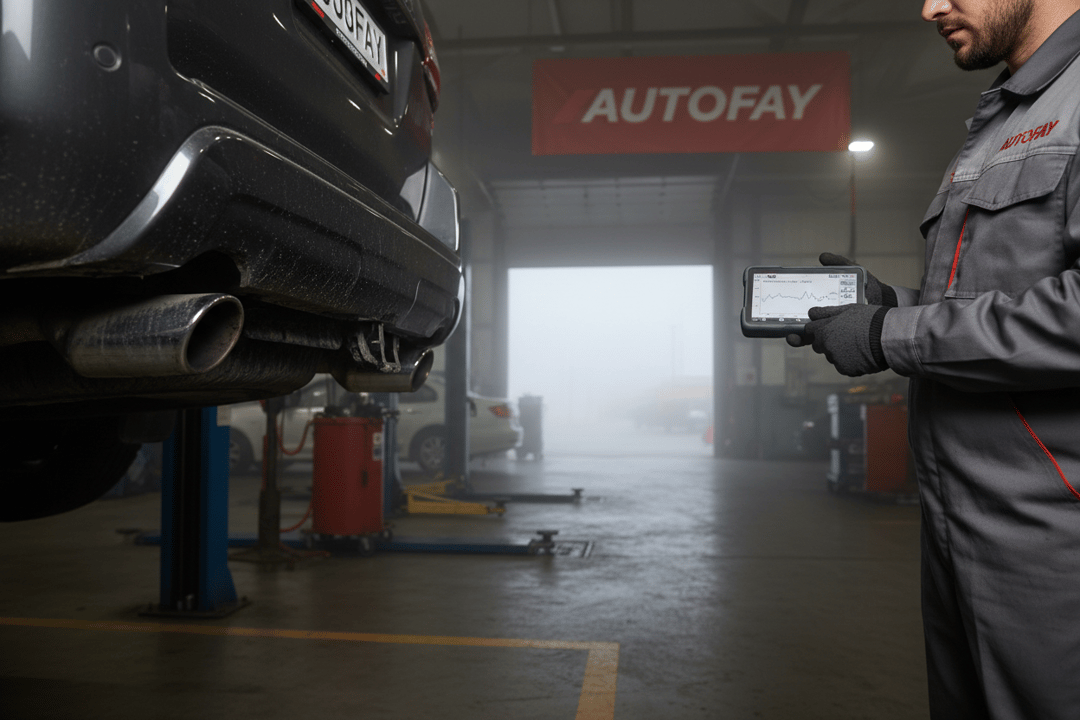
Both diesel and petrol engines serve the UAE market, but they appear in different vehicle types and respond differently to the extreme climate. Diesel engines dominate the heavy SUV segment — Land Cruiser, Patrol, Pajero — and commercial vehicles. Petrol engines are the standard for sedans, sports cars, and lighter SUVs. Understanding the inspection differences helps buyers evaluate either engine type with the right expectations.
Diesel Engine Inspection Points
AutoFay's engine inspection rates overall engine condition as No Visible Fault, Good, Average, or Needs Attention. For diesel engines, specific areas require focused attention. Engine sound — rated No Noise, Slight Noise, Knocking, or Severe Noise — is interpreted differently for diesels because they are inherently louder than petrol engines. A diesel that produces a rhythmic clatter at idle is normal. A diesel that produces irregular knocking or metallic hammering is not.
Exhaust smoke is the most telling diagnostic for diesel engines. Our inspection rates exhaust smoke as None, White, Blue, or Black. A diesel producing White smoke on cold start that clears within a minute is normal — condensation in the exhaust system evaporates. White smoke that persists indicates coolant entering the combustion chamber, usually through a failing head gasket. Blue smoke indicates oil burning — worn valve seals or piston ring wear. Black smoke indicates excess fuel — common causes include faulty injectors, a dirty air filter, or turbocharger issues.
The turbocharger — rated Working Fine, Noisy, or Leaking — is present on virtually all modern diesels. A noisy turbo with whistling or grinding sounds is approaching failure. Oil leaking from turbo seals indicates the unit needs replacement. The fuel system is critical on diesels: fuel injectors (Working, Dirty, Leaking, or Faulty) are precision components that degrade over time, and faulty injectors cause rough idle, poor fuel economy, and excessive smoke.
Petrol Engine Inspection Points
Petrol engines in UAE conditions face different challenges. The cooling system is under constant pressure from ambient heat. Our cooling system inspection checks the radiator, cooling fans, water pump, coolant hoses, and coolant level and condition. Petrol engines are more sensitive to overheating than diesels because petrol operates at lower compression ratios with tighter thermal tolerances. Coolant condition rated Contaminated or Oily is a critical finding on a petrol engine — it may indicate a head gasket leak.
Engine oil condition on petrol engines follows a different degradation pattern. Oil rated Clean or Dark is normal depending on the time since the last change. Milky oil indicates water contamination — potentially from a head gasket leak or condensation from short-trip driving patterns. Engine oil seals (No Visible Fault, Seeping, or Leaking) tend to degrade faster on petrol engines in UAE heat because the thinner oil used in petrol engines provides less seal conditioning than the heavier oil in diesels.
The check engine light and OBD fault codes are equally important for both engine types. Petrol engines use oxygen sensors to monitor exhaust composition — our OBD scan detects faulty sensor codes. Catalytic converter efficiency codes (commonly P0420/P0430) appear more frequently on petrol engines, as the converter degrades from sustained high-temperature operation in UAE traffic.
Cooling System: Different Tolerances
Both engine types rely on the cooling system, but diesel engines generally tolerate higher temperatures before damage occurs. This does not mean diesel cooling systems can be neglected — it means that by the time a diesel shows cooling problems, the issue may be more advanced. Petrol engines tend to show symptoms earlier: the temperature gauge creeps up, warning lights illuminate sooner, and the engine may surge or hesitate as it approaches overheating.
For both types, our inspection checks the radiator cap (Good, Worn, or Faulty), coolant overflow tank (Good, Cracked, or Leaking), and hose clamps (Good, Loose, or Corroded). These small components make the difference between a sealed system that holds pressure and one that slowly loses coolant — particularly critical in UAE summer conditions.
Fuel System Considerations
Diesel fuel systems operate at extremely high pressures. The fuel pump (Working, Noisy, or Weak) and fuel lines (Good, Worn, or Leaking) must maintain integrity under these pressures. Fuel quality in the UAE is generally high, but water contamination from condensation in fuel tanks — checked as fuel tank condition Good, Dented, Rusted, or Leaking — can damage diesel injectors and cause rough running.
Petrol fuel systems operate at lower pressures but are more sensitive to fuel quality variations. Our fuel system inspection covers the fuel door operation, fuel cap, fuel lines, fuel pump, fuel injectors, and fuel smell (None, Slight, or Strong). A slight fuel smell around a petrol engine can indicate a loose fuel cap or vapor leak; a strong smell indicates a more serious leak that requires immediate attention.
Making the Right Choice
Neither engine type is universally better — each has advantages that suit specific use cases. Diesel suits heavy vehicles with long highway commutes and towing needs. Petrol suits lighter vehicles with mixed driving patterns. AutoFay's inspection evaluates either engine type with the same comprehensive methodology, giving buyers the information they need regardless of their fuel preference.
AutoFay inspects 410 checkpoints covering both diesel and petrol powertrains, with HD photos and a detailed PDF report. On-location inspection across all 7 Emirates. Book at autofay.ae or call +971-54-258-4458.

0 Comments
No comments yet. Be the first to share your thoughts!