
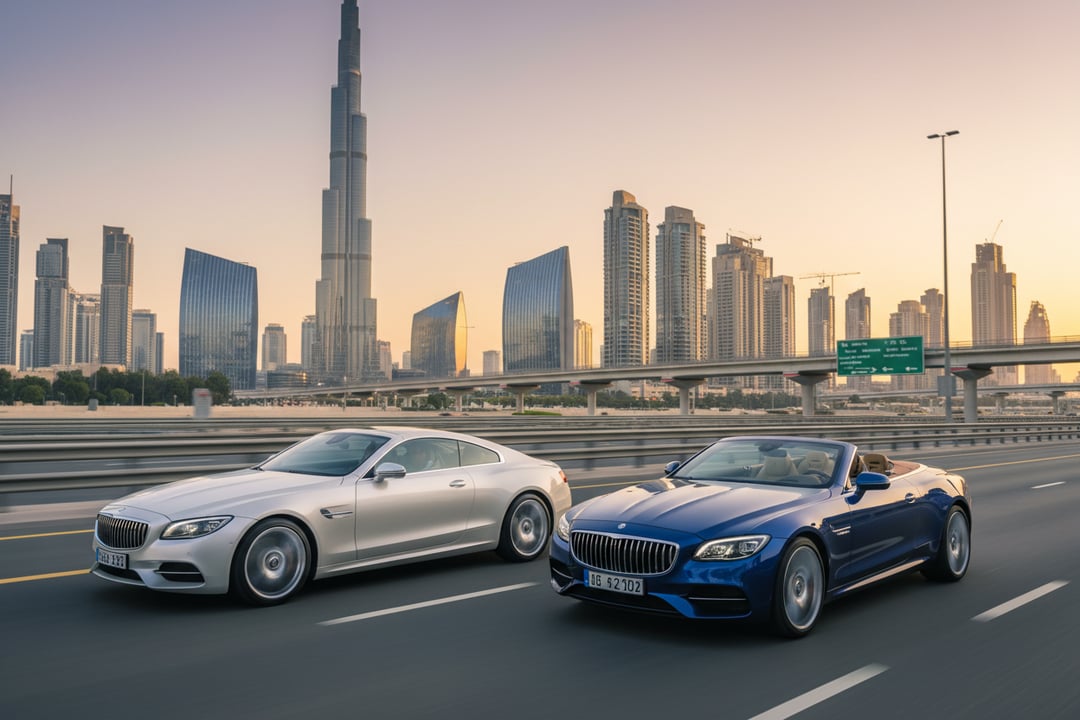
The choice between a coupe and a convertible in the UAE is rarely just about aesthetics. It represents a fundamental trade-off between structural rigidity, practical utility, and long-term durability in an environment defined by extreme heat and dusty conditions. As a certified vehicle inspector, I advise buyers to look beyond the visual appeal and assess the mechanical implications of removing the roof. This decision impacts the chassis integrity, the complexity of the suspension, and the likelihood of post-purchase headaches. Understanding these factors is essential for ensuring the vehicle retains its value and safety standards over time.
The Driving Experience: Chassis Rigidity vs. Aerodynamics
The most immediate difference between a coupe and a convertible is the visceral sensation of driving. A coupe typically offers superior structural rigidity due to a fixed roof and often a solid frame. This stiffness reduces torsional flex during cornering, allowing for sharper handling and predictable steering response. In contrast, removing the roof creates a void that compromises the cabin’s structural integrity. Manufacturers must compensate for this loss of rigidity by adding bracing, which adds weight and alters the suspension tuning.
When evaluating a convertible, the suspension package is critical. Because the roof contributes significantly to a vehicle’s weight distribution, convertibles often require stiffer springs and dampers to maintain stable cornering. This results in a tighter ride that can transmit more road imperfection to the cabin compared to a softer-tuned coupe. For the UAE’s varied road surfaces, a well-tuned convertible suspension will feel firm, whereas a poorly tuned one may feel jittery. The Road Test phase of a professional inspection must specifically evaluate how the vehicle handles high-speed stability and cornering body roll.
Practicality: Roof Mechanisms and Storage
Practicality in the UAE demands robust storage solutions for daily commutes and weekend trips. Convertibles inherently face a storage dilemma: the roof mechanism takes up significant space. In soft-top models, the fabric and motor assembly consume a large portion of the trunk, often leaving barely enough room for a weekend bag or a child’s car seat. Hardtop convertibles alleviate this issue somewhat but still require a hydraulic or electric actuator that is prone to mechanical fatigue over time.
- Roof Mechanism Reliability: Electric actuators and hydraulic pumps are complex assemblies that fail with age and usage.
- Water Intrusion: Convertible roofs create additional seals around the windows and pillars, increasing the risk of water leaks during heavy rain.
- Storage Compromise: Significant trunk space is sacrificed for the roof stowage area, impacting cargo capacity for families or travelers.
Furthermore, rear-seat access in convertibles is frequently compromised. The intrusion of the roof frame and side pillars often reduces headroom and legroom for passengers in the back. In a family-oriented market like the UAE, this limits the vehicle's utility. A coupe, by contrast, provides consistent cabin dimensions and usually superior rear-seat legroom, making it the superior choice for multi-passenger utility.
Maintenance Costs and Durability
Convertibles command higher maintenance premiums due to their added complexity. The roof mechanism is the single most expensive component to repair or replace. A failure in the hydraulic system or the motor assembly can render the vehicle undrivable until fixed. In the UAE’s intense climate, the rubber seals, weather stripping, and fabric or vinyl tops are subjected to constant UV exposure, accelerating degradation and cracking.
Fluid leaks are another common issue. The drainage channels designed to guide water away from the roof are prone to clogging with sand and dust common in the region. If these channels are blocked, water can seep into the cabin or the rear footwells. A Computer Diagnostic AED 99 service can reveal if the vehicle’s alarm system is triggered by faulty roof sensors, which often precede mechanical failure. However, these codes do not diagnose the physical state of the motor or hydraulics.
For a complete health check of the vehicle's mechanical health, a Comprehensive AED 299 package offers the necessary depth. This covers the Body and Computer checks, which are vital for spotting previous accident damage to the roof pillars or frame rails. Inspecting the condition of the fluids, including transmission and coolant, is also critical, as convertibles often have unique cooling requirements to manage the heat generated by the roof motor.
Inspection Vulnerabilities: What to Check
From an inspection standpoint, convertibles present specific challenges that require a trained eye. The chassis of a convertible is more susceptible to accident damage because the B-pillars (the vertical pillars between the front and rear doors) are structurally critical for safety. A side-impact collision that bends the B-pillar can render the vehicle unsafe to drive, even if the bodywork looks superficially acceptable.
When using AutoFay’s inspection services, specific categories must be scrutinized. The Frame category checks the integrity of the pillars, floor pans, and rails. Any sign of welding or misalignment in these areas suggests that the vehicle may have been in an accident that compromised its structural safety. The Body and Paint inspection must look for panel gaps in the area of the rear window and roof, as poor alignment indicates previous repair work on the roof mechanism or pillars.
The Suspension system must also be evaluated. Convertibles often require specialized bushings and mounts to handle the flex in the chassis. Wear in these components leads to clunking noises over bumps, which can be annoying but also indicates underlying structural fatigue. Additionally, the Tires category should check for uneven wear patterns, which can result from the chassis flex characteristic of convertibles.
| Inspection Focus Area | Coupe | Convertible |
|---|---|---|
| Structural Integrity | High rigidity; fewer stress points on the frame. | Lower rigidity; B-pillars and roof rails are critical for stability. |
| Paint & Body | Standard painting processes; less exposure to UV on the roof. | Exposure to UV rays degrades paint on the roof; risk of peeling or fading. |
| Mechanical Complexity | Simpler design; fewer moving parts in the cabin. | Complex roof mechanisms; hydraulic pumps and electric motors prone to failure. |
| Fluid Condition | Standard cooling and brake fluid systems. | Requires monitoring of window sealants and potential drainage leaks. |
Road Test and Noise Vibration
The Road Test is the final verification step where the differences between the two body styles become apparent. A coupe generally offers superior noise insulation, keeping the cabin quiet at highway speeds. A convertible, by its very nature, allows wind and road noise to enter the cabin. While modern convertibles use acoustic glass and special windbreakers to mitigate this, they cannot fully eliminate the noise.
Inspectors must listen for abnormal noises coming from the roof hinges or the rear glass during the Road Test. These noises often indicate worn bushings or loose mounting points in the mechanism. Vibration is another factor; if the convertible’s dashboard vibrates at idle, it suggests the chassis mounts are worn, allowing engine vibration to transfer directly into the cabin structure.
Brakes are also scrutinized closely. Convertibles are typically lighter than their coupe counterparts, which can lead to different deceleration characteristics. However, the braking system must still provide consistent stopping power. The Brakes category checks the pad percentage rating and rotor condition to ensure the vehicle can stop safely, regardless of its weight class.
Conclusion
Selecting the right vehicle requires weighing the desire for open-air driving against the realities of structural integrity and maintenance. Coupes offer a practical, durable, and quieter option that suits the UAE’s climate and the need for cargo space. Convertibles deliver an exhilarating experience but demand a higher level of scrutiny regarding their mechanical systems.
For buyers, the cost of a potential mistake—such as purchasing a vehicle with a failed roof mechanism or structural damage—is far greater than the cost of a professional inspection. A vehicle is a significant investment; ensuring it meets safety standards before purchase is non-negotiable.
AutoFay inspects 410+ checkpoints with HD photos and PDF report. Book at autofay.ae or call +971542584458
0 Comments
No comments yet. Be the first to share your thoughts!