

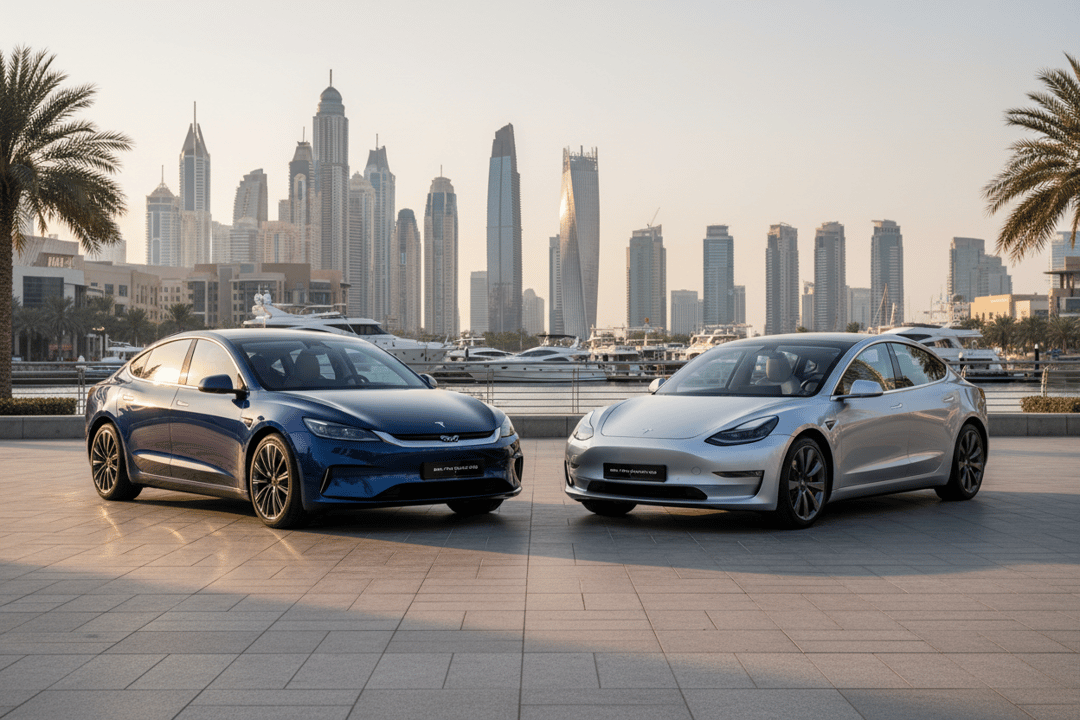
The electric vehicle market in the UAE has evolved rapidly, moving beyond luxury-only status to become a practical segment dominated by high-performance options. Among these, the Tesla Model 3 and the BYD Seal represent two distinct philosophies of electric mobility. While the Tesla Model 3 established the benchmark for the modern EV sedan, the BYD Seal introduces a more complex architecture and advanced thermal management systems. For buyers in Dubai, Abu Dhabi, and the wider Emirates, the decision between these two involves more than just badge recognition; it requires a deep dive into mechanical reliability, long-term maintenance costs, and the hidden dangers of the secondhand market. In a region where temperatures regularly exceed 45°C, understanding how these vehicles age under stress is essential.
Engineering Philosophy and Core Reliability
The fundamental difference between these two vehicles lies in their approach to engineering. The Tesla Model 3 utilizes a simplified powertrain architecture with fewer moving parts, relying heavily on software. The BYD Seal employs a more complex e-platform 3.0 design, incorporating a water-cooled battery pack and a sophisticated thermal management system designed to maintain efficiency across diverse climates. In terms of raw mechanical reliability, the Tesla’s simplicity is a strength, offering fewer points of failure. However, the BYD’s complexity provides better thermal regulation, which can prevent overheating issues common in older EVs driven aggressively in the UAE heat.
When inspecting a Tesla Model 3, the focus is often on the structural rigidity of the chassis and the health of the drive units. The Model 3 is rear-wheel drive, which contributes to a lower center of gravity and predictable handling. In contrast, the BYD Seal offers the option of all-wheel drive, typically via a dual-motor setup, which improves traction on sandy or gravel roads but adds weight and complexity to the suspension system. For a used purchase, the buyer must determine which powertrain configuration better suits the local driving conditions, as the all-wheel-drive variants of the Seal demand more rigorous maintenance checks.
Common Inspection Findings: The Tesla Model 3
Tesla vehicles often present specific issues that reveal their history of use. During a professional inspection, the most common findings on a used Tesla Model 3 in the UAE revolve around the suspension and the door actuation systems. The Model 3 has a relatively hard suspension setup tuned for sportiness, which accelerates wear on the upper control arms and struts. A visual check for oil seepage around the strut mounts or clunking noises during a road test is critical.
- Suspension Wear: The MacPherson strut assembly and the control arm bushings are the first components to show fatigue due to the vehicle's firm ride quality.
- Door Handle Mechanisms: The retractable door handles on Tesla vehicles are a frequent point of failure, often jamming or failing to deploy, leaving the owner stranded.
- Charging Port: Exposure to desert dust and sand can cause the charging port latch mechanism to stick, preventing the cable from engaging properly.
- Tires: Due to the heavy torque delivery and performance-oriented tires, tread life depletes faster than on conventional sedans, requiring more frequent replacements.
Common Inspection Findings: The BYD Seal
The BYD Seal presents a different set of challenges for inspectors. The primary concern often revolves around the vehicle's software integration and paint quality. Because BYD is a newer entrant to the global market, there is less historical data available regarding long-term component fatigue compared to Tesla. Inspectors must pay close attention to the battery thermal management system, as failure here can lead to reduced range or permanent cell degradation.
- Software Glitches: Early to mid-generation units may exhibit infotainment lag or minor glitches in the driver assistance software requiring software updates at a Tesla-like service center.
- Paint and Bodywork: Reports of "orange peel" textures on the paintwork have been noted, which can lead to accelerated corrosion if not addressed promptly in high-humidity coastal areas.
- Sealing Integrity: The complex curves of the Seal's body require flawless paintwork; any microscopic scratches can compromise the water-resistant coating, risking water ingress into the cabin.
- Brake System: The regenerative braking system is powerful, but if not properly calibrated, it can lead to uneven wear on the brake pads and rotors.
Maintenance Implications in the UAE Climate
Operating an electric vehicle in the UAE presents unique maintenance challenges that differ significantly from combustion engine cars. The primary concern is thermal management. A battery pack operating at elevated temperatures suffers accelerated degradation. Both the Tesla Model 3 and the BYD Seal are designed with cooling systems, but the effectiveness of these systems relies heavily on the condition of the coolant and the radiator hoses.
For the Tesla Model 3, the regenerative braking system is a double-edged sword. While it extends brake life by up to 90%, the high current flow through the calipers and rotors can cause uneven heat distribution. This often results in a condition called "glazing," where the brake pads become hard and slick, requiring a mechanical cleaning of the rotors to restore stopping power. For the BYD Seal, the complexity of its battery management system means that any fault in the coolant pumps can result in catastrophic battery failure if left unaddressed.
Evaluating Value: A Comparative Buying Guide
Determining which vehicle offers better value requires weighing the cost of ownership against the initial purchase price. The Tesla Model 3 generally holds its resale value better than the BYD Seal due to brand recognition and established service networks, but this can come at the cost of higher premiums for used examples. The BYD Seal, while mechanically robust, faces a steeper learning curve for parts availability and specialized labor in the UAE market.
| Feature | Tesla Model 3 | BYD Seal |
|---|---|---|
| Powertrain Complexity | Simplified RWD or Single Motor AWD | Dual Motor AWD with complex thermal management |
| Susceptibility to Heat | High; battery cooling is passive in some modes | Moderate; active liquid cooling systems present |
| Software Reliability | Stable but updates can cause temporary glitches | Evolutionary; early units may need tuning |
| Panel Fitment | High quality; gaps are consistent | Variable; some reports of inconsistent panel gaps |
The Critical Role of Professional Inspection
Given the complexity of modern electric drivetrains and the high cost of replacement components, buying a used EV without a comprehensive inspection is a gamble. A visual inspection is insufficient; a vehicle requires a technical evaluation to uncover hidden faults that are not visible to the naked eye. Issues such as a faulty onboard computer (OBC), a damaged battery cell, or frame damage due to a minor accident can drastically alter the vehicle's value and safety profile.
Utilizing a professional inspection service is the only way to mitigate the risks associated with purchasing a used electric vehicle in the UAE. An expert inspection goes beyond a quick look to verify the integrity of the chassis and the functionality of all electrical systems. This is particularly important for vehicles that may have been imported used from Europe or Japan, where maintenance records are often non-existent. A thorough check ensures that the vehicle chosen is mechanically sound and safe for daily operation.
AutoFay provides a on-location inspection service available across all seven Emirates, bringing the inspection facility directly to the buyer. By utilizing a rigorous database of 410+ checkpoints across 25 distinct categories, AutoFay delivers a detailed analysis of the vehicle's condition. Their packages are designed to offer transparency at every stage of the purchase process. The Computer Diagnostic package, priced at AED 99, is the essential first step, identifying any engine, transmission, ABS, or airbag codes stored in the vehicle's computer.
For a more comprehensive view, the Body & Computer package, priced at AED 250, combines visual cosmetic checks with diagnostic data. This is crucial for identifying accident damage or previous repairs that may affect the vehicle's structural safety. Finally, the Comprehensive package, priced at AED 299, offers the deepest level of scrutiny. This includes a panel-by-panel evaluation of the body and paint to determine if panels are original or repaired, a frame check to ensure structural rails and pillars are unaltered, and a full road test to evaluate acceleration, braking, and noise levels.
Do not rely on dealer representations alone. The thermal stress of the UAE climate and the intricacies of electric powertrains demand objective verification. A professional inspection provides the tangible evidence needed to negotiate a fair price or walk away from a potentially problematic vehicle. The cost of a diagnostic service is negligible compared to the cost of uncovering a significant failure after purchase. AutoFay inspects 410+ checkpoints with HD photos and PDF report. Book at autofay.ae or call +971542584458.

0 Comments
No comments yet. Be the first to share your thoughts!