

Entering the 50,000 to 100,000 kilometer range marks a significant transition for any vehicle. This mileage band represents the period where factory warranties typically expire and the vehicle shifts from "new" to "used" in the eyes of the market. While the car may still look presentable, it begins to experience the cumulative effects of wear and tear that are not always visible during a visual walk-around. A buyer must understand that this is the threshold where component failures often become unavoidable, particularly for rubber, fluid, and suspension parts.
The Critical "Transition Phase"
This mileage range is often called the "valley of depreciation" because the car retains some value but requires expensive maintenance. The vehicle has likely endured thousands of starts, stops, and highway miles. At this stage, the engine is no longer breaking in; it is working under full load for extended periods. The transmission has completed its mechanical break-in cycle, and the friction materials in the brakes are significantly depleted.
- Tires: Most performance tires are designed to last 40,000 to 60,000 kilometers. at higher mileage, a tire is approximately half-worn; at higher mileage, it is likely approaching the legal limit.
- Fluids: Engine oil, transmission fluid, coolant, and brake fluid have degraded chemically and physically. Their ability to lubricate and cool has diminished compared to when the car was new.
- Rubber Components: Suspension bushings, hoses, and seals are dry-rotting or fatiguing due to constant flexing and exposure to heat.
Engine and Transmission Health
The internal health of the powertrain is the single most critical factor in determining the long-term value of a vehicle. At 50k to 100k km, the following systems require strict scrutiny.
Timing Components and Belts
Intervals for timing belt replacement vary by manufacturer, but this mileage range often coincides with the end of the belt's service life. A broken timing belt can cause catastrophic engine failure. Inspectors must check for oil contamination on the timing cover, which indicates a leak from the camshaft or crankshaft seals.
Oil Consumption and Leaks
Modern engines are more efficient, but some consumption is natural. However, burning a quart of oil every 1,000 kilometers signals piston ring or valve seal wear. Check the oil dipstick and the ground under the car for fresh puddles. A burnt smell from the exhaust indicates that the oil has been overheating or leaking onto hot exhaust components.
Transmission Behavior
Slipping gears, hesitation when accelerating, or hard shifting into reverse are signs of transmission wear. Fluid color is a key indicator; healthy transmission fluid is bright pink or red, while dark brown or muddy fluid indicates overheating and internal friction material breakdown.
Suspension, Steering, and Braking
- Shock Absorbers and Struts: These components dampen road vibration. Once worn, the car will exhibit nose-diving during braking, body roll during turns, and a rough ride over bumps.
- Brake Pads and Rotors: Brake pads are typically replaced every 30,000 to higher mileage. At the upper end of this range, rotors may be warped or scored, causing a vibration in the steering wheel when braking.
- Tire Wear Patterns: Uneven wear on the inner or outer edges suggests alignment issues or worn suspension components.
Body, Frame, and Interior
Rust and Corrosion
Panel Alignment and Gaps
>Inspectors must look for mismatched gaps between doors, the hood, and the trunk. Significant deviation suggests that the car has been in a collision and poorly repaired. The doors should open and close with a solid, heavy feel, not a hollow or rattling sound.Electrical Systems
Why Professional Inspection is Essential
| Check Category | Inspection Detail |
|---|---|
| Engine Diagnostics | OBD scan for transmission, ABS, and airbag codes. |
| Brake Condition | td>Pad thickness rating and rotor condition.|
| Fluid Condition | td>Level verification and visual analysis of oil/coolant.|
| Body & Paint | Panel-by-panel analysis for original or repaired surfaces. |
| Frame Integrity | Inspection of rails, pillars, and floor pan for damage. |
| Road Test | td>Acceleration, braking, noise, and vibration analysis.
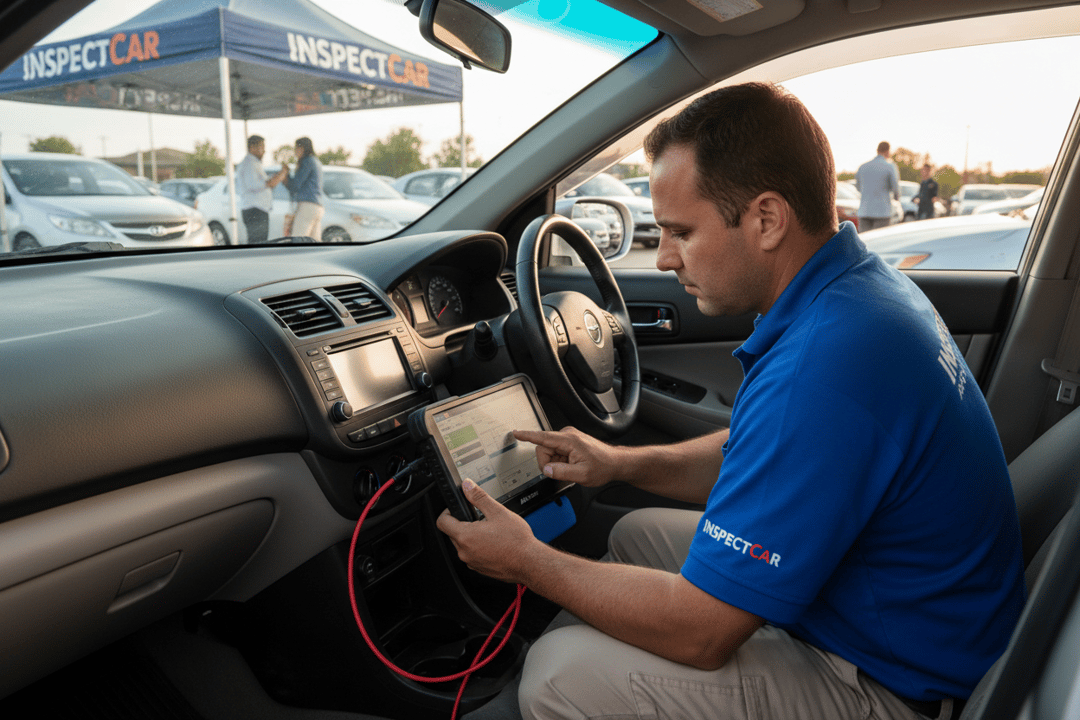
For a vehicle in the 50,000 to higher mileage range, a comprehensive visual and mechanical check is the only way to uncover the true condition of the asset. DIY checks can identify obvious issues, but they often miss the silent killers that lead to expensive repairs down the road. Professional inspectors utilize specialized equipment to read error codes and assess wear levels accurately.
AutoFay provides a on-location inspection service across all seven Emirates, bringing the inspection to the buyer's location. Their packages are designed to cover the specific needs of used car buyers at this critical mileage range. A Computer Diagnostic scan is available for AED 99, which reads engine, transmission, ABS, and airbag codes. For a detailed review of the vehicle's condition, the Body and Computer package is offered for AED 250. For the highest level of scrutiny, the Comprehensive package at AED 299 covers 410+ checkpoints across 25 categories.
Inspecting a car with 50,000 to 100,000 kilometers requires a shift from looking for cosmetic flaws to identifying mechanical and structural fatigue. The consequences of neglecting these checks can range from poor fuel economy and uncomfortable rides to catastrophic component failure. A professional inspection ensures that the buyer understands the true operational state of the vehicle before making a commitment.
AutoFay inspects 410+ checkpoints with HD photos and PDF report. Book at autofay.ae or call +971542584458




0 Comments
No comments yet. Be the first to share your thoughts!