
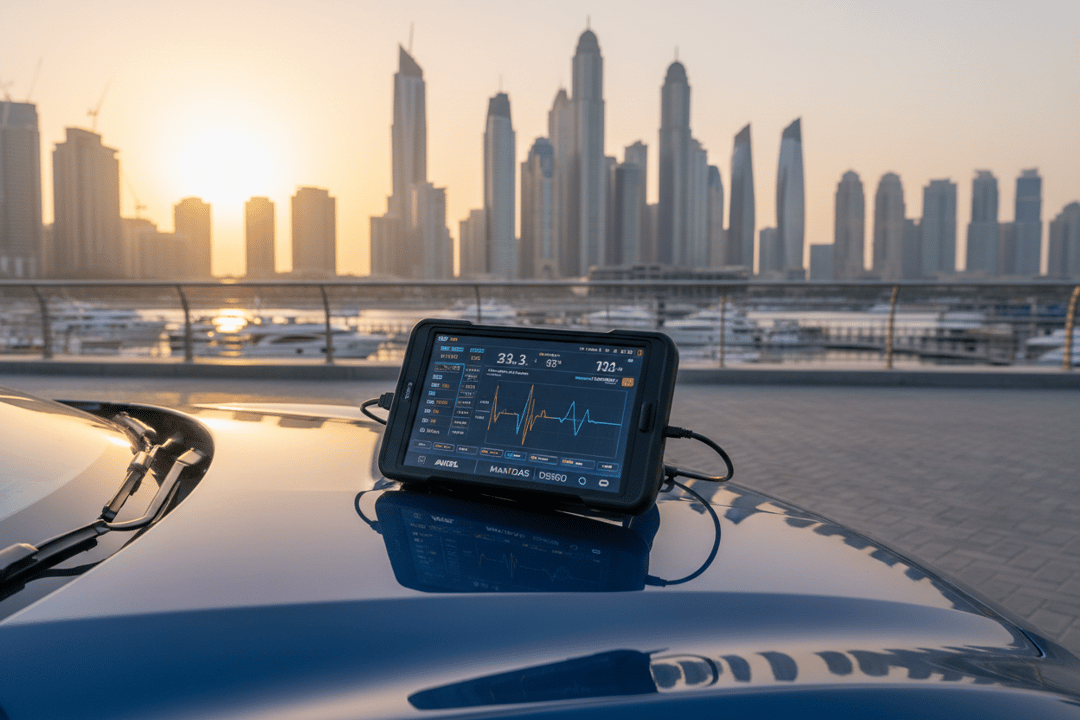
The oxygen sensor, often referred to as the O2 sensor, serves as one of the most critical components in a modern vehicle’s exhaust system. Located in the exhaust manifold or downstream of the catalytic converter, this device measures the amount of unburnt oxygen in the exhaust gases. Its primary function is to provide feedback to the Engine Control Module (ECM), or Engine Control Unit (ECU), regarding the air-fuel ratio entering the combustion chamber. This feedback loop is essential for maintaining optimal fuel efficiency and minimizing harmful emissions. In the UAE’s demanding climate and traffic conditions, the reliability of this sensor directly impacts vehicle performance and longevity. Detecting a failing O2 sensor before finalizing a purchase prevents the acquisition of a vehicle prone to poor fuel economy or potential engine failure.
The Critical Role of the Oxygen Sensor in Engine Management
The oxygen sensor operates by comparing the oxygen content in the exhaust gas with the ambient air. It generates a voltage signal, typically ranging from 0.1 volts to 0.9 volts, which the ECU uses to adjust the fuel injection timing and duration. When the exhaust contains too much oxygen, indicating a lean mixture, the sensor voltage drops, signaling the ECU to inject more fuel. Conversely, if the exhaust contains too little oxygen, indicating a rich mixture, the voltage rises, prompting the ECU to reduce fuel injection. This continuous adjustment ensures the engine runs as efficiently as possible. A malfunctioning sensor disrupts this delicate balance, forcing the engine to operate in a suboptimal state.
In the context of the UAE market, where vehicles are often subjected to high temperatures and stop-and-go traffic, the electrical components within the sensor can degrade faster than in temperate climates. A failing sensor may not send accurate data, causing the ECU to either over-fuel or under-fuel the engine. This not only degrades driving performance but can also lead to the contamination of other expensive components, specifically the catalytic converter.
Visual Indicators: Detecting Obvious Exhaust Issues
While modern vehicles rely on complex electronics to diagnose faults, visual inspection of the exhaust system remains a vital first step in the pre-purchase inspection process. A compromised oxygen sensor can cause the engine to run rich, resulting in incomplete combustion. This often manifests as visible black soot at the tailpipe. Inspectors should look for heavy black smoke or a sooty residue on the exhaust tip, as this indicates excess fuel delivery. This condition wastes fuel and accelerates the wear of spark plugs and ignition coils.
Another visual symptom involves the smell of the exhaust. A distinct, pungent odor resembling rotten eggs is usually indicative of sulfur in the fuel or a catalytic converter struggling to process excessive hydrocarbons due to a rich fuel mixture caused by sensor failure. Inspectors should also check for coolant leaks near the exhaust manifold area, as a leaking head gasket or a cracked engine block can introduce coolant into the exhaust stream. This results in white, sweet-smelling smoke that can also damage the oxygen sensor and catalytic converter. While not always exclusive to the sensor, these visual cues provide immediate context for engine health.
- Black Soot: Indicates a rich fuel mixture caused by incorrect sensor data.
- White Smoke: Often signals coolant leakage into the exhaust, potentially related to engine stress from sensor issues.
- Rotten Egg Smell: Sulfur smell suggests the catalytic converter is struggling with unburnt fuel.
Dashboard Warning Lights and Diagnostic Codes
The most definitive way to identify an oxygen sensor problem is through the vehicle’s On-Board Diagnostics (OBD) system. When the sensor detects a malfunction, such as a slow response time or a voltage that remains outside the normal operating range, it triggers the Check Engine Light (CEL). However, the presence of the light does not pinpoint the exact location of the issue. It could be the sensor itself, an exhaust leak, or a vacuum leak. A professional scanner is required to retrieve the specific error codes stored in the ECU memory.
Common diagnostic trouble codes (DTCs) associated with oxygen sensor issues include P0131, P0135, and P0171. P0131 refers to a "Bank 1 Sensor 1 Circuit Low Voltage," suggesting the sensor is reading too lean. P0135 refers to a heater circuit malfunction, meaning the sensor cannot heat up quickly enough to measure gases at low temperatures. P0171 indicates the system is running too lean. Understanding these codes helps inspectors determine the exact nature of the failure, whether it is a sensor element issue or a wiring problem.
| Diagnostic Trouble Code | Possible Cause | Immediate Effect on Vehicle |
|---|---|---|
| P0131 | Bank 1 Sensor 1 Circuit Low Voltage | Engine runs lean, resulting in poor acceleration and hesitation. |
| P0135 | Heater Circuit Malfunction | Sensor fails to respond quickly during cold starts, affecting emissions tests. |
| P0171 | System Too Lean (Bank 1) | Excessive fuel consumption and potential stalling under load. |
Drivability Symptoms: Idle, Acceleration, and Fuel Economy
When a vehicle owner drives a car with a failing oxygen sensor, the symptoms become immediately noticeable during routine driving. The most common complaint is poor fuel economy. Because the engine is running inefficiently, the vehicle will consume significantly more fuel than the manufacturer’s specifications. In the UAE, where fuel prices are a major operational cost, a sudden drop in mileage is a major red flag that warrants a thorough engine inspection.
Drivers may also experience a rough idle. The engine may shake or vibrate noticeably when the car is stopped at a traffic light or in heavy Dubai traffic. This instability occurs because the air-fuel ratio is fluctuating erratically. During acceleration, the vehicle might hesitate, jerk, or lack power. This lack of response happens because the ECU is unable to adjust the fuel injection accurately in real-time to match the throttle input. Furthermore, a failing sensor can cause the engine to stall when coming to a stop, as the combustion process becomes unstable without the correct sensor feedback.
The Role of Professional Inspection: AutoFay Services
Relying solely on a test drive is insufficient for uncovering hidden oxygen sensor issues. A professional inspection service examines the vehicle under controlled conditions and utilizes specialized equipment to assess engine health. AutoFay provides a comprehensive on-location inspection service across all 7 Emirates, covering over 410+ checkpoints across 25 distinct categories. The Engine category specifically evaluates engine sound, engine mounts, and exhaust smoke color, ensuring that any irregularities caused by sensor failure are documented.
During the inspection process, inspectors perform a Road Test to evaluate acceleration, braking, and noise levels. They also utilize a Computer Diagnostic scan to read live data streams from the O2 sensors. This allows them to see the real-time voltage output of the sensor while the vehicle is running, providing a clear picture of whether the sensor is responding correctly to the exhaust gases. This level of scrutiny is essential for detecting intermittent faults that may not trigger a check engine light during a brief test drive.
Why Invest in an Inspection Package?
Attempting to diagnose or repair an oxygen sensor issue without professional help can lead to misdiagnosis and wasted expenses. Ignoring the warning signs can result in severe consequences, such as catalytic converter failure. The catalytic converter relies on the oxygen sensor to function correctly to reduce harmful emissions. If the sensor sends incorrect data, the converter can overheat and become clogged, rendering it inoperable. Replacing a catalytic converter is a costly repair that can easily exceed the price of the vehicle itself.
For buyers in the UAE market, the risk of purchasing a vehicle with hidden mechanical faults is high. AutoFay offers tiered inspection packages designed to provide specific levels of detail and assurance. The Computer Diagnostic package at AED 99 is an excellent starting point for identifying specific error codes and sensor faults. The Body & Computer package at AED 250 adds a visual inspection of the engine bay and undercarriage, ensuring no physical damage or leaks are present. For the most thorough assessment of mechanical health, the Comprehensive package at AED 299 provides a detailed report on engine, transmission, brakes, suspension, and tires.
Investing in an inspection is far more economical than the potential expense of repairing a catalytic converter or dealing with engine failure caused by a neglected sensor. The detailed HD photos and PDF report provided by the inspection service serve as a permanent record of the vehicle's condition at the time of inspection.
AutoFay inspects 410+ checkpoints with HD photos and PDF report. Book at autofay.ae or call +971542584458




0 Comments
No comments yet. Be the first to share your thoughts!