

The UAE market for high-performance sports cars differs significantly from European markets. Extreme temperatures, high salinity, and aggressive driving styles place unique stress on German engineering. For the prospective buyer, understanding the resale dynamics and mechanical realities of specific Porsche models is essential for acquiring a vehicle that offers long-term reliability rather than a costly headache.
Models that Retain Value in the Local Market
Not all Porsches depreciate equally in the Emirates. The 911 platform consistently commands the highest residual value due to its iconic status and established reputation for durability. Among the SUV lineup, the Cayenne enjoys immense popularity, acting as a status symbol while retaining a stronger resale value than its competitors, particularly the Audi Q7 and BMW X5 of similar vintage.
The Boxster and Cayman offer the best entry point into the brand, often trading at a significant discount to the 911 but holding value due to their enthusiast appeal. The Panamera targets a different demographic, offering sedan-like luxury with sports car performance; its value retention is moderate, heavily dependent on the trim level and maintenance history.
Common Mechanical Anomalies Across the Range
Every Porsche generation presents specific engineering challenges. Early 911s (996 generation) are notorious for the Intermediate Shaft (IMS) bearing failure, which can lead to catastrophic engine destruction. Owners of 997 models generally enjoy better reliability, though the cylinder deactivation system in Turbo and GT models often fails, leading to rough idling and reduced performance if left unaddressed.
The Cayenne and Macan share a common vulnerability in their air suspension systems. Over time, the compressor and air bags degrade, causing the vehicle to sag or ride roughly. In the UAE heat, rubber components in the seals and bushings deteriorate faster than in temperate climates, accelerating the need for suspension replacement.
Electrical gremlins often plague the Panamera and Cayenne. The complex network of sensors and control modules can malfunction, triggering warning lights for unrelated systems. A failing auxiliary battery or a glitch in the infotainment module can render the car undrivable until diagnostics are performed.
Inspection Priorities for UAE Conditions
When purchasing a used Porsche in the Emirates, the inspection must account for local environmental factors. The primary priority is the condition of the air conditioning system; a Porsche without ice-cold air is fundamentally compromised in the region's climate. Equally critical is the health of the cooling system, as overheating is a common failure mode that can destroy an engine instantly.
Check the bodywork for evidence of hard impacts. The iconic wide arches of a Porsche are prone to damage from curbs at high speeds. Even a minor bumper scuff can hide a bent subframe or misaligned suspension, which will lead to premature tire wear and uneven tire replacement costs.
The braking system requires immediate scrutiny. Porsche brakes are expensive, but the real financial risk comes from neglect. Worn brake fluid absorbs moisture, which lowers the boiling point and causes brake fade during heavy stop-and-go traffic. Brake pads must have sufficient material remaining to ensure safety and prevent warping of the rotors.
Key Inspection Categories
- Body and Paint: Verify that panels were replaced due to accidents rather than wear. Look for color mismatch at the seams, which indicates a repair.
- Engine Performance: Listen for ticking noises at idle, which could indicate valve train issues. Check for blue or white smoke during acceleration, signaling oil consumption or coolant leaks.
- Electronics: Ensure every button and switch functions correctly. Test the parking sensors, the rearview camera, and the electronic steering lock.
- Fluids and Leaks: Inspect the ground beneath the vehicle for oil or coolant drips. Check the oil level and viscosity through the dipstick to ensure the engine has not consumed excessive oil.
Selecting the Right Inspection Package
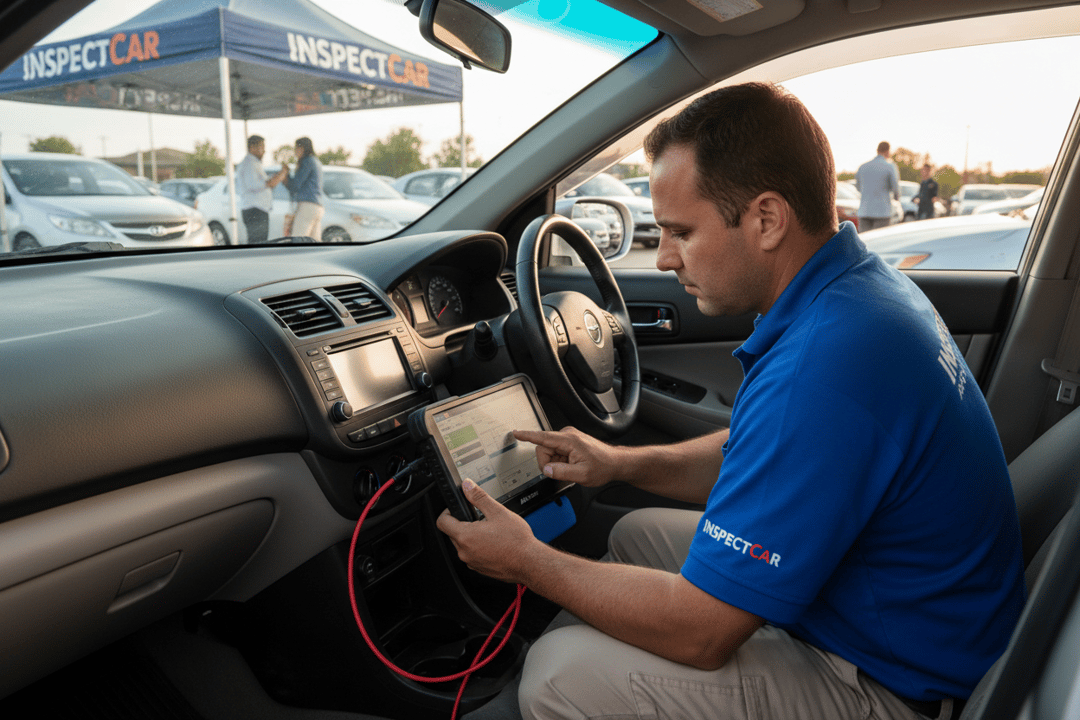
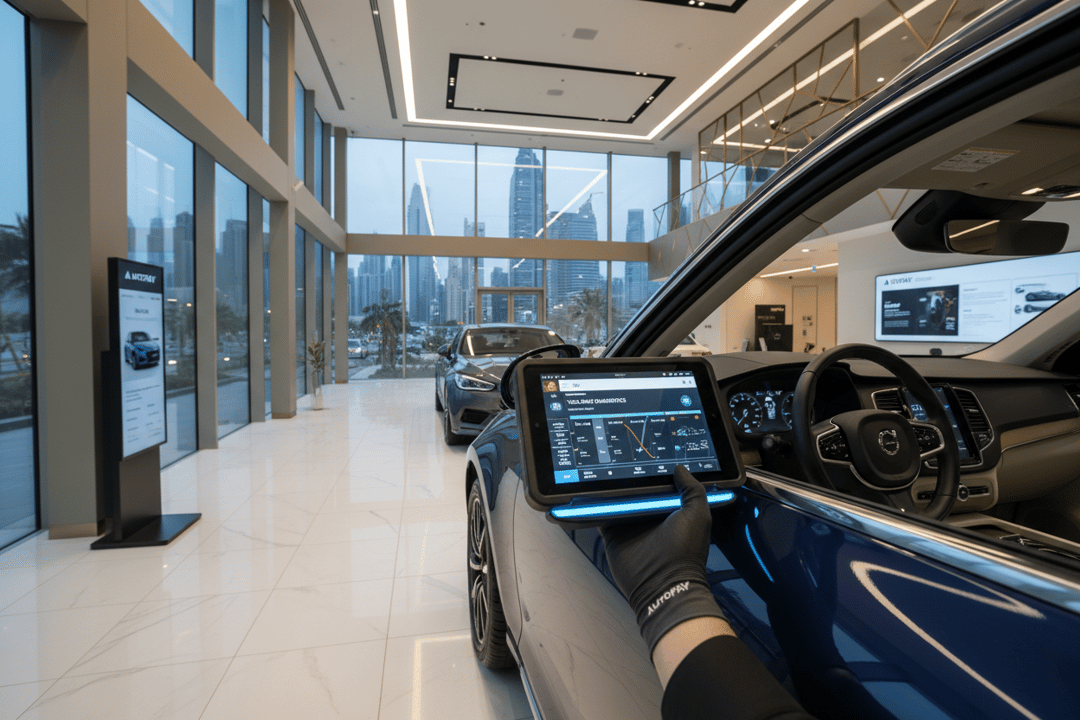
Deciding on the level of inspection depends on the vehicle's asking price and age. A basic computer diagnostic scan is useful for identifying stored error codes, but it cannot reveal physical damage. The Body and Computer package offers a necessary balance, combining a visual inspection with an engine scan to ensure the car is not a "basket case."
For high-value purchases or vehicles with unknown histories, the Comprehensive package is the only logical choice. This service provides a detailed analysis of critical systems, ensuring that hidden structural damage or mechanical failures are identified before a transaction is finalized.
| Package | Price (AED) | Best For |
|---|---|---|
| Computer Diagnostic | 99 | Quick check of stored codes and warning lights. |
| Body & Computer | 250 | Basic accident assessment combined with engine diagnostics. |
| Comprehensive | 399 | Full inspection of mechanical, structural, and safety systems. |
The Importance of Professional Verification
Relying solely on the seller's word is insufficient for high-end vehicles. The nuances of Porsche engineering require an expert eye to spot subtle warning signs that a layperson would miss. A professional inspection reports not only current faults but also potential future failures, allowing the buyer to negotiate a fair price based on the vehicle's true condition.
Investing in a pre-purchase inspection saves thousands of dirhams in hidden repair costs and provides a documented history of the vehicle. It protects the buyer from fraudulent odometer rollback or concealed accident damage, ensuring that the investment in a Porsche is sound and secure.
AutoFay inspects 410+ checkpoints with HD photos and PDF report. Book at autofay.ae or call +971542584458
0 Comments
No comments yet. Be the first to share your thoughts!