
The used car market in the United Arab Emirates places a premium on reliability and resale value. Among Korean manufacturers, Hyundai has established a strong foothold, offering models like the Tucson, Santa Fe, and Elantra that appeal to families and commuters alike. However, purchasing a pre-owned vehicle requires a rigorous vetting process to ensure mechanical integrity and accident-free history. A professional inspection transcends a visual walk-around, offering data-driven insights into the vehicle's true condition. This guide outlines critical areas to scrutinize when evaluating a used Hyundai, emphasizing the specific expertise available through professional inspection services.
Market Positioning and Model Lifespan
Hyundai vehicles generally demonstrate robust longevity in the UAE climate, provided they receive regular maintenance. Models such as the Santa Fe and Tucson are known for retaining value better than many competitors, particularly if the service history is complete and verifiable. Resale value fluctuates based on mileage and the condition of the interior electronics, rather than mileage alone. Older generation models may see depreciation accelerate if major components like the timing belt have not been replaced. Prospective buyers should prioritize models with documented maintenance schedules to ensure the vehicle has not suffered from neglect over time.
The Elantra remains a popular choice for those seeking a balance of fuel efficiency and space. When evaluating any model, the first step is to verify the vehicle identification number (VIN) matches the documents. A mismatched VIN is a red flag indicating potential theft or fraud. Once the paperwork is verified, attention shifts to the physical condition of the chassis and the performance of the drivetrain.
Body and Paint Condition: Detecting Accident Damage
Accident damage, even if seemingly minor, can compromise the structural safety of the vehicle. Panel alignment must be checked to ensure doors, hoods, and trunks close evenly. Gaps between panels should be consistent across the vehicle, as uneven spacing often indicates prior collision repair. Paint quality reveals the car's true history; original paint exhibits a uniform texture and gloss, whereas repainted areas often show orange peel effects or inconsistencies in color density.
Scrutiny should focus on the B-pillar and rear wheel arches, areas frequently exposed to curbs or minor impacts. A panel-by-panel inspection, as performed by experts, differentiates between original and repaired sections. This process is essential to identify whether the Hyundai has been involved in a front-end collision that might have bent the radiator support or damaged the frame rails. Structural damage can lead to misalignment issues and poor handling later on.
Engine and Transmission Diagnostics
The powertrain is the heart of the vehicle, and its health dictates the car's lifespan and performance. Cold starts should be smooth, without excessive cranking or a rattling noise. Upon acceleration, the engine should respond immediately without hesitation or stalling. Smoke from the exhaust provides critical diagnostic information; white smoke indicates coolant leaks, black smoke suggests fuel system problems, and blue smoke points to burning oil.
Fluid leaks beneath the vehicle are a common issue. Inspectors check for oil, coolant, or transmission fluid pooling on the ground, which indicates worn gaskets or seals. The timing belt or chain must be inspected for wear; a failed timing belt can cause catastrophic engine failure. Mechanical noises, such as tapping or knocking, suggest internal wear that may require significant repairs.
OBD Scanning for Hidden Faults
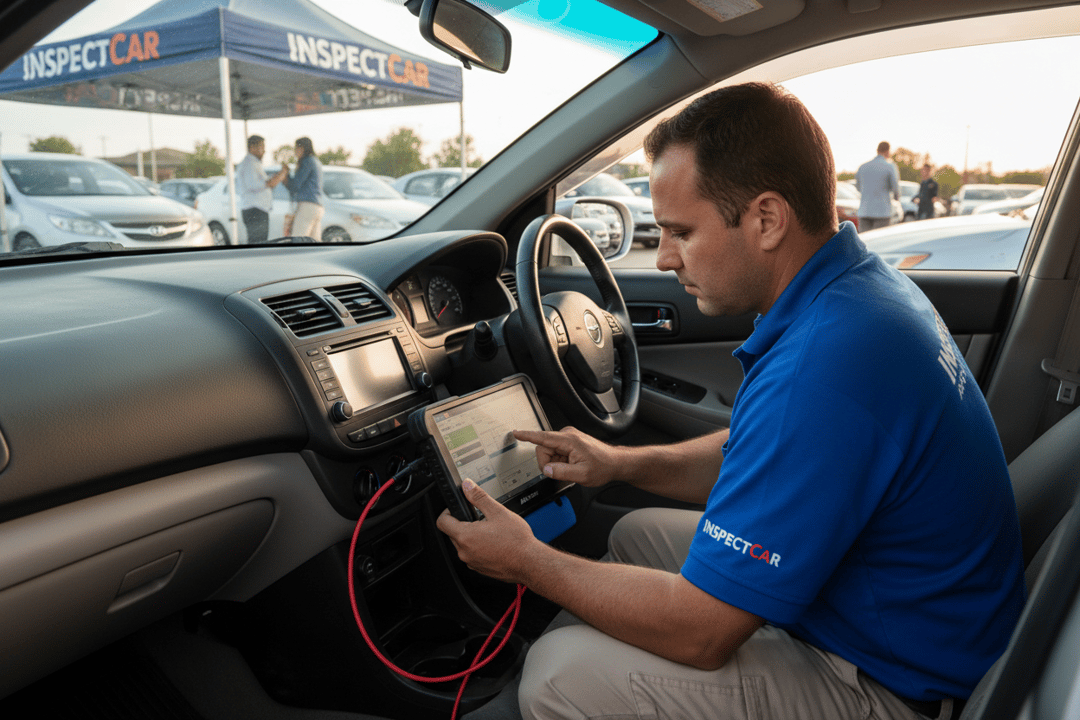
Modern vehicles rely on complex electronic control units (ECUs) to manage engine and transmission performance. A standard visual inspection cannot detect electronic glitches that trigger the "Check Engine" light. An On-Board Diagnostics (OBD) scan is mandatory to retrieve fault codes stored in the engine, transmission, ABS, and airbag systems. These codes pinpoint specific failures, such as a faulty oxygen sensor or a malfunctioning catalytic converter, before they escalate into major breakdowns.
Suspension, Brakes, and Tires
Hyundai vehicles are engineered for comfort, but suspension components wear out under the stress of daily UAE driving. Test the suspension by driving over speed bumps at a moderate speed; listen for clunking noises and observe the vehicle's body movement. Worn shock absorbers or struts result in a bouncy ride and increased stopping distances.
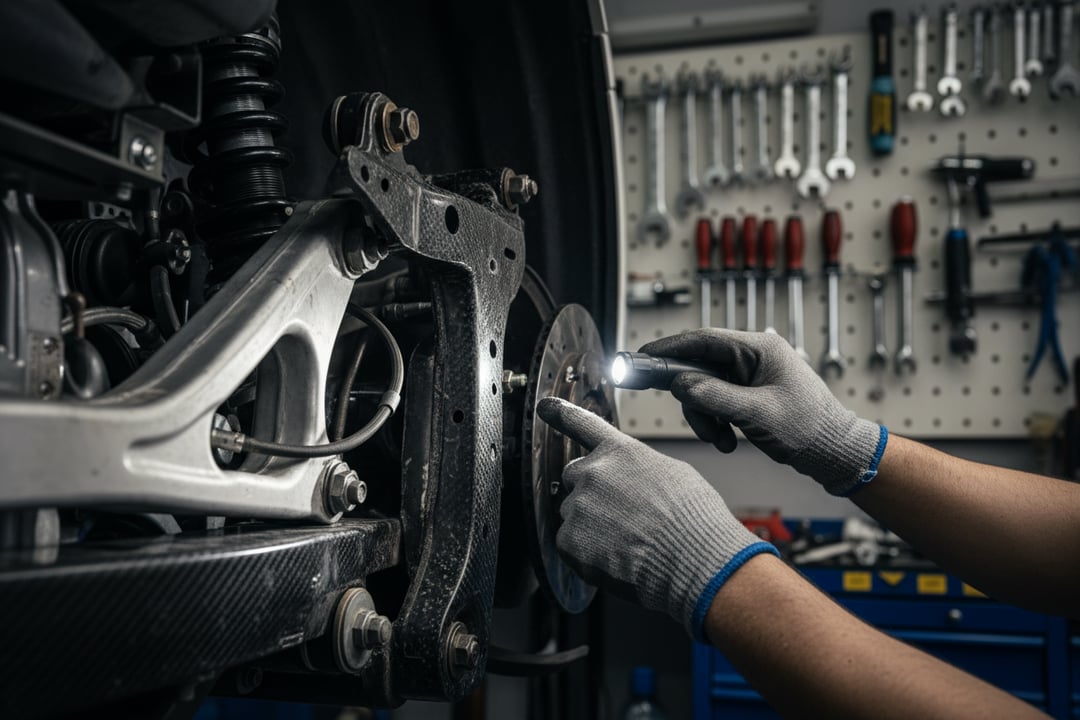
Brake performance is non-negotiable for safety. Inspectors measure the remaining thickness of brake pads and rotors. A pad thickness below 3mm requires immediate replacement to avoid damaging the rotors. The brake fluid should be clear and free of moisture; contaminated fluid can cause brake fade during high-speed driving or in heavy traffic. Additionally, the braking system should be free of excessive vibration or pulsation when applied firmly.
Tire selection impacts safety and handling. Inspectors check the manufacturing date of the tires, as rubber degrades over time regardless of mileage. Tires older than six years may crack or lose elasticity, increasing the risk of a blowout. Uneven tread wear patterns indicate alignment issues or suspension problems that must be addressed.
Choosing the Right Inspection Package
Investing in a professional inspection mitigates risk and ensures the vehicle meets safety standards. Different inspection packages cater to specific needs and budgets. Understanding the scope of each package helps buyers determine the level of scrutiny required for the specific Hyundai model being considered.
| Package | Price | Key Inclusions |
|---|---|---|
| Computer Diagnostic | AED 99 | Engine, Transmission, ABS, and Airbag system scans to identify specific electronic fault codes. |
| Body & Computer | AED 250 | Includes a full computer diagnostic scan plus a visual assessment of body panels, paint quality, and major mechanical components. |
| Comprehensive | AED 299 | A complete inspection covering 410+ checkpoints across 25 categories, including frame integrity, fluids, suspension, and a road test. |
The "Comprehensive" package is the most thorough option, utilizing 25 distinct categories to assess every inch of the vehicle. This includes a detailed road test to verify acceleration, braking, and noise levels. For high-value purchases or older vehicles with unknown histories, the comprehensive inspection provides the depth of analysis required to uncover hidden defects.
AutoFay offers on-location inspection services across all seven Emirates, bringing the inspection directly to the buyer’s location. This convenience allows for a stress-free transaction without the need to transport the vehicle to a workshop. The service provides a detailed PDF report containing HD photos documenting all findings.
AutoFay inspects 410+ checkpoints with HD photos and PDF report. Book at autofay.ae or call +971542584458



0 Comments
No comments yet. Be the first to share your thoughts!