

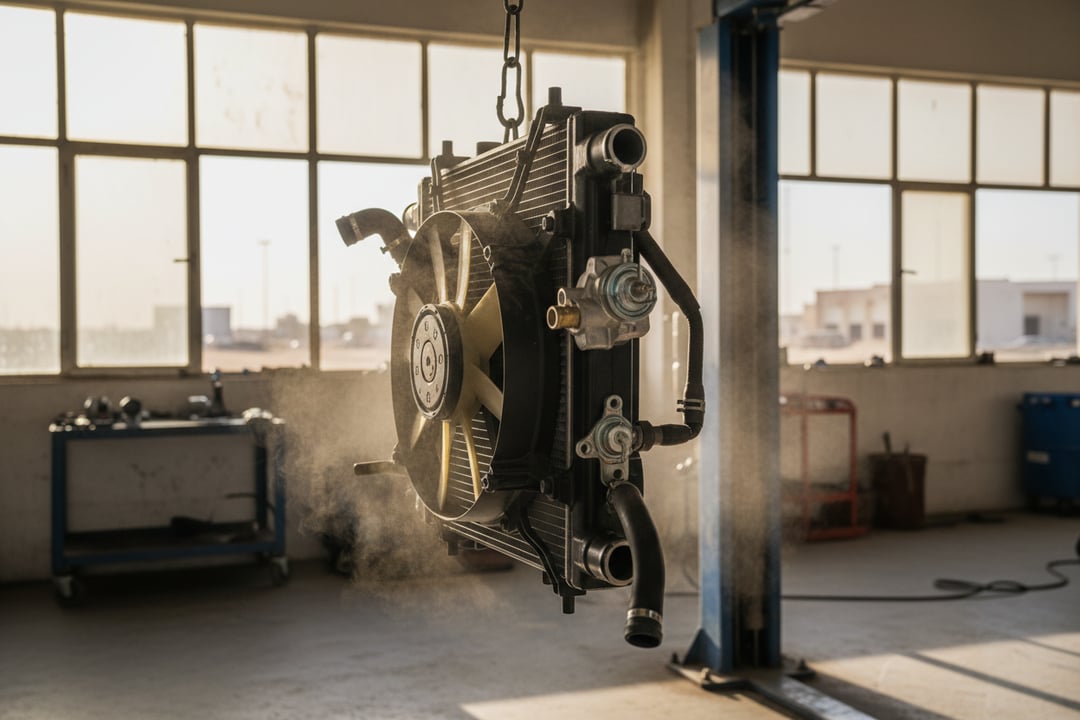
UAE summers push engine temperatures well above the design limits of many vehicles, and the cooling system becomes the line of defense against overheating.
Why the Cooling System Matters in UAE Heat
Extreme ambient temperatures force the radiator to dissipate far more heat than in temperate climates.
If the system cannot keep the coolant below critical thresholds, the engine may seize within minutes of a hard climb on Sheikh Zayed Road.
Key Cooling Components to Inspect
Radiator Fan Operation
A functional electric fan must engage at the correct coolant temperature to supplement airflow when the vehicle is stationary.
Listen for a steady whirring sound; a grinding fan indicates worn bearings that will fail under prolonged high‑heat duty.
Coolant Hose Condition
Hoses should be supple, without cracks, bulges, or hardened sections that could burst when the coolant expands.
Check both upper and lower hoses for signs of coolant residue, which reveals past leaks that may reappear under thermal stress.
Water Pump Integrity
The pump’s impeller must spin freely; any wobble suggests bearing wear that can cause sudden loss of circulation.
Inspect the pump housing for coolant stains that hint at internal seal failure, a common issue in high‑temperature operations.
Thermostat Functionality
A thermostat that sticks closed prevents coolant from reaching the radiator, leading to rapid temperature spikes.
Conversely, a thermostat stuck open can keep the engine below optimal operating temperature, increasing fuel consumption.
Spotting Problems on Popular SUVs
Ford Territory 2025 (Agency)
The 2025 Territory uses an aluminum radiator that is prone to corrosion if coolant quality is poor.
Inspect the fan control module for firmware updates; outdated software may delay fan activation during heat waves.
Ford Territory 2023 (Comprehensive)
Older models often exhibit hose hardening due to exposure to desert dust mixed with heat.
Verify the water pump’s mounting bolts for torque loss, a symptom of thermal cycling over several service intervals.
Honda HR‑V 2022 (Agency)
The HR‑V’s plastic inlet pipe can become brittle, leading to micro‑cracks that leak under pressure.
Check the thermostat housing for signs of coolant seepage, which indicates a failing seal that could cause overheating on long highway runs.
How AutoFay Checks the Cooling System
- Visual inspection of fan blades, motor mounts, and wiring harnesses.
- Operational test of fan activation at specified coolant temperature thresholds.
- Flex test of upper and lower coolant hoses for elasticity and surface integrity.
- Pressure test of the cooling circuit to reveal hidden leaks.
- Thermostat opening temperature using a calibrated thermometer.
- Water pump spin test and bearing noise detection with a stethoscope.
Consequences of Ignoring Cooling Issues
| Component | Potential Outcome |
|---|---|
| Radiator fan | Engine temperature can rise above safe limits, causing cylinder head warping. |
| Coolant hoses | Sudden hose rupture leads to rapid coolant loss and immediate engine overheating. |
| Water pump | Loss of circulation forces the engine to run on residual coolant, accelerating wear. |
| Thermostat | Improper temperature regulation reduces engine efficiency and may trigger coolant boiling. |
Choosing the Right Inspection Package
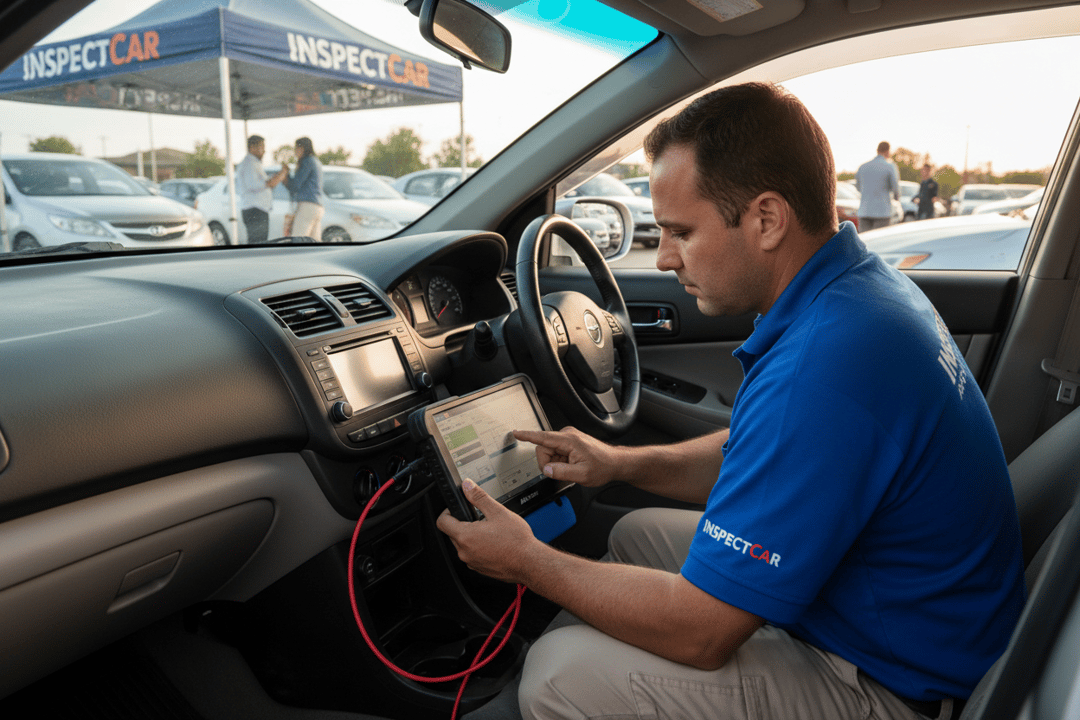
The Computer Diagnostic package at AED 99 covers OBD scans for coolant temperature codes and fan control faults.
The Body & Computer package at AED 250 adds visual checks of hoses, fan blades, and water pump housing.
The Comprehensive package at AED 299 includes a full pressure test, thermostat temperature, and a road test that monitors temperature rise under load.
AutoFay inspects 410+ checkpoints with HD photos and PDF report. Book at autofay.ae or call +971542584458




0 Comments
No comments yet. Be the first to share your thoughts!