

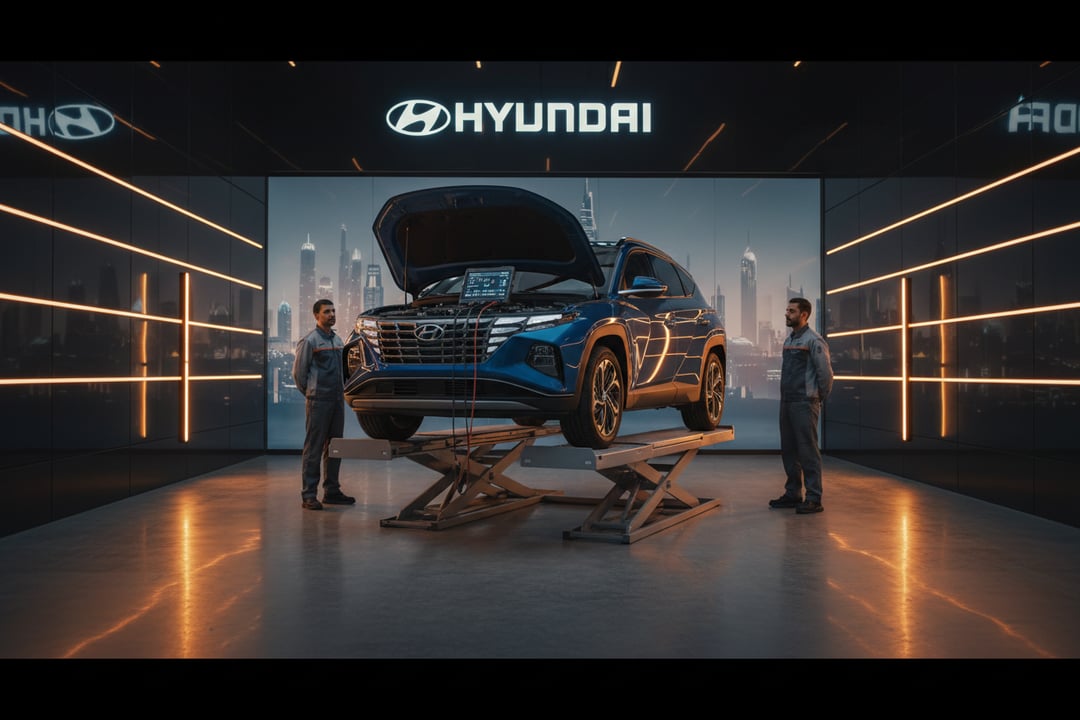
The Hyundai Tucson has become a staple on UAE roads because its compact SUV size, decent ground clearance, and fuel‑efficient engines suit both city traffic and desert trips.
DCT Transmission Red Flags in the Tucson
The dual‑clutch transmission (DCT) offers shifts but can hide problems that become costly if ignored.
First, listen for a clunk or hesitation during upshifts; a delayed engagement often signals worn clutch plates.
Second, inspect the transmission fluid through the dip‑stick – a burnt hue means the fluid has lost its lubricating properties, and the gearbox could fail within months.
Third, run an OBD scan for DCT‑related codes such as P0700 or P0740; these codes reveal solenoid or pressure‑control faults before they trigger a limp mode.
- Check shift response at low speeds; slipping indicates clutch wear.
- Verify fluid level and color; low or dark fluid points to leaks or overheating.
- Confirm that the transmission control module updates firmware during a diagnostic session.
AutoFay’s Computer Diagnostic package at AED 99 includes a full DCT scan, saving you from a surprise gearbox replacement.
Engine Recalls and Turbo Reliability
Hyundai issued a recall for certain Tucson models equipped with the capable turbo‑charged engine due to a faulty fuel injector seal that can cause fuel leakage.
Fuel leakage not only raises risk but also leads to lean‑condition engine codes that degrade performance.
Turbochargers on the 1.6 L and 2.0 L units are prone to bearing wear after 80 higher mileage, especially when the vehicle is driven hard in sand.
Symptoms of a failing turbo include excessive smoke from the exhaust, a whining noise that rises with engine speed, and loss of boost pressure.
| Recall Issue | Inspection Focus |
|---|---|
| Fuel injector seal | Check for wet spots around the injector, run OBD for P0171/P0174 codes. |
| Turbo bearing wear | Listen for high‑pitched whine, examine turbo housing for oil leaks. |
| ECU software | Verify that the latest calibration is installed during diagnostics. |
When AutoFay performs the Body & Computer inspection for AED 250, it photographs the turbo housing, checks for oil residue, and logs any recall‑related fault codes.
Which Tucson Generation to Skip
The Tucson has three main generations in the UAE market: first (2005‑2010), second (2010‑2015), and third (2015‑2020). Each generation carries distinct pitfalls.
The second generation is notorious for premature clutch wear in DCT models and for higher rates of turbo bearing failure.
The third generation improved the turbo design but introduced a new ECU that, if not updated, can cause intermittent stalling under heavy load.
- First generation – generally reliable but lacks modern safety features; avoid if you need advanced driver assistance.
- Second generation – skip DCT variants unless you can verify recent clutch replacement and fresh fluid.
- Third generation – acceptable if the ECU has the latest firmware and the turbo shows no oil leakage.
Choosing a model from the third generation with a manual gearbox sidesteps both DCT and turbo‑related headaches.
How AutoFay’s 410+ Checkpoints Cover Every Concern
AutoFay inspects vehicles across 25 categories, from body paint condition to frame straightness, ensuring no hidden defect goes unnoticed.
The inspection includes a road test that evaluates acceleration, braking, noise, and vibration – crucial for spotting DCT slip or turbo lag.
Fluids are examined for level and condition; burnt transmission fluid instantly flags a potential gearbox disaster.
Suspension components and tire age are documented, because worn bushings or old tires can amplify vibration from a faulty turbo.
- Engine: sound, mounts, smoke color, and OBD codes.
- Transmission: fluid, clutch operation, electronic diagnostics.
- Turbo: visual inspection, sound test, boost.
The Comprehensive package at AED 299 bundles all these checks, adds HD photos of every inspected area, and provides a PDF report for your records.
Comparing Other Popular SUVs in the UAE
While the Tucson offers a balanced package, the Ford Territory (2023 & 2025) and Honda HR‑V (2022) present alternative strengths and weaknesses.
The 2025 Territory uses a conventional automatic that rarely suffers DCT‑specific issues, but its larger engine bay can hide coolant leaks that are harder to detect without a thorough inspection.
The 2023 Territory introduced a mild‑hybrid system; a missed battery fault can cause reduced fuel, making an OBD scan essential.
The 2022 HR‑V relies on a continuously variable transmission (CVT); CVT belts can wear out after 120 higher mileage, a condition that only a road‑test and fluid check will reveal.
| Model | Key Concern | AutoFay Focus |
|---|---|---|
| Hyundai Tucson (3rd Gen) | DCT clutch wear, turbo bearing | Transmission fluid, turbo visual |
| Ford Territory 2025 | Hybrid battery health | OBD battery codes, coolant check |
| Ford Territory 2023 | Conventional automatic leaks | Fluid levels, leak inspection |
| Honda HR‑V 2022 | CVT belt degradation | Road test, transmission fluid |
Regardless of the make, a detailed AutoFay inspection uncovers the hidden wear that could become a costly repair.
AutoFay inspects 410+ checkpoints with HD photos and PDF report. Book at autofay.ae or call +971542584458



0 Comments
No comments yet. Be the first to share your thoughts!