


UAE summers regularly push ambient temperatures above 45 °C, and a car battery is the first component to feel the strain. High heat accelerates electrolyte evaporation, reduces plate density, and shortens the life of even a brand‑new battery. Knowing how the climate attacks the battery lets you spot problems before they leave you stranded.
Why Extreme Temperatures Kill Batteries Faster
When the temperature climbs, the chemical reaction inside the battery speeds up, causing the electrolyte to boil off. Loss of electrolyte means the plates become exposed, leading to sulfation that permanently reduces capacity.
Heat also increases internal resistance, so the battery delivers less current during a cold start. In a hot garage the same battery may struggle to turn over a diesel engine after a long idle.
Testing Cold Cranking Amps (CCA) in the UAE
The most reliable indicator of battery health is the Cold Cranking Amps (CCA) rating, even though the test is performed at 0 °C. A portable load can simulate that condition and reveal whether the battery can meet the manufacturer’s specification.
Follow these steps to obtain a trustworthy reading:
- Fully charge the battery and let it rest for at least 30 minutes.
- Connect the load clamps to the positive and negative terminals, ensuring a solid grip.
- Activate the load for 15 seconds and note the peak amp.
- Compare the result with the CCA rating listed in the owner’s manual.
If the measured drops below 70 % of the spec, the battery will likely fail under load, especially after a hot day when the engine coolant is still warming up.
Terminal and Connection Checks
Corroded terminals are a common sight on used cars that have spent years parked under the sun. Oxidation on the posts creates resistance, which can mimic a weak battery during a start.
Inspect the terminals with a flashlight. Look for white or bluish powder, and gently brush it away with a wire brush. After cleaning, tighten the clamps so there is no play; a loose connection can cause voltage drops of up to 0.5 V under load.
Vehicle‑Specific Battery Red Flags
Different models use distinct battery sizes, mounting systems, and electrical loads. Here are the points to watch on the three SUVs most likely to appear on the UAE used‑car market.
Ford Territory 2025 (Agency Trim)
- Battery is a 12 V, 75 Ah unit with a CCA of 660 A; verify that the load test meets at least 460 A.
- Check the high‑current starter relay under the hood; heat can cause the relay contacts to weld.
- Inspect the battery tray for signs of melted plastic, a symptom of prolonged overheating.
Ford Territory 2023 (Comprehensive Trim)
- The 2023 model uses a 12 V, 78 Ah battery with a CCA of 680 A; a drop below 480 A signals imminent failure.
- Look for corrosion on the grounding strap that connects the engine block to the chassis; a poor ground amplifies voltage loss.
- Ensure the battery ventilation vent is unobstructed; blocked vents trap heat and accelerate gas buildup.
Honda HR‑V 2022 (Agency Trim)
- Equipped with a 12 V, 55 Ah battery rated at 540 CCA; a reading under 380 A warrants replacement.
- Honda’s start‑stop system draws frequent bursts; verify that the battery’s state‑of‑charge indicator shows at least 80 % after a full charge.
- Check the terminal clamps for any sign of rubber boot cracking, which can let dust and moisture into the connection.
Inspection Routine You Can Trust
When you’re evaluating a used SUV, combine the battery checks with a broader vehicle inspection. A systematic approach catches hidden faults that could turn a good into a costly repair.
Here is a checklist you can perform before calling a professional:
- Measure resting voltage; anything below 12.4 V indicates a discharged or weak cell.
- Perform the CCA load test as described earlier.
- Visually examine terminals, cables, and battery tray for corrosion, cracks, or deformation.
- Start the engine and watch the voltage drop; a healthy system should stay above 10 V during cranking.
- Listen for any clicking or grinding noises from the starter motor, which may suggest insufficient power delivery.
Missing any of these steps can let a failing battery slip through, especially when the climate masks symptoms by keeping the electrolyte warm.
What AutoFay Offers for Battery Health
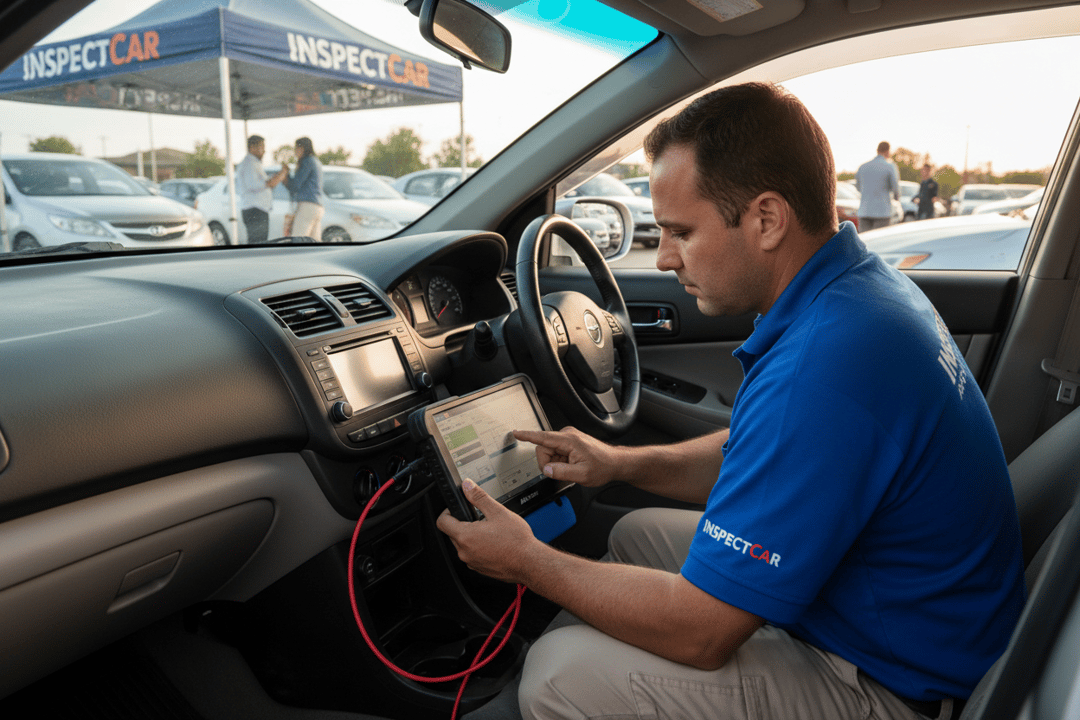
AutoFay conducts a on-location inspection across all seven Emirates, covering more than 410+ checkpoints in 25 categories. Their battery assessment is part of the Engine and Fluids sections, where technicians check voltage, CCA, terminal condition, and electrolyte level.
Choose a package that fits your needs:
- Computer Diagnostic – AED 99: reads battery codes and logs any voltage-related fault.
- Body & Computer – AED 250: adds visual inspection of terminals and checks for corrosion on related components.
- Comprehensive – AED 299: includes full load testing, thermal imaging of the battery tray, and a detailed PDF report with HD photos.
Because the inspection includes Road Test data, you’ll see how the battery performs under real‑world acceleration and braking, not just on a bench.
AutoFay inspects 410+ checkpoints with HD photos and PDF report. Book at autofay.ae or call +971542584458




0 Comments
No comments yet. Be the first to share your thoughts!