

The logistics sector in the UAE demands vehicles that balance high mileage endurance with operational costs. Delivery drivers require platforms that withstand daily stress without frequent mechanical failures. Selecting the right used vehicle requires a technical understanding of mechanical integrity rather than just aesthetic appeal. This analysis outlines the most suitable models for commercial delivery, outlines critical inspection criteria, and explains the long-term economic implications of vehicle ownership in the region.
Strategic Selection for Delivery Operations
Not all used vehicles perform equally under the rigors of commercial delivery. The ideal candidate must possess a reinforced chassis to handle frequent acceleration and braking cycles. Additionally, fuel economy remains a primary concern for long-term profitability. SUVs, particularly those with four-wheel drive, offer the structural rigidity necessary to navigate UAE terrain while carrying cargo. Pickup trucks provide utility for larger loads, whereas compact crossovers offer better fuel efficiency for urban courier services.
Toyota and Nissan models consistently dominate the top of the reliability charts for commercial use. The Hilux and Patrol are renowned for their ability to accumulate high mileage with minimal major repairs. Similarly, the Mitsubishi Triton offers a robust chassis that resists flex under heavy loads. For urban environments, the Honda Vezel or Toyota C-HR provide excellent handling characteristics and lower fuel consumption compared to full-sized sedans.
- Toyota Hilux: Unmatched durability and resale value.
- Nissan Patrol: High load capacity and commanding road presence.
- Mitsubishi Triton: Strong suspension and payload ratings.
- Honda Vezel: Superior fuel efficiency in stop-and-go traffic.
Essential Checkpoints for Heavy-Duty Usage
When inspecting a potential delivery vehicle, the physical condition of the chassis must be verified before the engine is started. A vehicle with a compromised frame will exhibit unpredictable handling and increased susceptibility to rust. Inspectors must look for previous accident damage that could weaken structural pillars or the floor pan. At AutoFay, this process involves a detailed examination of the frame rails to ensure they are not twisted or repaired with substandard materials.
The undercarriage requires rigorous scrutiny to identify wear patterns indicative of commercial usage. Suspension components, including shocks and bushings, sustain significant stress during daily deliveries. Any excessive play in the control arms or worn ball joints will result in a harsh ride and premature tire wear. Furthermore, the braking system must be evaluated for heat fatigue, which occurs when parts are subjected to constant heavy braking during rush hour commutes.
Identifying Critical Wear Patterns
Tires represent the most immediate safety hazard in high-mileage vehicles and must be checked for manufacturing date, not just tread depth. A tire older than five years, regardless of remaining tread, poses a risk of blowouts due to rubber degradation. Even if the tread is legal, the sidewalls may have cracked from the heat of Abu Dhabi summers. At this price range, worn tires are a common compromise made by previous owners to maximize resale value.
Fluid levels and engine condition offer insight into the vehicle's mechanical history. Low oil levels or a burning smell during the road test often point to piston ring wear or valve seal failure. Transmission fluid that is dark or smells burnt indicates that the clutch packs or bands are nearing the end of their service life. These issues do not cause immediate failure but significantly reduce the vehicle's lifespan and reliability over the next year.
- Suspension Bushings: Look for cracking or dry rot on rubber components.
- Brake Pads: Check the thickness of the lining; a rating below 50% is dangerous for heavy loads.
- Fluids: Transmission and coolant should be clear, not milky or brown.
- Electronics: Ensure all windows, mirrors, and lights function correctly for safety compliance.
The Role of Diagnostic Scanning
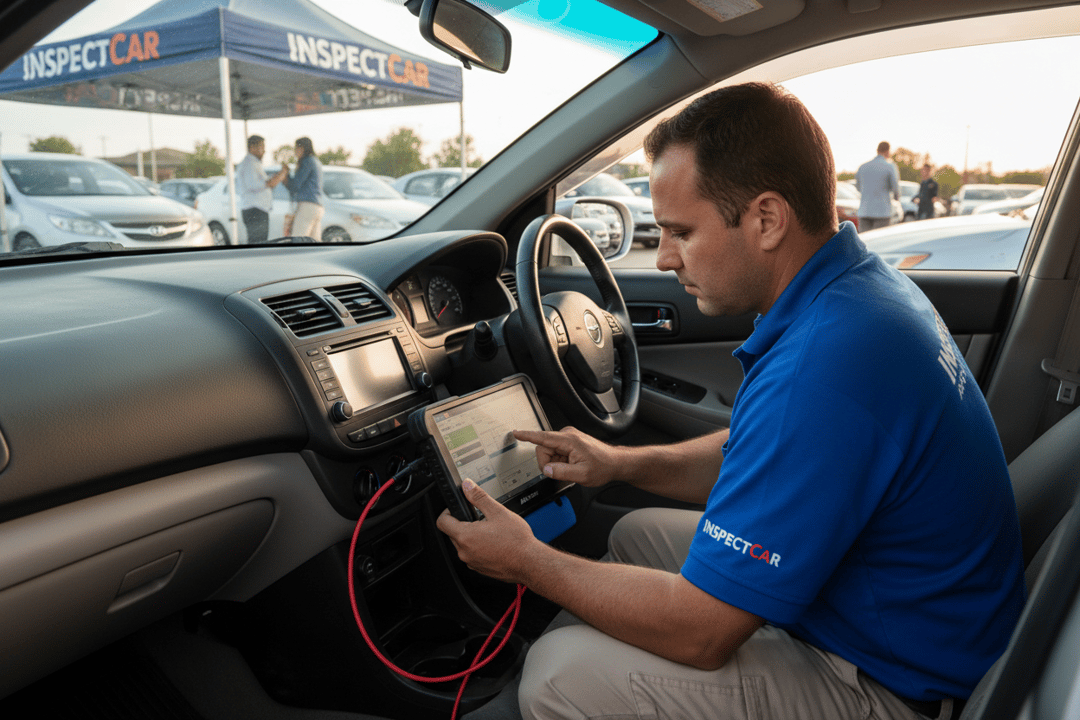
Modern delivery vehicles rely heavily on complex electronic systems to manage fuel efficiency and engine performance. A simple visual inspection cannot reveal hidden errors stored in the vehicle's computer. An OBD (On-Board Diagnostics) scan is essential to identify Check Engine lights and specific fault codes related to the catalytic converter, oxygen sensors, or misfires. These faults can lead to failing an Emirates ID roadworthiness test.
Professional diagnostic services utilize advanced software to read data from the engine, transmission, ABS, and airbag systems. Ignoring these codes can lead to catastrophic engine failure while on the job, resulting in lost income and rental fees. A comprehensive inspection package covers these electronic systems to ensure the vehicle's electronic architecture is functioning within manufacturer specifications.
Models with High Resale Value
Investing in a vehicle that retains its value is a financial necessity for business owners. In the UAE market, Japanese SUVs consistently outperform other segments in depreciation rates. The Toyota Hilux and Nissan Patrol command premium prices on the secondary market due to their perceived reliability and parts availability. A well-maintained used example of these models will retain a significant portion of its initial value compared to European rivals.
Models with high residual value provide a buffer against unexpected repairs. If a delivery vehicle requires expensive repairs, the owner can recover a larger portion of the capital through resale. This economic principle discourages the purchase of vehicles that are notorious for expensive maintenance, such as diesel-powered European luxury sedans, which may depreciate rapidly while costing more to keep on the road.
| Inspection Category | Why It Matters for Delivery | AutoFay Checkpoint |
|---|---|---|
| Body & Paint | Hail damage is common in UAE; previous repairs hide frame damage. | Panel-by-panel inspection for original vs. repainted surfaces. |
| Computer Diagnostic | Prevents unexpected breakdowns and emission fines. | Scans engine, transmission, ABS, and airbag systems. |
| Tires | Directly impacts fuel economy and safety. | Reviews manufacturing year and tread wear percentage. |
| Brakes | Essential for heavy load carrying and emergency stops. | Measures pad thickness and caliper functionality. |
Why Professional Verification is Mandatory
Purchasing a used vehicle without a third-party expert review invites significant financial risk. Private sellers may gloss over mechanical issues to secure a quick sale. A professional inspection acts as a neutral arbiter, identifying discrepancies between the seller's description and the vehicle's actual condition. This verification process protects the buyer from inheriting a vehicle with structural defects or hidden electronic failures.
AutoFay provides a on-location inspections covering all seven Emirates, allowing for convenience without compromising on rigor. The inspection process evaluates 410+ checkpoints across 25 distinct categories to ensure a holistic review of the vehicle's health. By investing in a thorough pre-purchase inspection, buyers avoid the significant issue scenario of purchasing a vehicle that requires immediate and expensive repairs.
AutoFay inspects 410+ checkpoints with HD photos and PDF report. Book at autofay.ae or call +971542584458



0 Comments
No comments yet. Be the first to share your thoughts!